Recently, I read The Disaster Artist which is an inside look at the making of The Room, which is called the Citizen Kane of bad films. If you haven’t seen it, see it! The Disaster Artist is also a very compelling read.
Tommy Wiseau
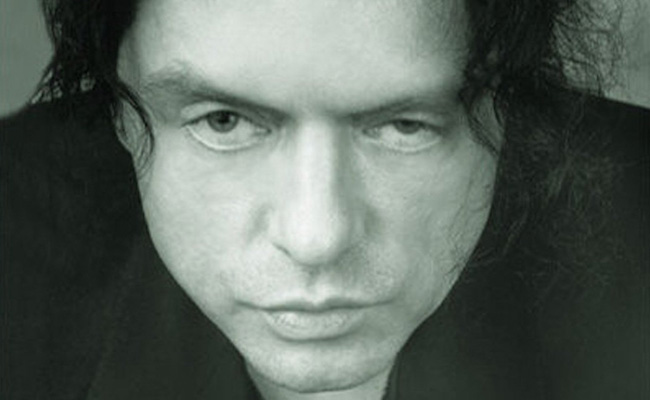
Fairly early in the book authors Greg Sestero and Tom Bissell liken The Room’s mastermind Tommy Wiseau to Quaismodo saying that Wiseau looks like “the Hunchback of Notre Dame following corrective surgery.” This is allegory is almost too true. Could you imagine Tommy Wiseau playing Quasimodo? That would amazing!
I mentioned Disney’s Mix and Match Villains Book in a post about the villain line but since then I have found my copy of it. Oh the fun of this thing.
The book is a game where you flip segments of a pictures and words to form absurdities.
Frollo’s page
So for example the Hunchback page features Frollo holding a book with Quasimodo and Hugo off to the side and the text reads “Frollo sneered, I’m very disappointed in you Quasimodo.
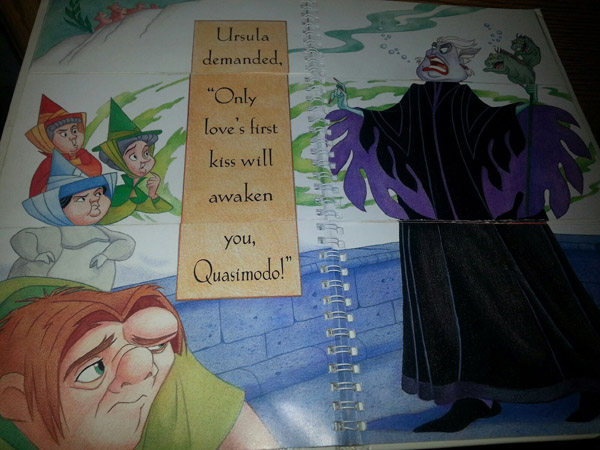
With a few flips I can change it to this.
Ursula demands that only love’s first kiss will awaken Quasimodo
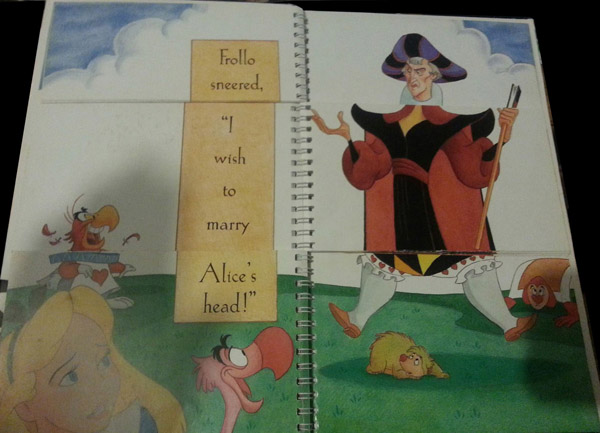
Oh such fun. Though I confessed as child I loved using Alice’s Head in the mix.
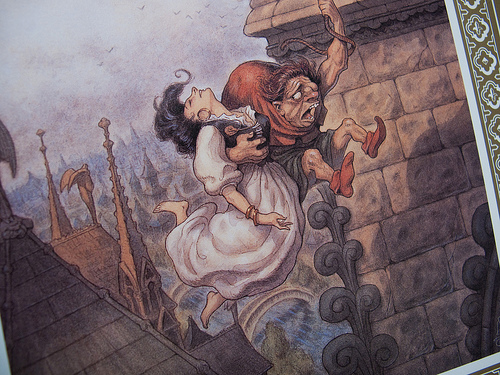
Concept art of Quasimodo saving Esmeralda from the Art of the Hunchback
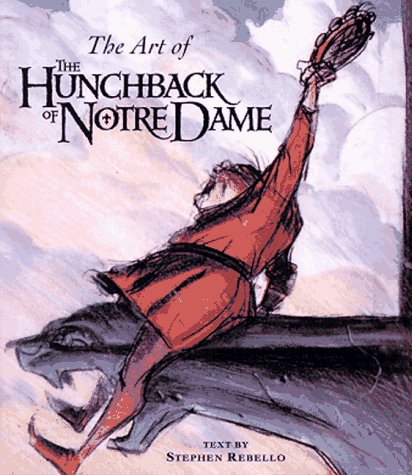
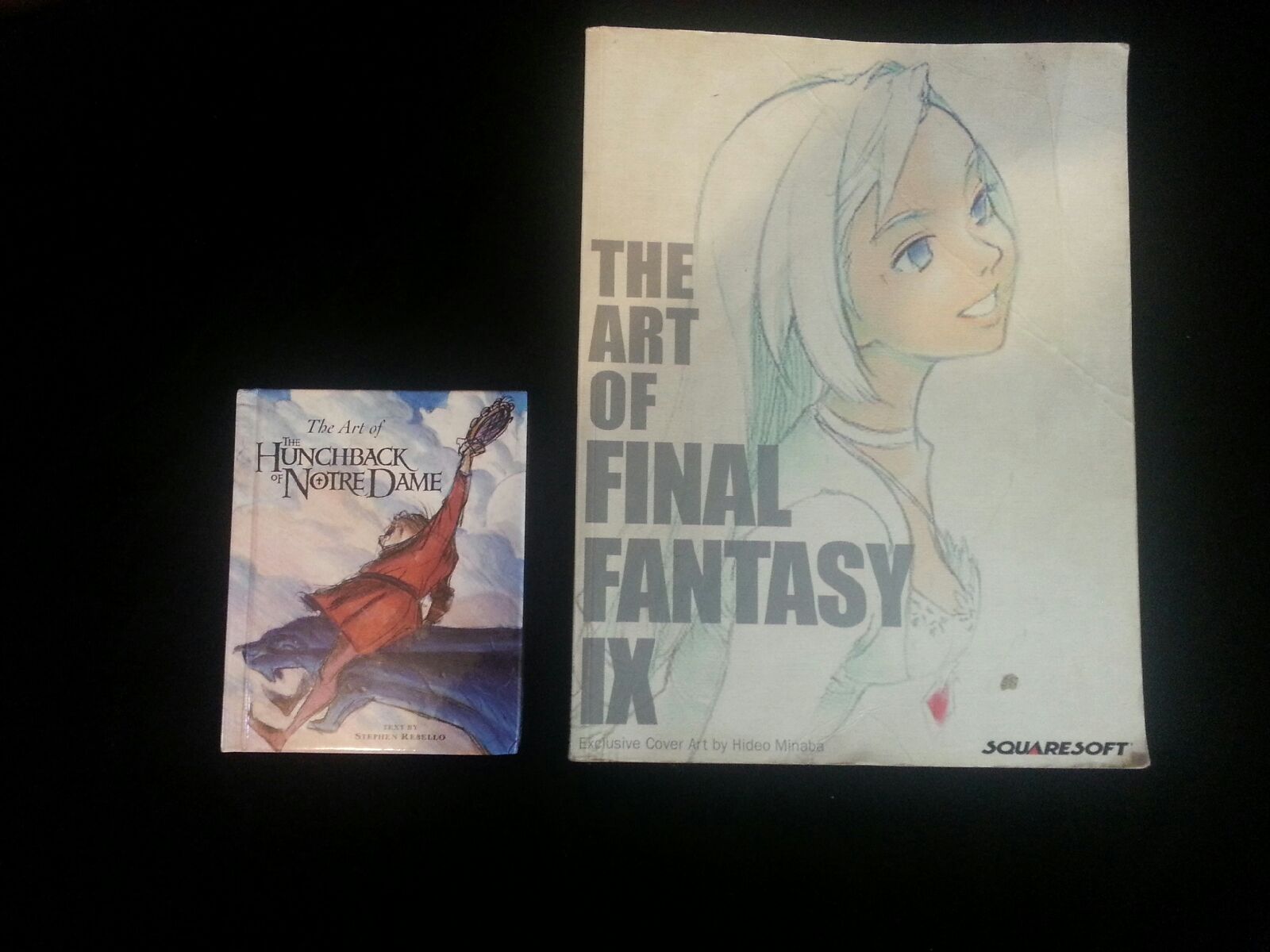
It’s for all intended purpose thisis an art book. It has tons of concept art, production stills, sketches, illustrations from the novel, and art by Victor Hugo. (Hugo’s own art work is gorgeous). However the major flaw with it is its size. It’s tiny for something that is an art book. Here’s a picture of it compare to my Final Fantasy IX art book (I had this book for a while).
Size comparison of The Art of the Hunchback of Notre to The Art of Final Fantasy IX
The Hunchback art book is 5.6 inches by 4.3 inches compare to the art Final Fantasy IX which is 11.8 inches by 9.3 inches. However I think this isn’t suppose to be a true art book as much a more in depth look behind movie’s creation.
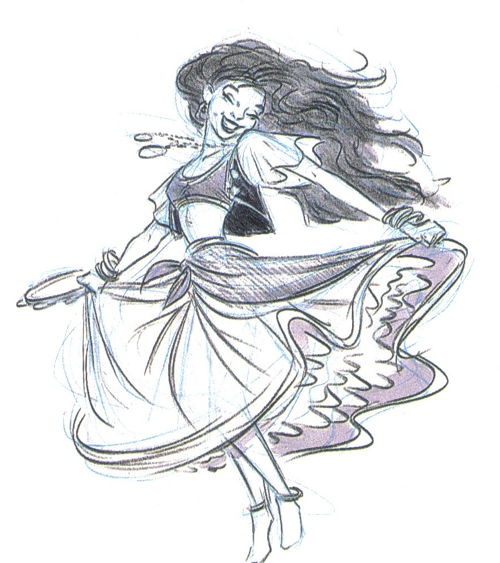
Concept Art for Esmeralda Disney Hunchback of Notre Dame
The book has a ton of information about the background on the book, characters and a lot of how the movie art plays with light and shadows. It’s a very interesting read although Stephen Rebello does make one big generalization. In the Quasimodo chapter page 57, he writes ” Victor Hugo probably never imagined his malformed, melancholy creation breaking forth into song.” Hugo himself wrote a libretto for Louise Bertin’s opera La Esmeralda . Making Hugo the first person to adapt the novel. Considering Hugo wrote Quasimodo an aria, I think it’s safe to say that he did imagine him breaking out into song. On a side note, that aria was only piece people liked from the opera. You can listen to it here
Concept Art of Quasimodo from the Art of the Hunchback of Notre Dame
Anyway despite that generalization it is well researched and an interesting read with lots of great artwork. I would highly recommend it for fans of the Disney movie.
Esmeralda is once again in red, does anyone else think this a cliche that should die? Because I’m getting annoyed by it, (future article*). But other than that I like the artwork it’s fairly simple yet effective.
March 29 is apparently Ananke Day according to the good people at The Frollo Forum. Ananke was the original inspiration for the character of Frollo. Victor Hugo say the word carved into a wall in Notre Dame and wonder about the person who carved it. It’s a greek concept that means roughly (very, very very roughly) “Death Destiny”.
So in honor Ananke Day here’s a video of “Anarkia” from Notre Dame de Paris peformed by Daniel Lavoie (Frollo) and Bruno Pelletier (Grongoire) Enjoy
http://www.youtube.com/watch?v=S0sGpSBzuLg
Also I know I put this song as number 7 in the worst song list of Notre Dame de Paris but I really do enjoy it. So many subject changes for such a short song, I think Gringoire has ADD.
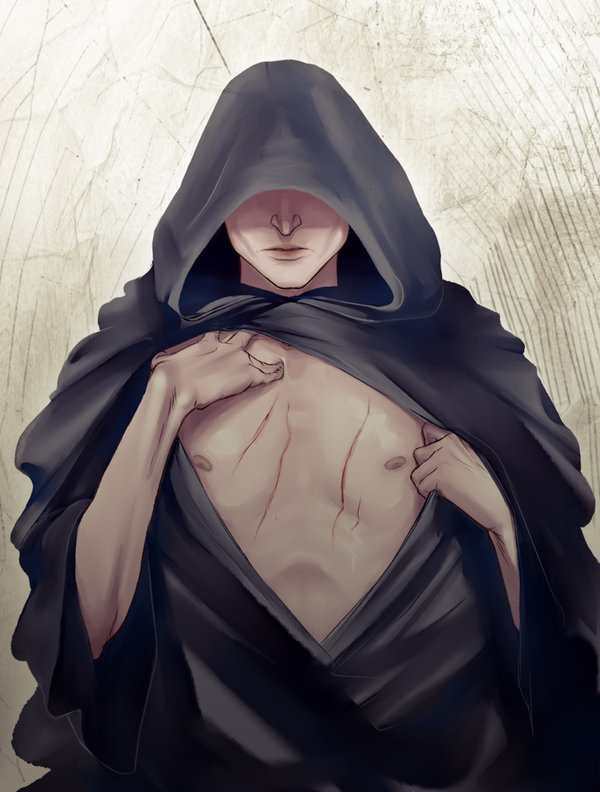
Today’s Fan-Art was created by MimiStriped. It’s base on a scene from the book where Frollo shows Esmeralda his wounds he gave himself in reaction to her being tortured. This scene is during his confession to her in Jail and it’s my favorite scene from the book. And this is a lovely rendering.
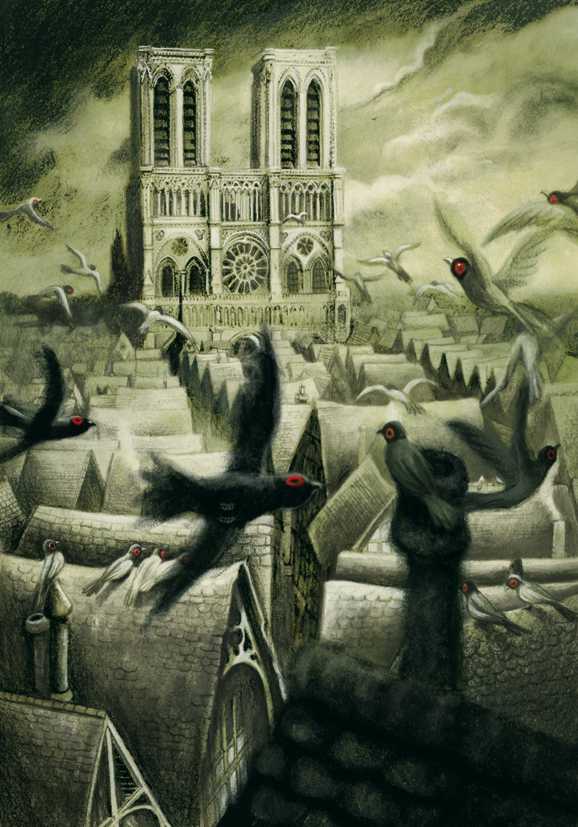
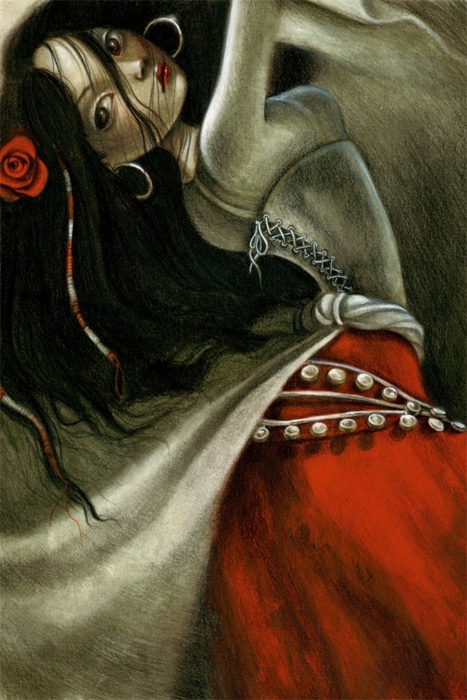
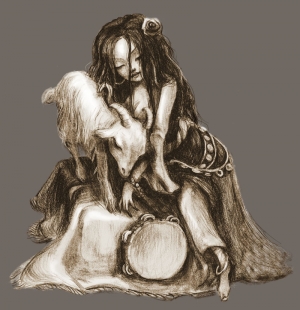
Benjamin Lacombe is a French artist who has illustrated several books his latest is Notre Dame de Paris which was released November 30th 2011. His work has a gothic anime feel that I find appealing but I’m not sure why. I’ve seen stuff akin to it but there is something about his work that I find appealing maybe it’s the use of color or the composition. Currently the book is only available in French. Other work by Benjamin Lacombe
Quaismodo Bells of Notre dame reprise Disney Hunchback of Notre Dame
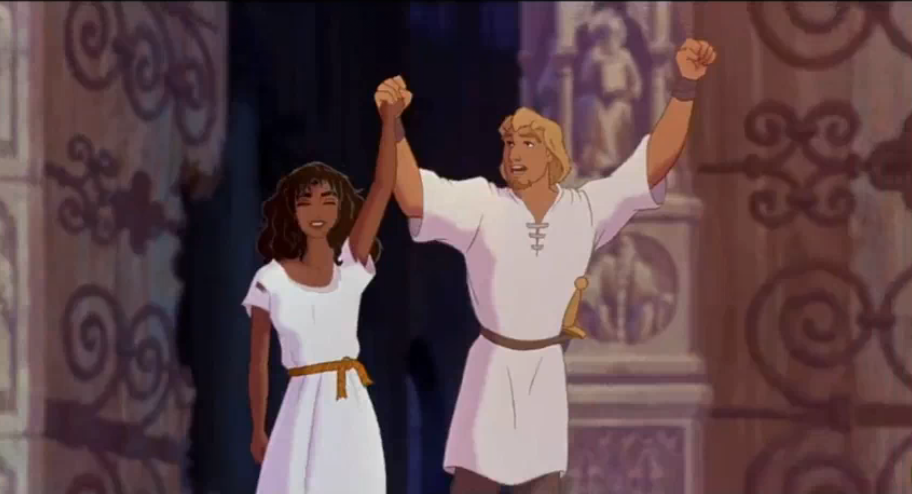
Phoebus and Esmeralda Happy Ending Disney Hunchback of Notre Dame
Clopin Reprise of Bells of Notre Dame Disney Hunchback of Notre Dame
The Good Guys lives.
Yeah, this isn’t a big differences. Most film adaptations let the leads live. It is interesting that Esmeralda is really only spared because she is sentence to burn instead of hanging. If she had hanged the scene would have been less dramtic. So another minor difference is all the fire imagery including Esmeralda on the stake.
Also in letting the character live it takes away the theme of “Ananke” (simply meaning Death Destiny) Ananke is the word that book is based off of. However it’s only been features in like two adaptations and beside this movie is about how we “not to be deceived by appearances, for beauty is found within” no wait that’s Beauty and the Beast…. no it’s the same in Hunchback of the Notre Dame. Stupid Disney morals ruining their movies.
(2026 edit many versions skip Ananke, it shouldn’t be a point against it. If anyting it shoud be a point against version who introduce the concept and do nothing with it. So no Disney having a happy ending isn’t a bad thing it’s just a difference and many version have the characters live. )
Gringoire is Clopin and Phoebus
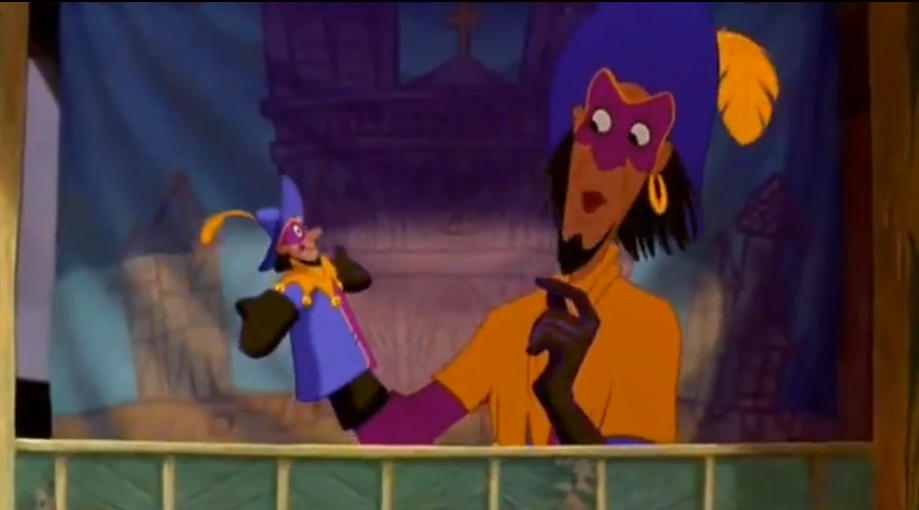
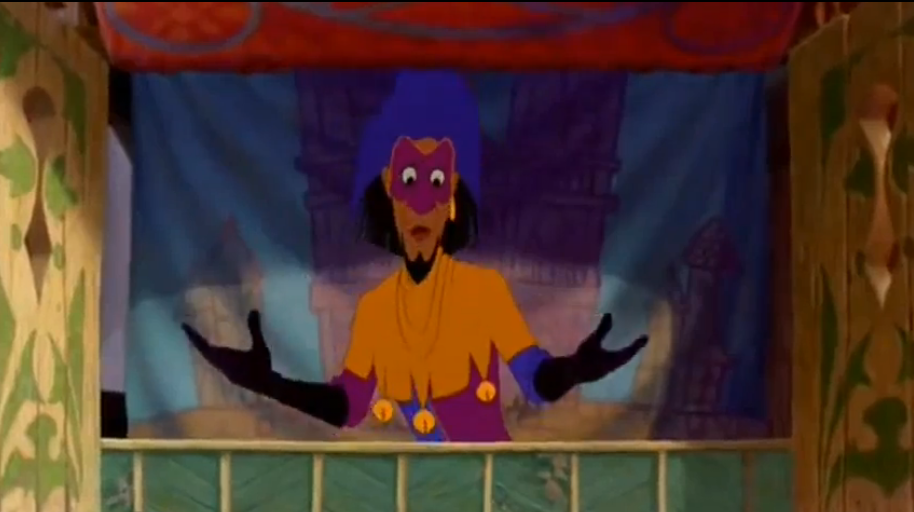
Clopin with Puppet Disney Hunchback of Notre Dame
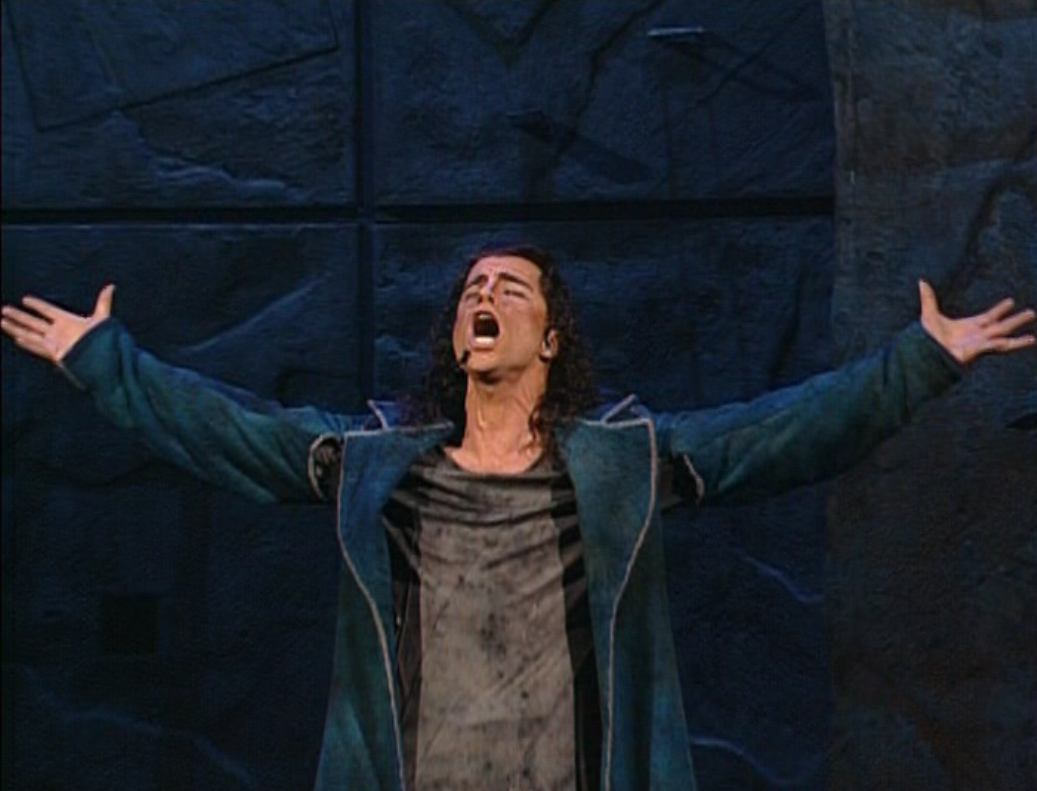
Bruno Pelletier as Gringoire in Notre Dame de Paris
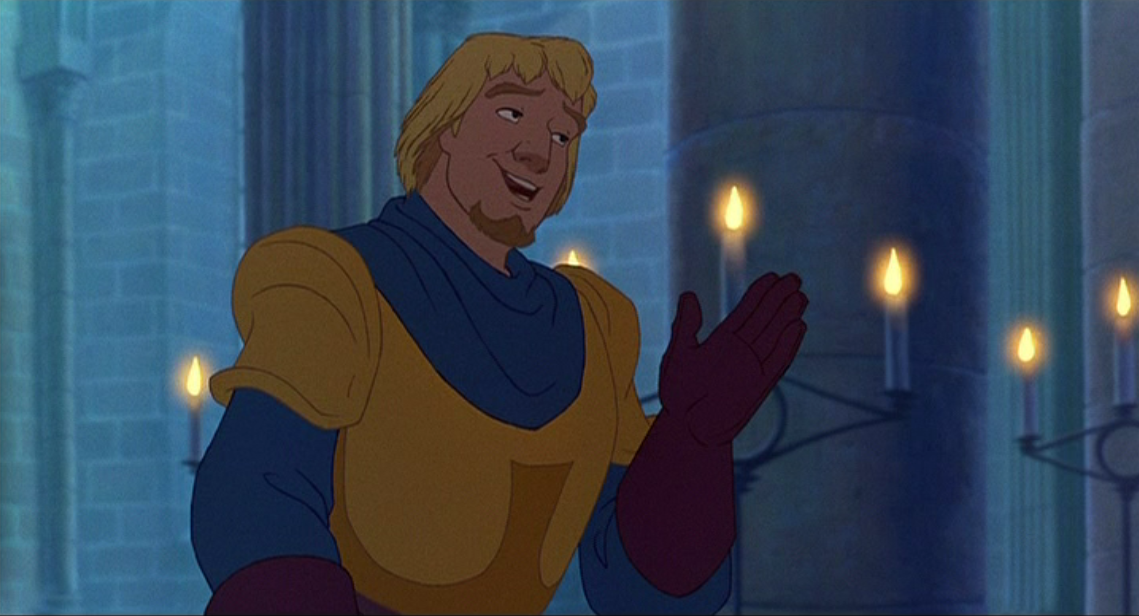
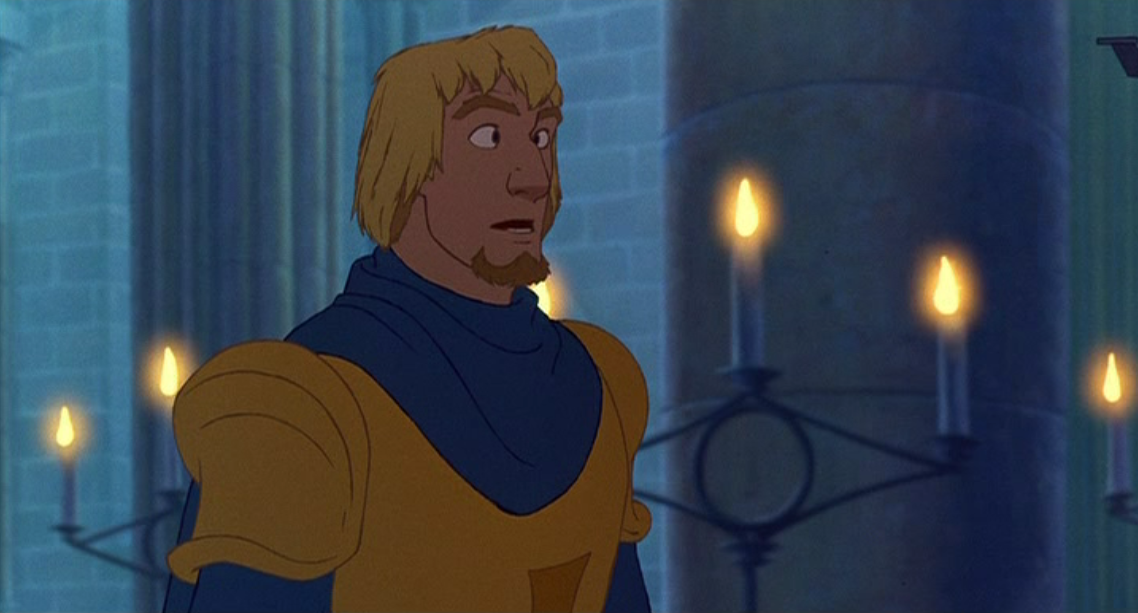
Phoebus explaining his name Disney Hunchback of Notre Dame
Another minor difference is the lack of Gringoire.
Gringoire in the book was a cowardly poet who runs off with Djali. He also acts like a story teller and the voice of author. In Disney, Gringoire is divided between Clopin and Phoebus. It’s a minor difference because when it comes to cutting characters out Gringoire is seldom cut from other version. Phoebus is the one to get diminished over Gringoire.
More Thoughts plus I was Wrong*
Quasimodo Disney Hunchback of Notre Dame
Esmeralda about to burn Disney Hunchback of Notre Dame
Phoebus cross-eyed Disney Hunchback of Notre Dame
There is just so many differences between Disney and the book that to write these posts has been mind boggling. I could just have an entire blog about the differences and it would probably last a good long time.
Because let’s face Disney didn’t re-tell Hugo’s story they retold the 1939 version. Then they got 18 people to collaborate on the story who may not have even seen the Charles Laughton version or read the book. This is why Esmeralda is impressed with Quasimodo’s space and not with Phoebus’ name (in the book she loved his name,) why Quasimodo builds models instead ringing his bells, and why Frollo is more obsessed with fire than Esmeralda.
If you read the book and then watch the Disney you would know that this movie has very little in common with book. The only things that are correct are names and the settings*. That’s it but in regards to the setting Disney may have got the place right but Notre Dame role in this movie is very much twisted.
(*2026 – Again I was being harsh, no excuse the 2011 version of me, I’m remorse for my lack of inflexibility on book to movie adaptation decisions when I wrote I reviews this movie. The Disney version is a adaptation that is suitable for a general audience they had to make changes. However I do think the concept of three men’s different perspectives of one woman, which is the crux of the novel, is handle well by this movie. Possibly better than the 1939 version.)
In all seriousness Disney’s Hunchback of Notre Dame really only has the basic premise of the original novel. All the characters differ in attitudes and back storys. The way the story unfolds and comes to its conclusion is different because of the characters.
Frollo
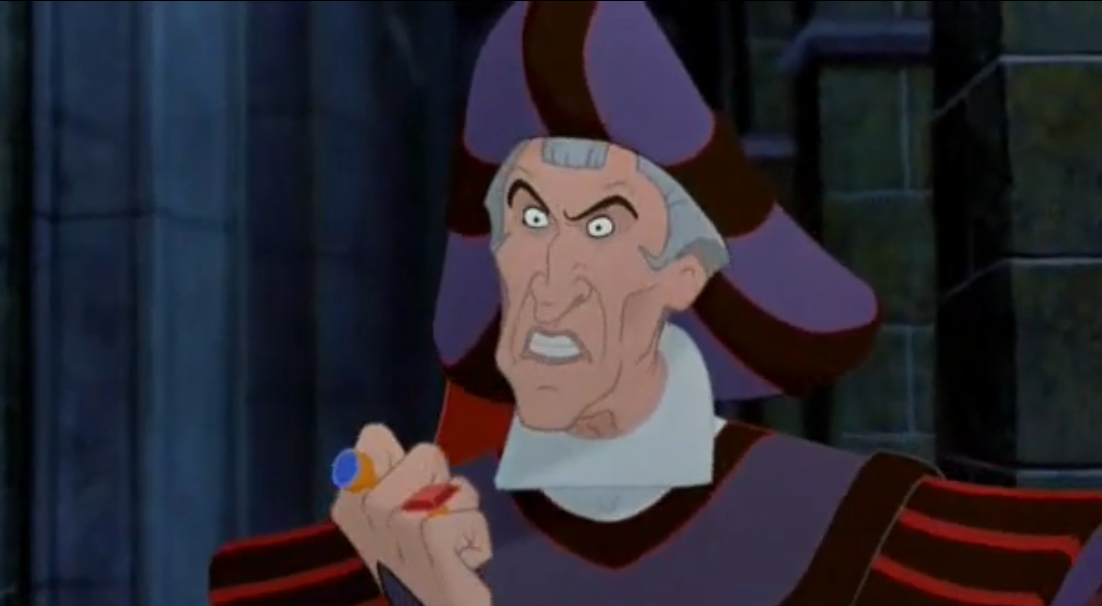
Frollo Hunchback of Notre Dame Disney
In making Frollo a judge and not a priest we loss his turmoil which makes Frollo an interesting and complex character.
I really don’t care as much about his lust and obsession for Esmeralda just because he hate the Romani people. Also in the book, his obsession occurs slowly. He sees her and is instantly taken by her youthful beauty. After that he begins stalking her and by kidnapping her he forces the the plot to take action.
In the Disney movie, Quasimodo doesn’t have the some loyalty and Frollo abuses him by telling him he’s a monster and keeps him locked in the tower. In the book Frollo did no such thing and Quasimodo could leave Notre Dame if he wished.
Quasimodo
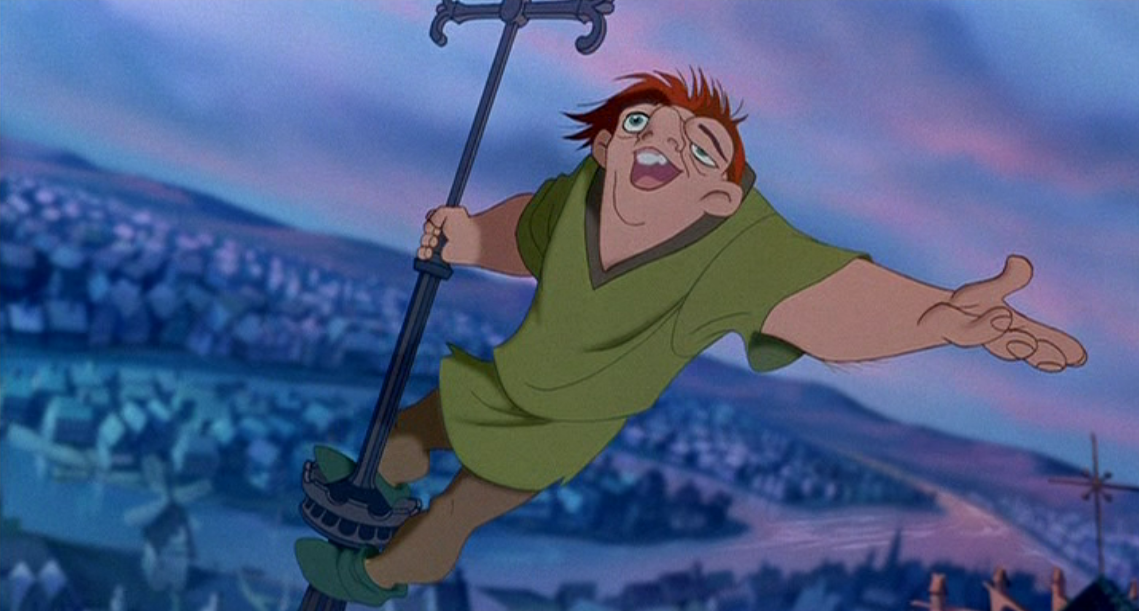
Quasimodo during Out There Disney Hunchback of Notre Dame
Quasimodo in the Disney movie is very much like Ariel. He wants to live with the normal people. He is very naive, kind and gentle.
In the book, Quasimodo is kind and loyal to those who have been kind to him i.e Frollo and Esmeralda. However, Quasimodo is also angry and doesn’t really like people. He would never want to leave Notre Dame as Notre Dame is his universe. He loves Notre Dame so much that he is very much a part of it and his lovers are bells. The relationship between Quasimodo and Notre Dame is destroyed in the Disney version as Notre Dame is not so much a sanctuary but a prison.
Also in the movie Disney he briefly mentions the bells but you don’t get the sense that he loves the bells. I also don’t see this Quasimodo killing Frollo in fit of rage or lying down next to Esmeralda to die.
Esmeralda
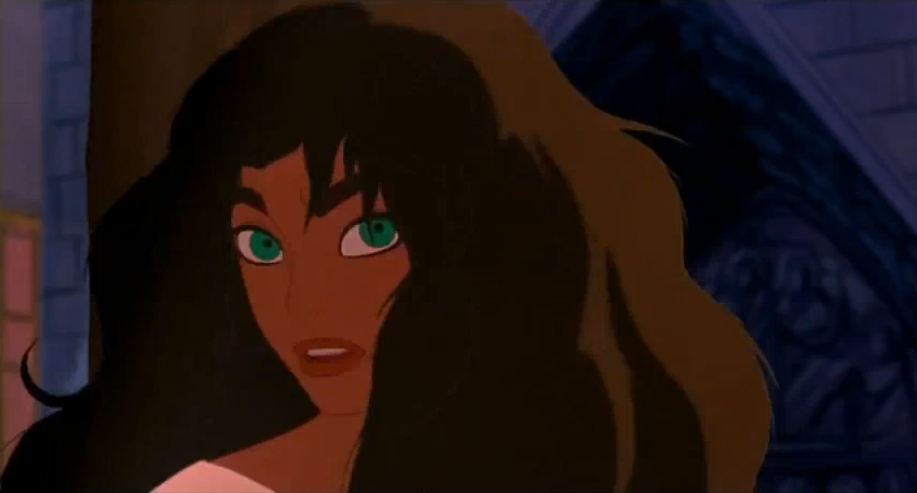
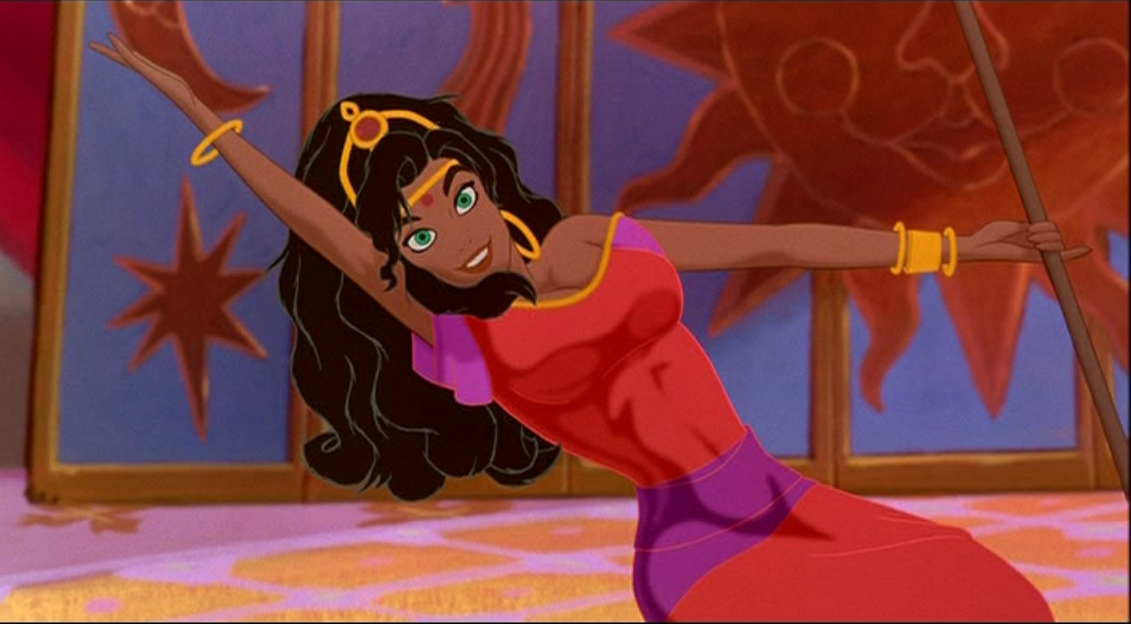
Esmeralda’s Dance Disney Hunchback of Notre Dame
Esmeralda is the polar opposition between Disney movie and the book.
In the book she is at least part French and is young, beautiful, naive, shallow and, childish.
In the Disney movie, while she is beautiful, she has none of the other traits, though the youth is debatable. She is confident and is in control of her sexual appeal. In the Disney version she is a full Romani and we are never given any sense of her backstory.
In the book she was unaware of her beauty and she lacks any worldliness. This naivety is what gets her into trouble in the book and ultimately is what kills her and not a passion for social justice.
Phoebus
Phoebus Disney Hunchback of Notre Dame
Phoebus in the book is a jerk who is kind of dumb and just wants to sleep with pretty girls.
Also he is two-timing cheat, who despite being engaged he tries sleeps with every good-looking girl he can.
In the Disney version is he is noble, moral and likes to crack bad jokes. Not like book Phoebus at all.
Clopin
Clopin Disney Hunchback of Notre Dame
Clopin in the book in the leader of the Court of Miracles, not the Romani. The Leader of the Romani in the book was the Duke of Egypt. Typically, the leader of the Court of Miracles and the Leader of the Romani get fused into one which is Clopin. That’s a minor issue. Compared to Frollo, Quasimodo, Esmeralda and Phoebus; Disney Clopin’s differences are not so bad. He tells stories like Gringoire (a character in book) and is the leader of the Court of Miracles; he’s two characters in one, or three.
Djali
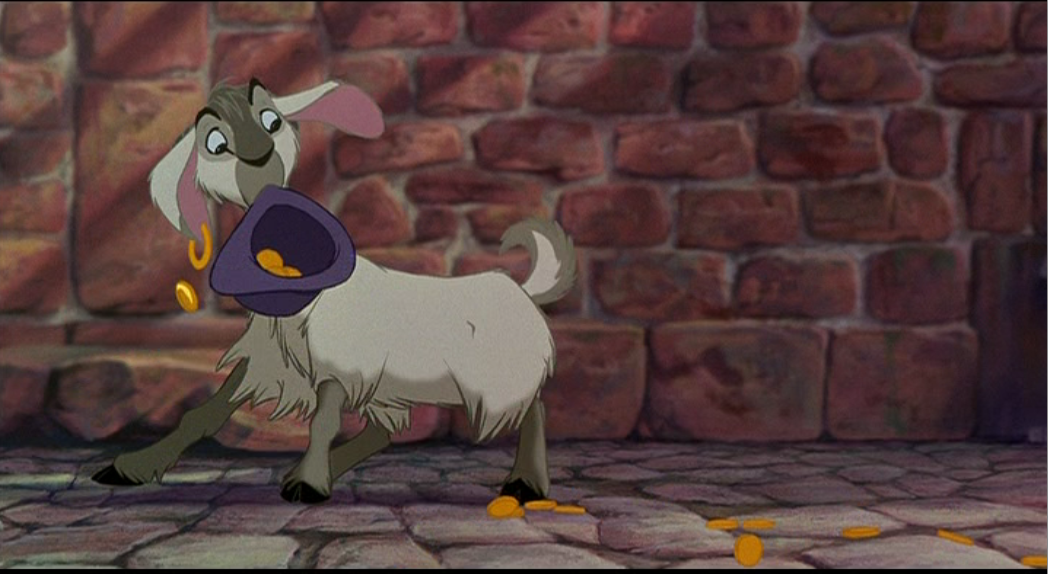
Djali Disney Hunchback of Notre Dame
Djali in the Disney movie is a pretty minor character who doesn’t do anything other than add some charm and humor.
In the book however Djali is pretty essential to the plot. Djali is the prime evidence for why Esmeralda is convicted of being a witch. Goats were considered to be representational of the devil and the tricks innocence tricks Djali performed like spelling and telling the time were thought to be the work of witchcraft by the judges in the book.
Of course, since the plot veers so far the book it doesn’t really matter. Djali’s main function in the movie is a cute sidekick who sells toys to children. To be honest while Djali lose plot relevance I still love Disney Djali.
The Gargoyles
TheGargoyles do not count, they’re not in the book.
Xed out Gargoyles Disney Hunchback of Notre Dame
It really does seems like someone early in production took the cliff notes of Hugo’s book, throw them into a blender, strained, added water and poured out the Disney Plot. Then that got re-written by those people who didn’t read. And the differences in the characters in proof that.
(2026 edit – Kind of mean but the inspiration for the movie was based on a graphic novel by Classics Illustrated. The Hunchback of Notre Dame was Volume #18 publish in March 1944.
The production was up-front about the graphic novel adaptation of the book as the inspiration for this movie. There is also enough similarities between the Disney version and the 1939 to draw a conclusion that it was also used an inspiration for the Disney movie. Especially since in the 1039 version Quasimodo does say his iconic line “Why wasn’t made of stone like three” to a gargoyles which inspiraed a gargoyles as characters in this movie. So I do think the book wasn’t reference all that much HOWEVER “Hellfire” does have a lyric that is pretty much a line from the book so at the very least Stephen Schwartz read the book.)



 in a post about the villain line but since then I have found my copy of it. Oh the fun of this thing.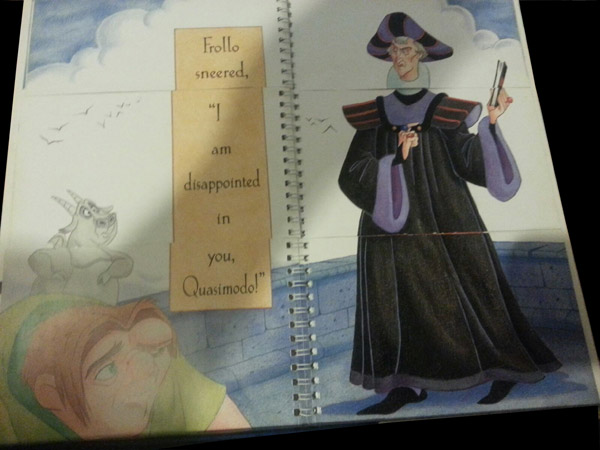
 .
.
 . Making Hugo the first person to adapt the novel. Considering Hugo wrote Quasimodo an aria, I think it’s safe to say that he did imagine him breaking out into song. On a side note, that aria was only piece people liked from the opera. You can listen to it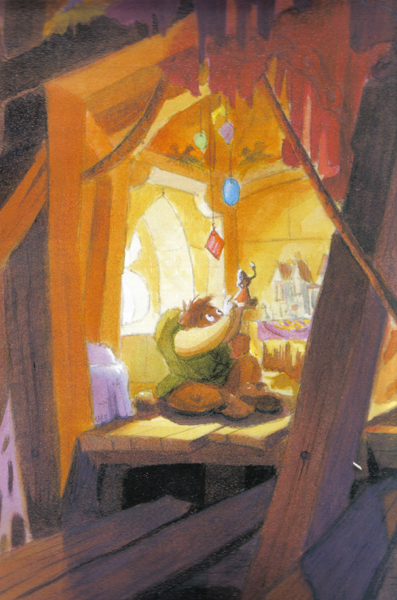
 (France)

 from Amazon France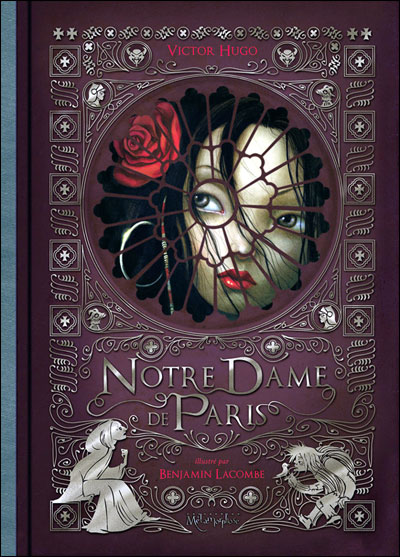


 is different from the
  , there aren’t that many minor differences. However there a few;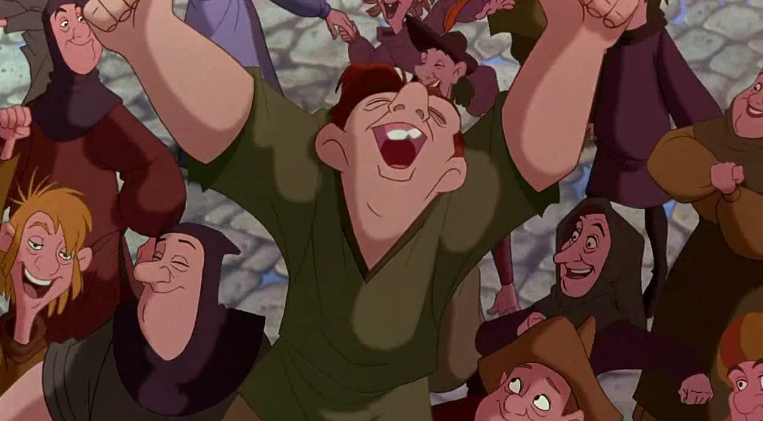


 . Then they got 18 people to collaborate on the story who may not have even seen the Charles Laughton version or read the book. This is why Esmeralda is impressed with Quasimodo’s space and not with Phoebus’ name (in the book she loved his name,) why Quasimodo builds models instead ringing his bells, and why Frollo is more obsessed with fire than Esmeralda.


 . To be honest while Djali lose plot relevance I still love Disney Djali.