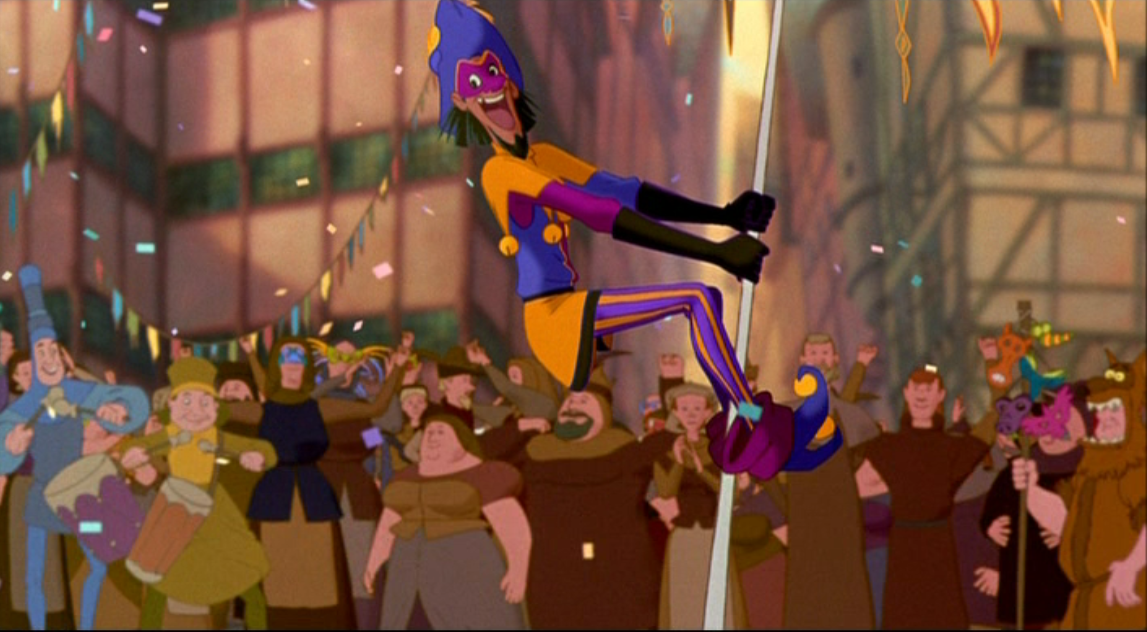
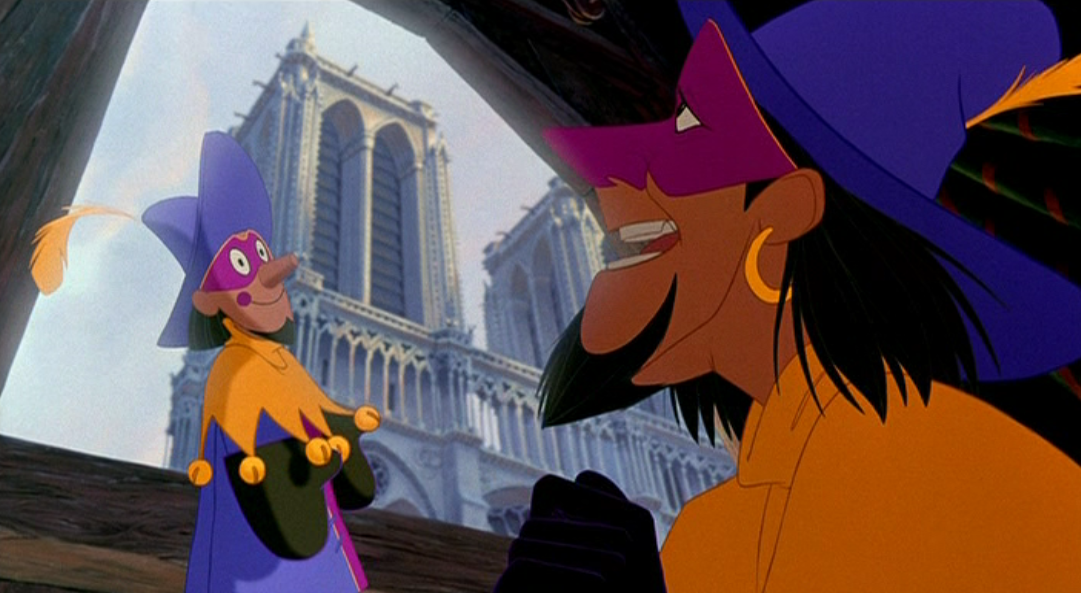
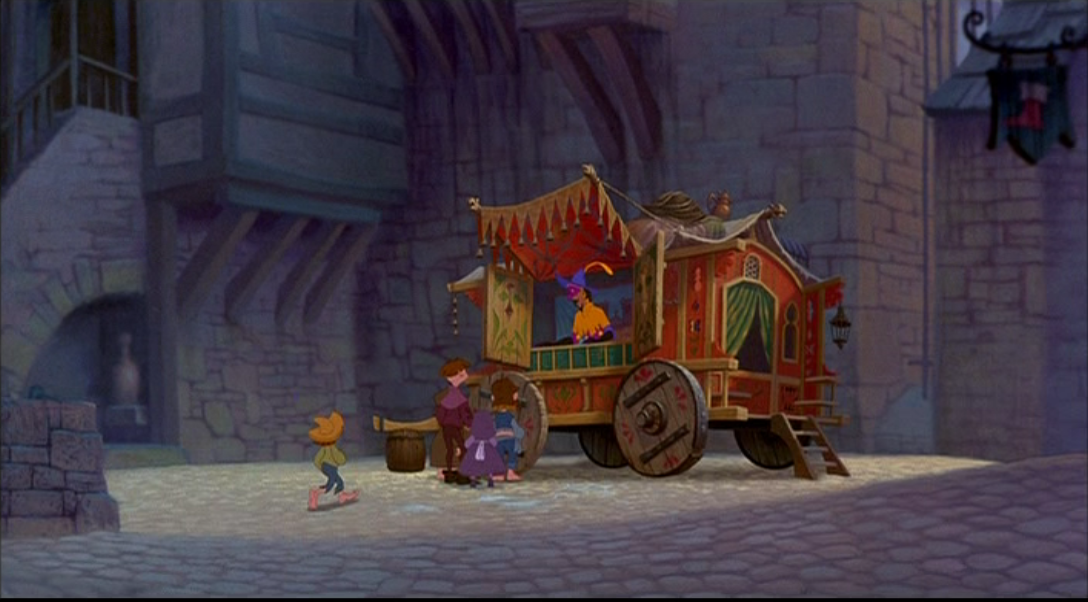
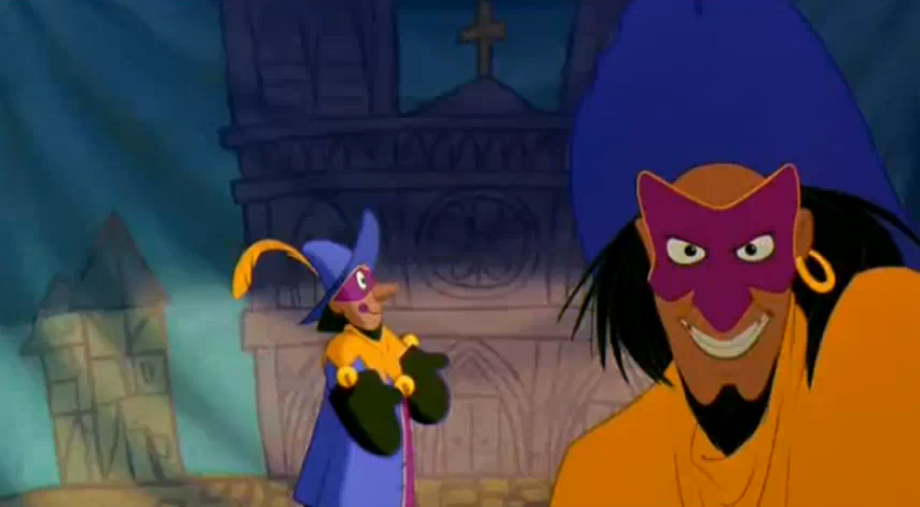
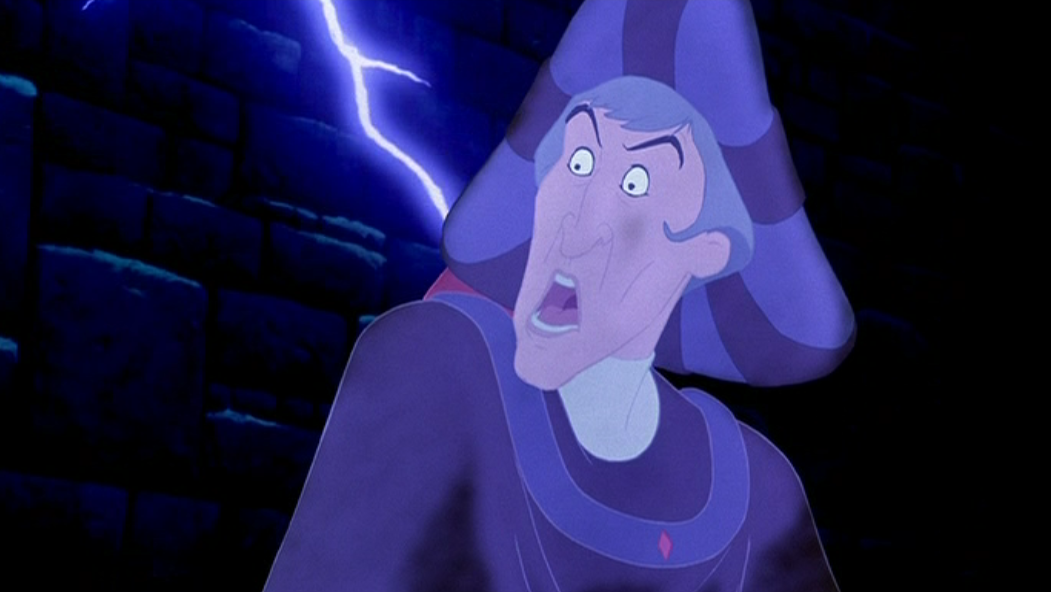
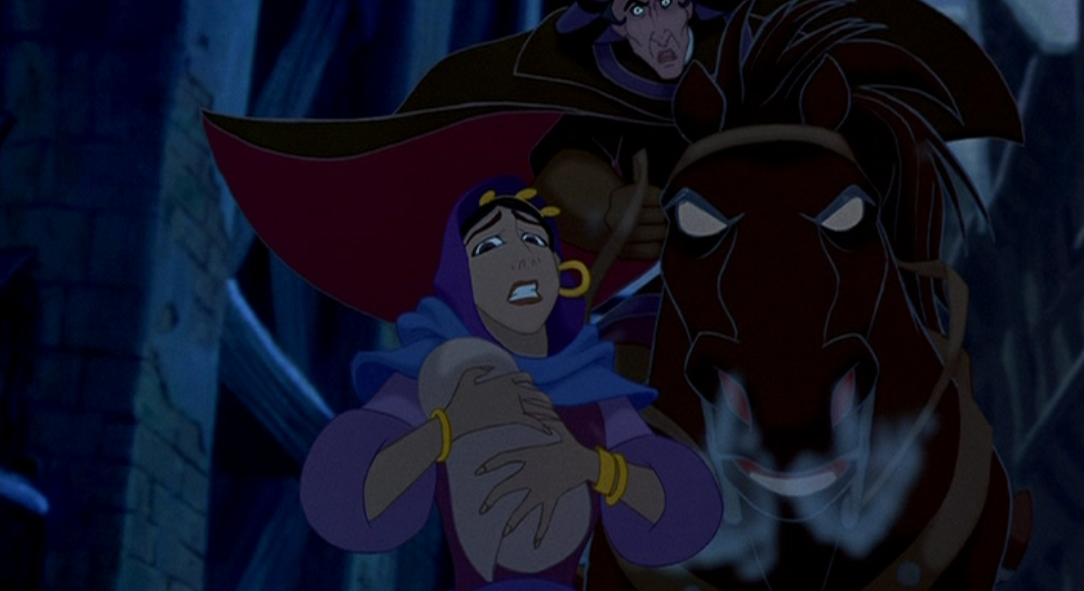
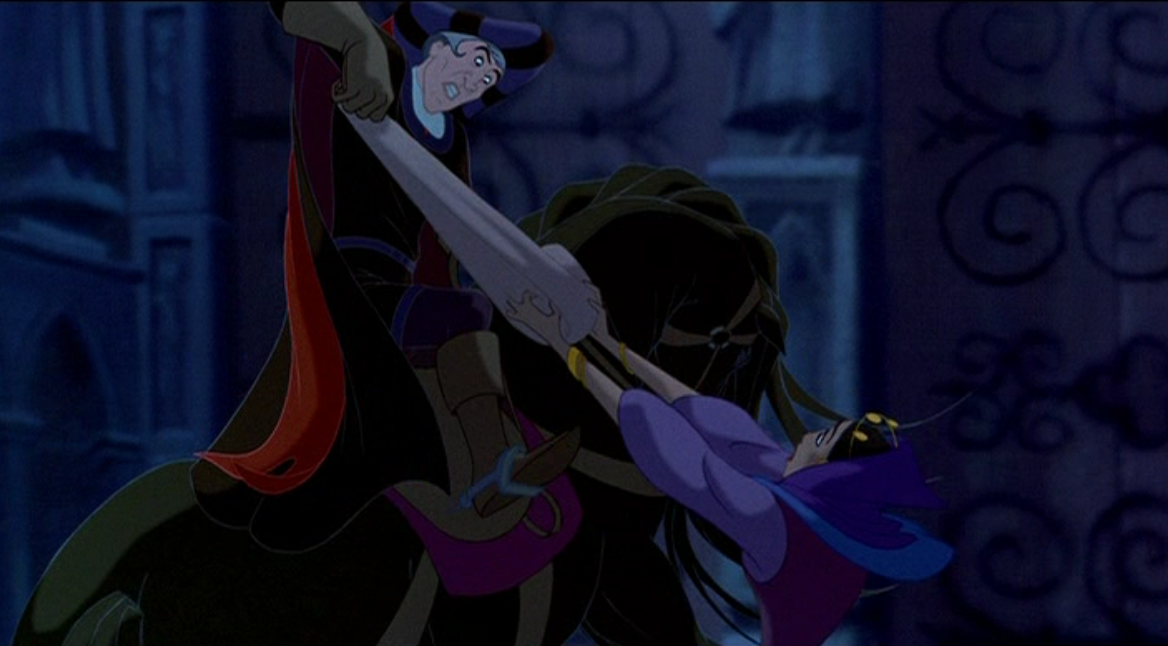
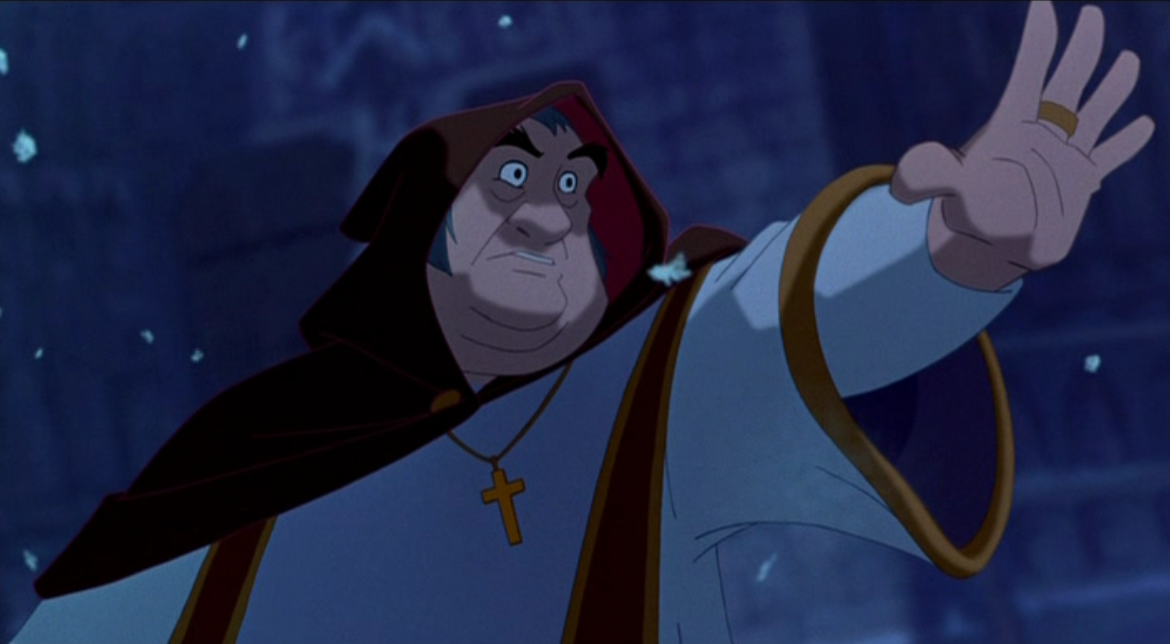
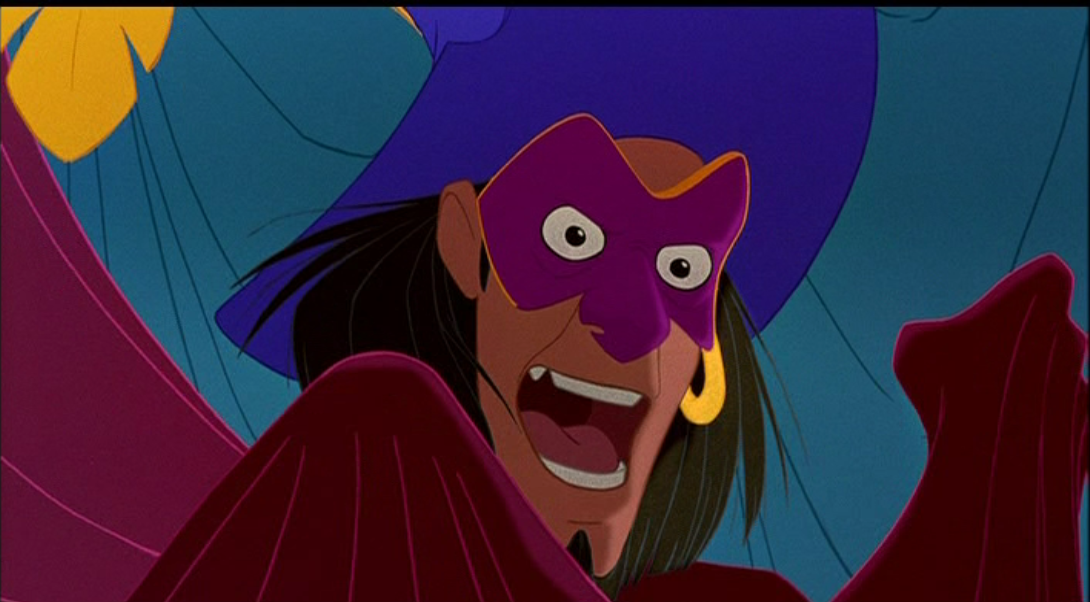
Clopin during the Feast of Fools Disney Hunchback of Notre Dame
Topsy Turvy follows in the path of the big show stopping music numbers of Disney. Other songs like this included (but not limited to) Under the Sea (The Little Mermaid), Be Our Guest (Beauty and the Beast) and A Friend Like Me ( Aladdin). Unlike these, Topsy Turvy is not a show stopper, it doesn’t stop the movie for the sake of a spectacle, but instead Topsy Turvy propels the plot forward.
Clopin Topsy Turvy Disney Hunchback Notre Dame
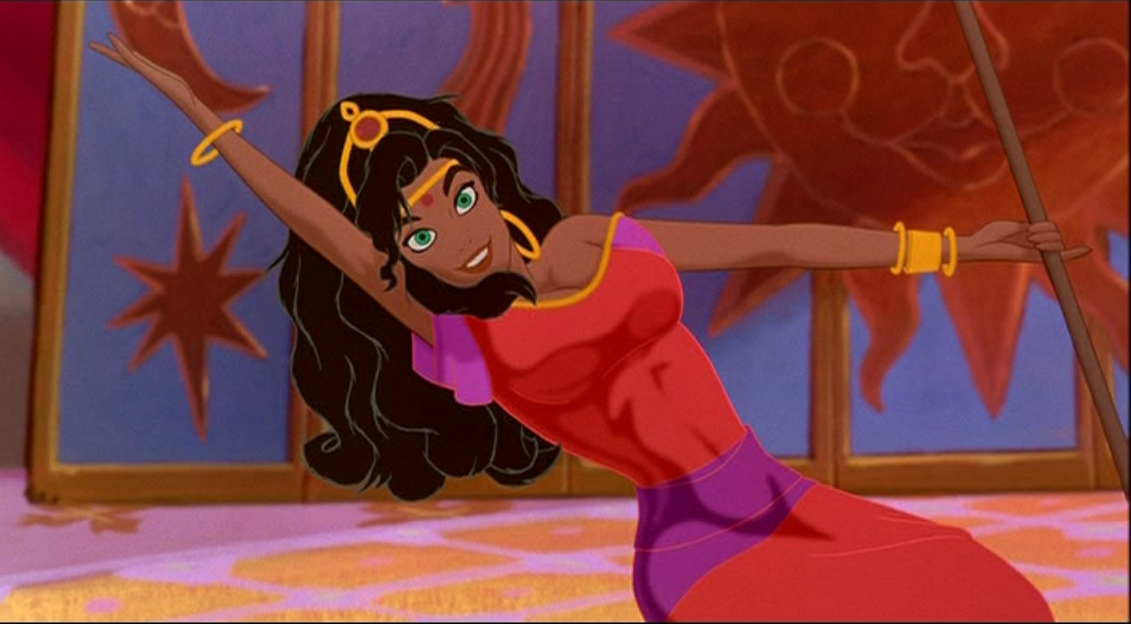
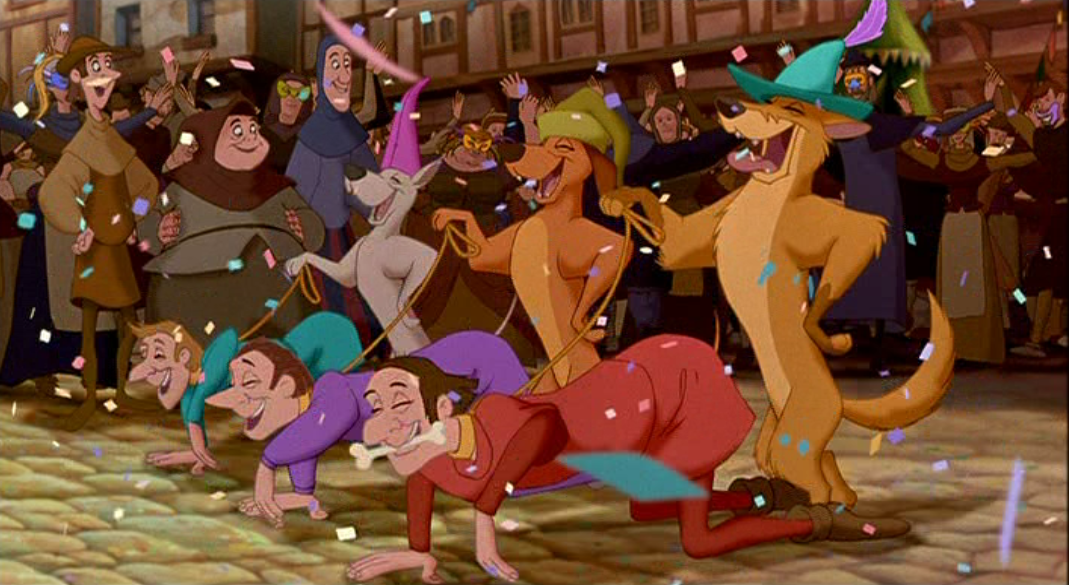
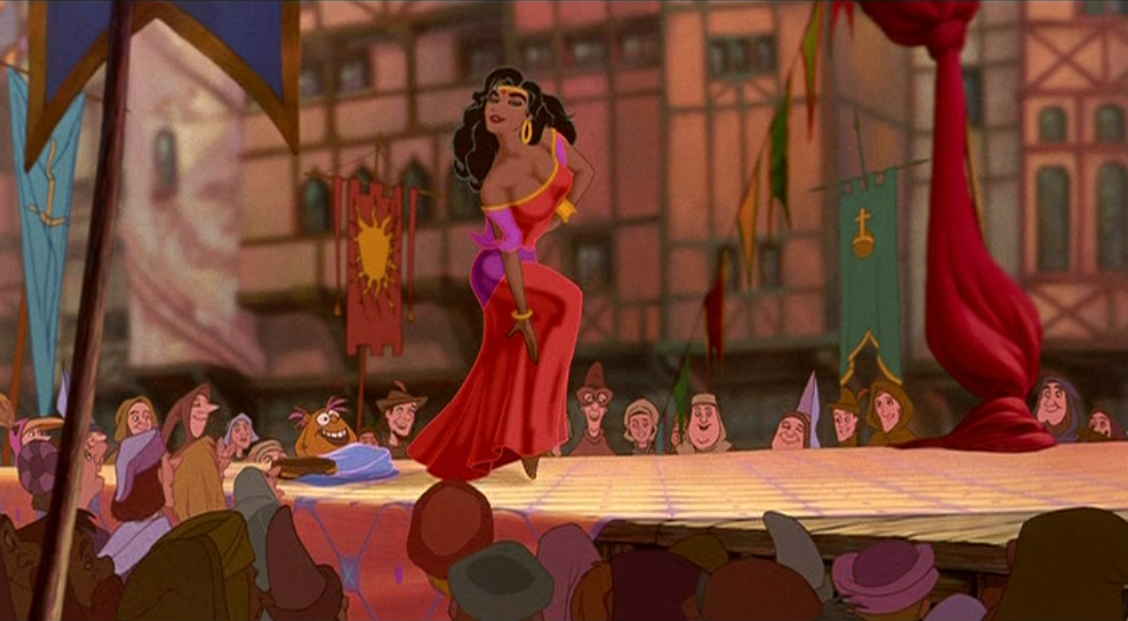
There is a lot that happens within the course of the song with regards to story telling. The festive starts and Quasimodo gets caught in the swing of it, Quasimodo meets Esmeralda, Esmeralda dances getting the attention of Quasimodo, Phoebus and Frollo, the King of Fools contest starts, and Quasimodo is crown the king. There so much that happens that the song is broken up into four part essentially. These parts are well connected and the last portation with Quasimodo as the King of Fools features a keynote change to denote the ending of the song.
Quasimodo Topsy Turvy Disney Hunchback of Notre Dame
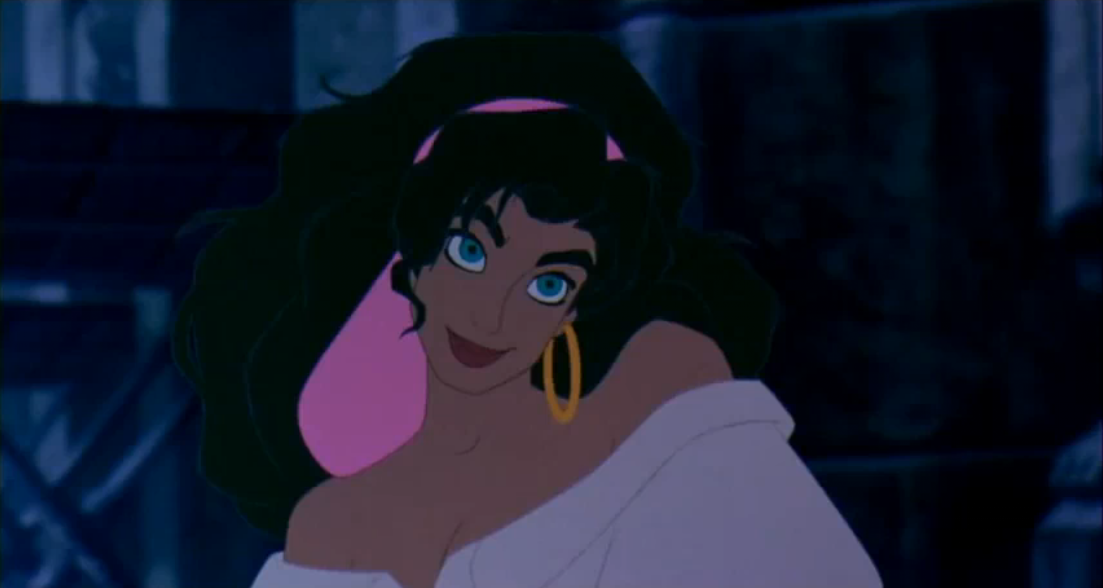
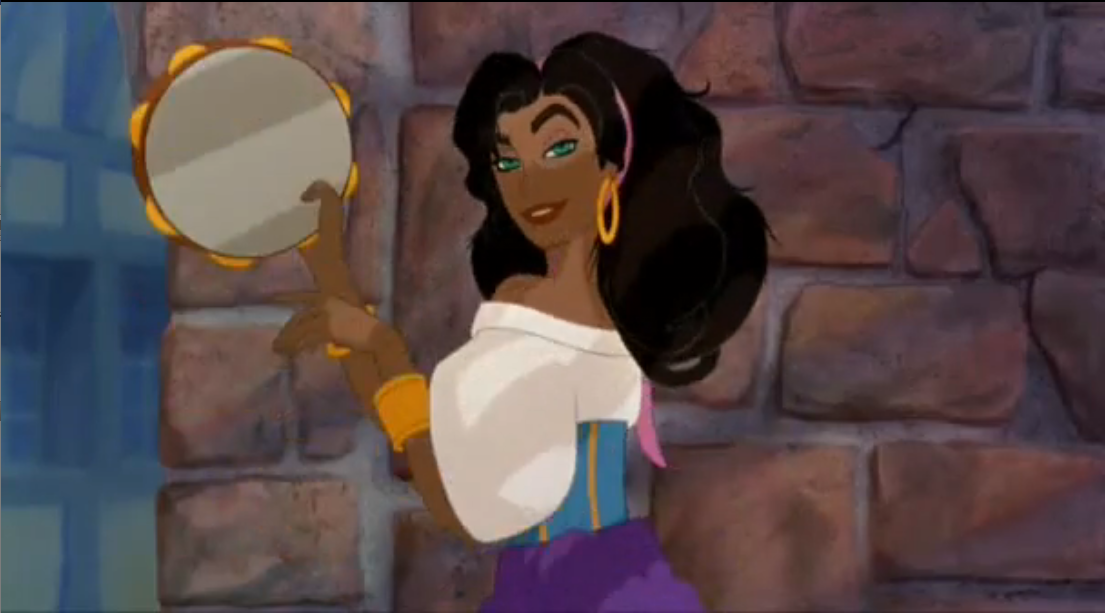
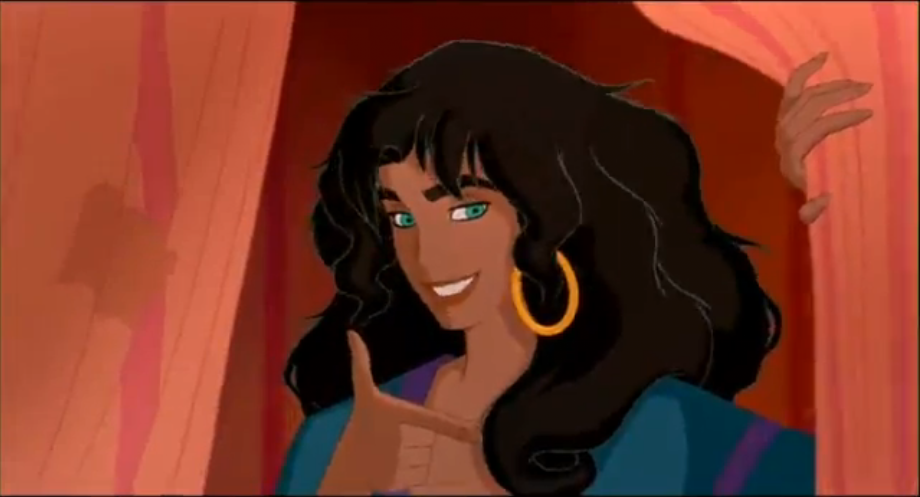
Esmeralda’s Dance Disney Hunchback of Notre Dame
As far as the song is concerned it’s fun. It’s very celebratory, the lyrics are clever and Paul Kandel does well singing it. It’s the only Disney song to use a word meaning prostitutes. The line “Join the bums and thieves and strumpets,” a strumpets is an old fashion word for a prostitute or a harlot. Kind of interesting that the only Disney song to use a word for prostitute would also feature a pole dance.
Reversal Topsy Turvy Disney Hunchback of Notre Dame
Quasimodo reacting to the craziness Topsy Turvy Disney Hunchback of Notre Dame
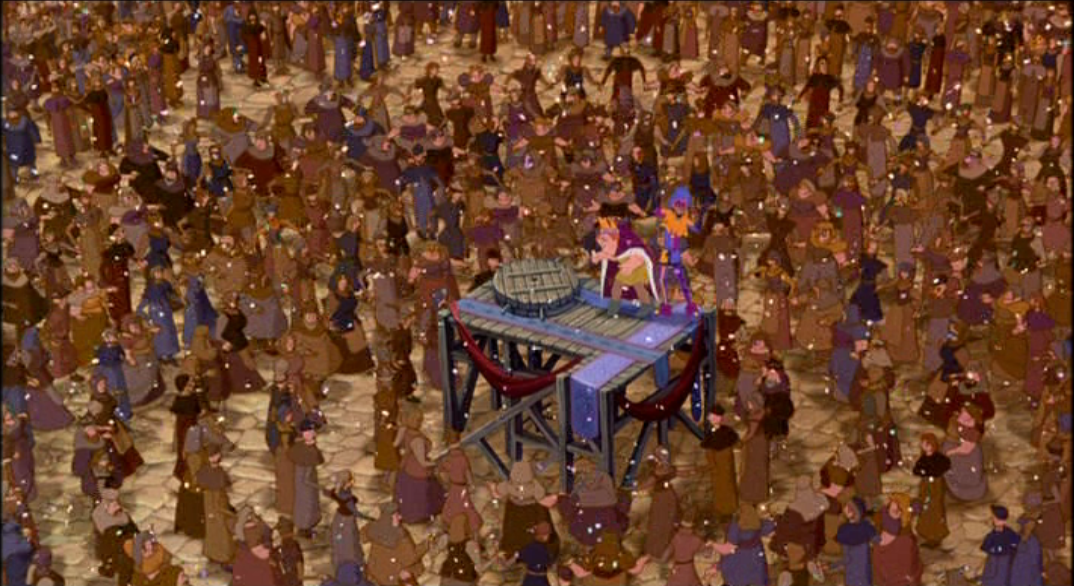
Topsy Turvy CG Crowd Disney Hunchback of Notre Dame
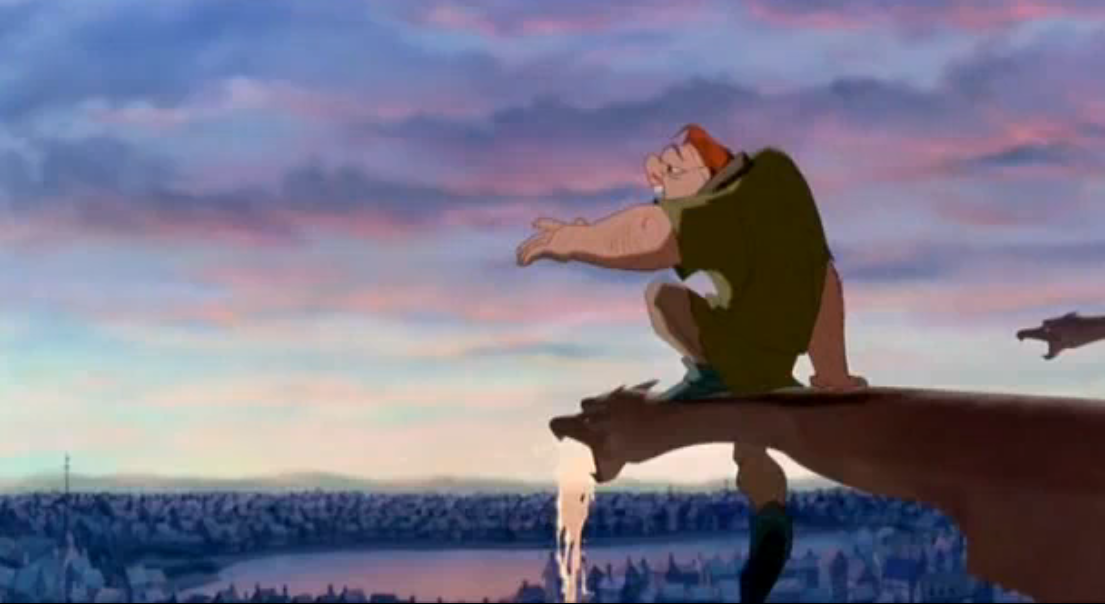
The visuals help make this song memorable. There lots of reversals to help keep the momentum going and the fun up. This visually also give Quasimodo something to react to and since he is seeing all this craziness for the first time, Quasimodo acts as the audience in this song. There is a cast of thousand. The crowds were made using CG and at the time were a feat but the crowd in movie hasn’t aged well.
Clopin Topsy Turvy Disney Hunchback Notre Dame
The song has several reference that harken back to Victor Hugo’s Novel. First the lyrics mention the date a being January 6, which is the day the Feast of Fools took place on. Of course the movie doesn’t seem to take place in winter, then again it could just be unseasonably warm.
Esmeralda’s Dance Disney Hunchback of Notre Dame
Another Reference is Clopin referring to Esmeralda as “La Esmeralda.” Esmeralda in the book is very often referenced to with the article “La.”
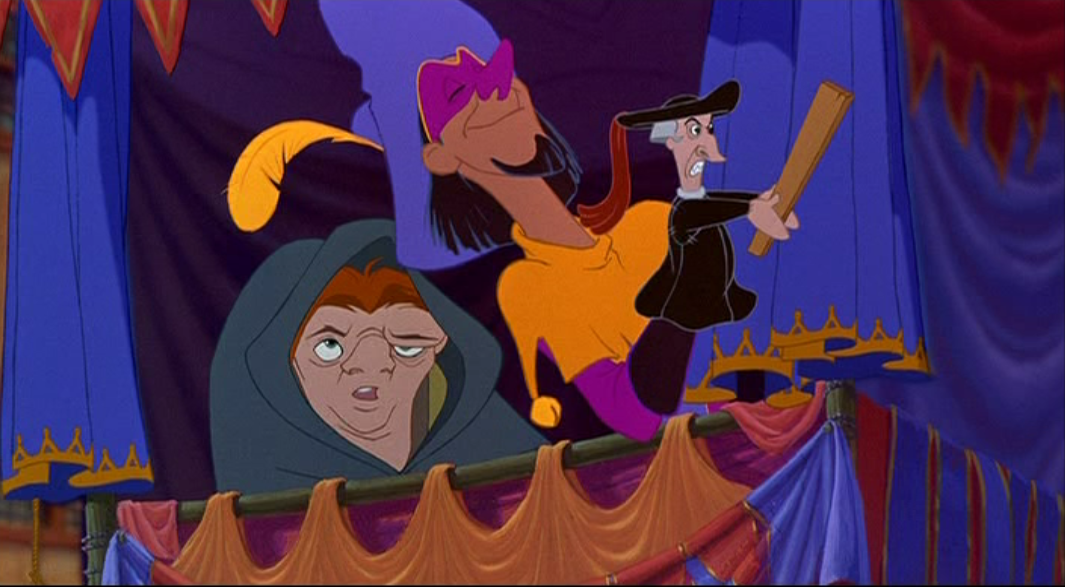
Shock the Priest Topsy Turvy Disney Hunchback of Notre Dame
The last reference and probably the most interesting. Is on the line “shock the priest” Clopin is holding a Frollo puppet. This is a clear reference to Frollo being a priest in the book.
Quasimodo as the King of Fools Topsy Turvy Disney Hunchback of Notre Dame
The song itself is fine, it big and fun but it’s not my favorite. I would position this song in the middle of the ranking however I can understand why many would like it, it’s a fun song that adds to the movie and alludes to the book very appropriately.
Clopin with puppet during the Bells of Notre Dame Disney Hunchback of Notre Dame
“The Bells of Notre Dame”is the opening to the movie.
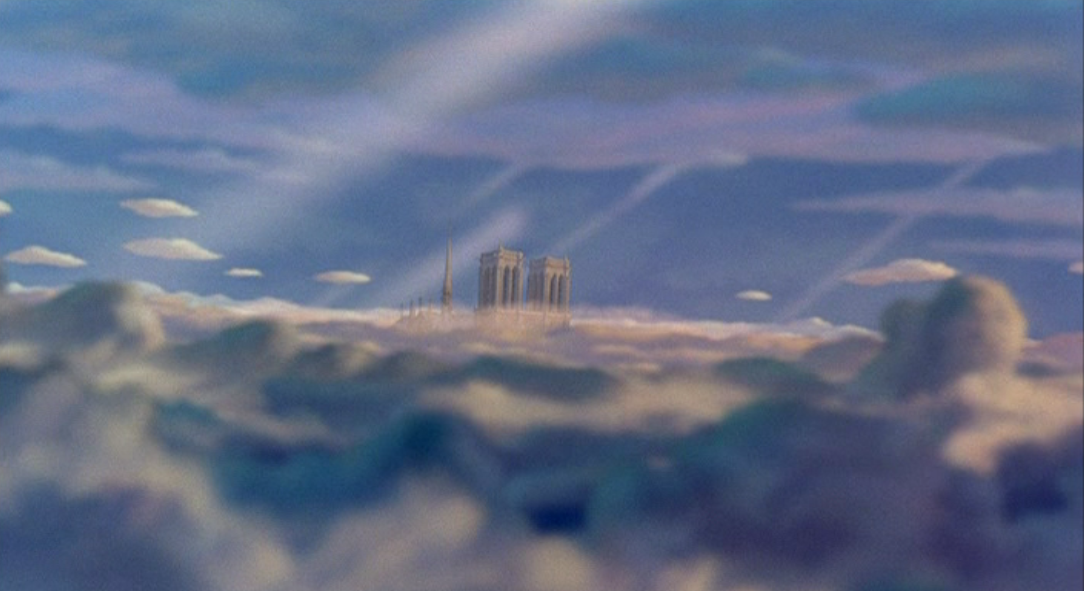
The Opening Shot of Disney’s Hunchback of Notre Dame
Paris during the Bells of Notre Dame Disney Hunchback of Notre Dame
Clopin during the Bells of Notre Dame Disney Hunchback of Notre Dame
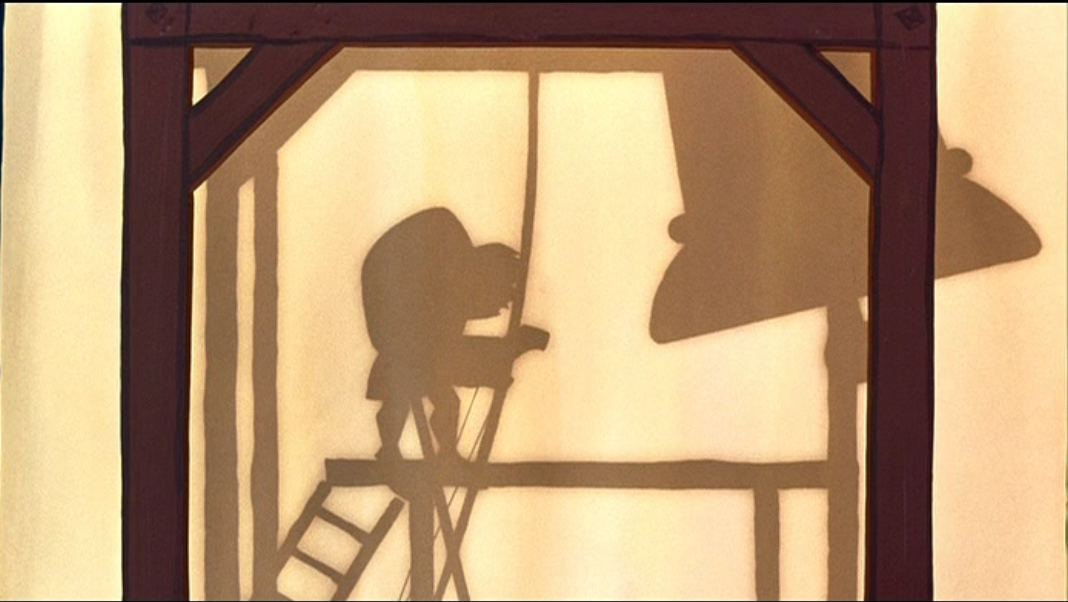
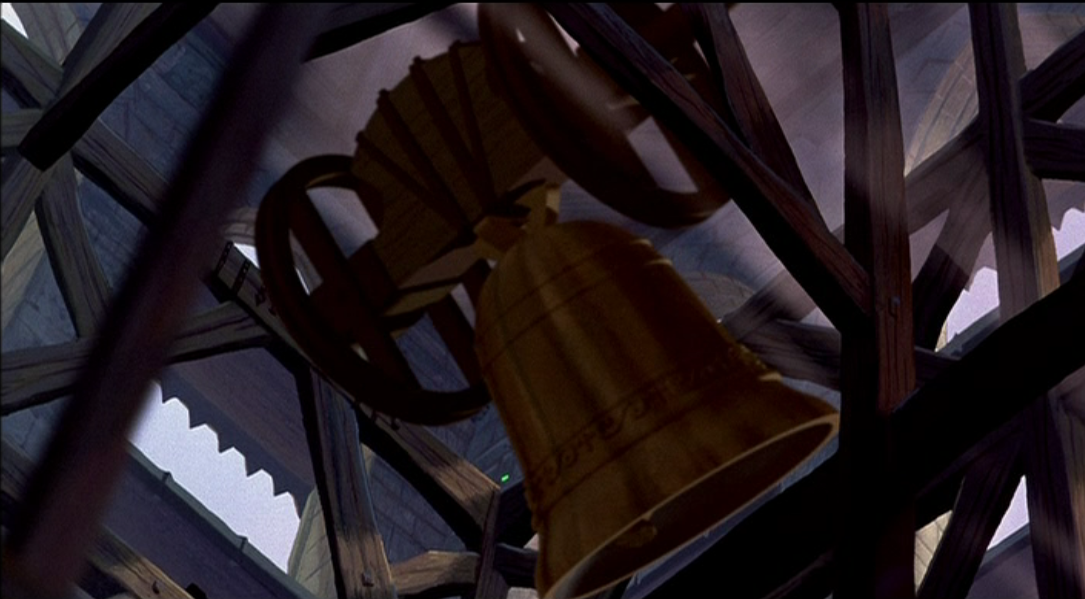
“The Bells of Notre Dame” starts off like The 1939 version, very appropriately with Bells and Latin choir (unlike the 1939 version). The bells grow in intensity till the title screen goes away and the opening scene starts and the melody of the refrain from Hellfire is heard. From this you get a major sense of drama before you see a single person. Then tone turns gentle and quite, then intense, then more intense. This song is like a roller coaster.
Clopin with Puppet Disney Hunchback of Notre Dame
Quasimodo’s Mother Disney Hunchback of Notre Dame
Frollo during the Bells of Notre Dame Disney Hunchback of Notre Dame
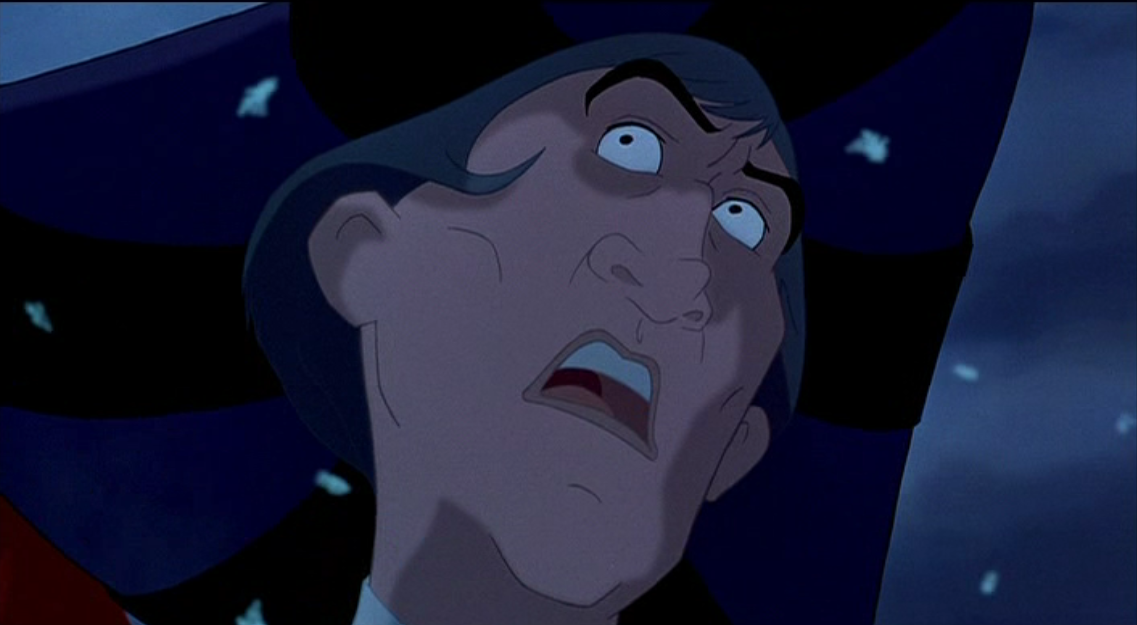
“The Bells of Notre Dame” does a few things for the movie, it introduces three main character, showcases Notre Dame’s importance as the setting of the film and explains the relationship between Quasimodo and Frollo. Disney had a bit of the problem with nature of Victor Hugo’s Hunchback of Notre Dame, Frollo isn’t the colossal jerk he is in the Book.
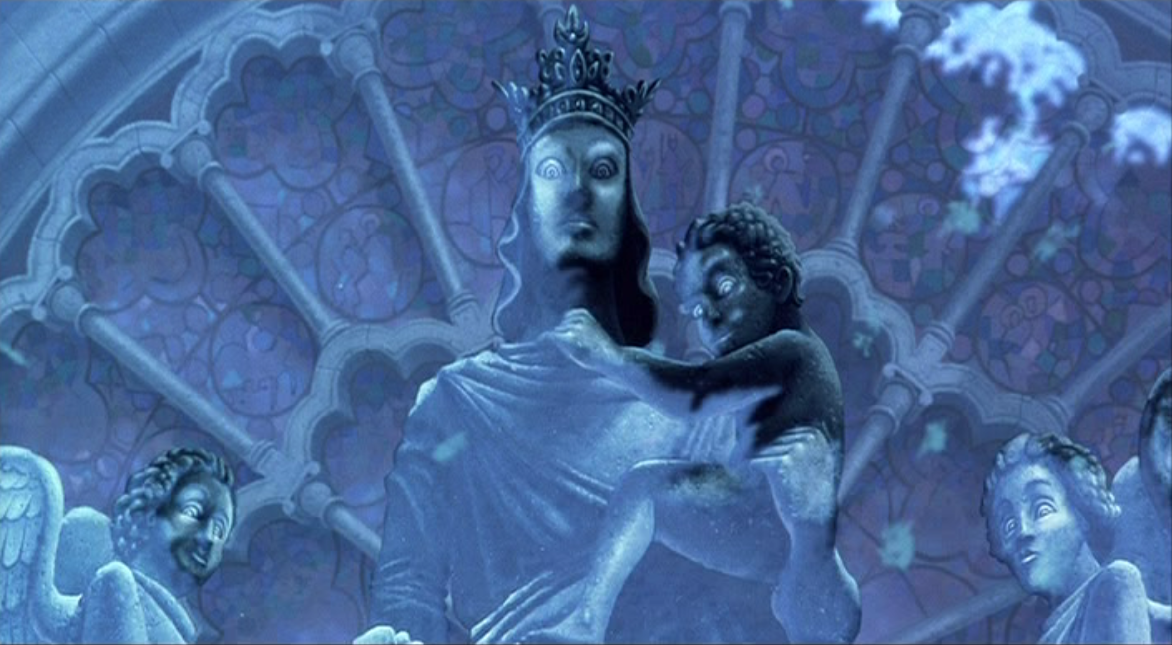
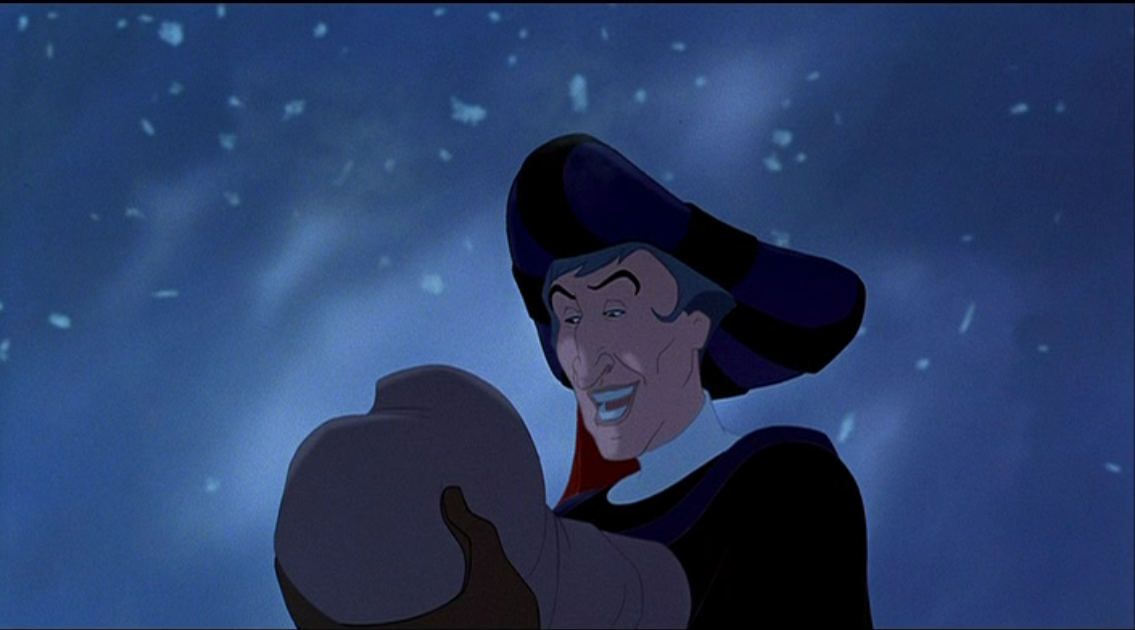
In the Book Frollo takes Quasimodo in after being moved by empathy for him, not by getting scared by a Statue and the Archdeacon because he murder an innocent women in front of the most important spiritual centers in France and fears hell that takes the baby of his victim as an act of contrition. But Disney villains are never ones for charitable act so Frollo is co-forced into looking after Quasimodo. “The Bells of Notre Dame” also presents the viewers with the moral of the story, “what makes a monster and what makes a man.”
Frollo chases Quasimodo’s mother during The Bells of Notre Dame Disney Hunchback of Notre Dame
Quasimodo’s Mother Disney Hunchback of Notre Dame
The Murder of Quasimodo’s Mother Disney Hunchback of Notre Dame
The Song also sets up the tone of the movie. Disney boosts that Hunchback is their darkest film, and yes it is, but it is after all a Disney film and there is a lot of “humor” in it. “The Bells of Notre Dame” present both facets, the humor, light-hearted Disney Flair and the darker aspects. The dark aspect are easy to see, the backstory, Frollo kills a women, tries to kill a baby and saddled into raising it. The humor comes from Clopin regaling the children with his puppet (love the Clopin Puppet). But even Clopin here is delighting in the dark dramatics of the story.
Frollo seeing Quasimodo for the 1st time Disney Hunchback of Notre Dame
The Well Disney Hunchback of Notre Dame
Archdeacon Disney Hunchback of Notre Dame
But is the song itself successful? Yes, yes it. I would so that it’s one of the best song in the movie right up there with “Hellfire.” It’s dramatic, epic, and grand. Unlike “Hellfire” which has a benefits of being more focused, Bells of Notre Dame has to fulfill it’s purpose and has a lot of ground to cover musically. It’s starts with a Latin choir, goes into a more gentle tone and the gets darker as the Romani are introduced along with Frollo, The Choir returns but more intense as Frollo chases Quasimodo’s mother. There are so many vignettes in this song that it could have been a mess but it’s handle musically very well and the music intensifies the dramatics of the action.
Frollo in fear for his soul during the Bells of Notre Dame Disney Hunchback of Notre Dame
Notre Dame Sees all Disney Hunchback of Notre Dame
Frollo and Baby Quasimodo during the Bells of Notre Dame Disney Hunch back of Notre Dame
Originally this wasn’t even going to be a song, it was going to be spoken dialogue. I’m glad they made it into a song because it’s one of the better songs in the movie. It was the perfect way for the movie to start. “The Bells of Notre Dame” perfectly set-up the tone, setting, characters, motivation, drama, and some light humor of the movie.
Clopin during the Bells of Notre Dame Disney Hunchback of Notre Dame
A Puppet of Quasimodo during the Bells of Notre Dame Disney Hunchback of notre dame
Bells Disney Hunchback of Notre Dame
I would say it’s one the best Disney’s openings. Seriously, Clopin’s crescendo at the end is amazing, it’s probably the single greatest bit of singing in the movie, maybe even Disney History.
I just want to take a moment and get this out there.
Tim Burton
Quasimodo Rescues Esmeralda Illustration
Josh Brolin
A few months ago it was announced that Tim Burton was rumored to be directing a new adaptaion of The Hunchback of Notre Dame slated for 2013 and attach to this is actor Josh Brolin of such movies as Jonah Hex and True Grit as Quasimodo. I was reading some of comments people left on the websites that announced this and mostly they were discussing how Johnny Depp was not playing the leading character in a Tim Burton movie. Unusual? Yes but does this mean that Johnny Depp will not be in the film?
Johnny Depp
My guess he will. Let’s face it Quasimodo not exactly a Depp role, sure he played Ed Scissorhand but I can’t envision Depp as Quasimodo. However I could see him as Gringoire. Gringoire is a poet and sometimes he used as a story-teller (as he more less is the voice for the writer) and more often than not he has been paired up with Esmeralda. I would predict that Johnny Depp will play Gringoire, I can see him as Frollo or Phoebus, however he could play Clopin. For Depp to Play Clopin it would depend of the direction of the film. Clopin is not actually a gypsy in the book but in the film Clopin takes on all of the leaders of the Court of Miracles, so sometimes he’s a Gypsy and sometimes he’s not. However I could see him as Clopin or Gringoire. Though I would lean towards Gringoire.
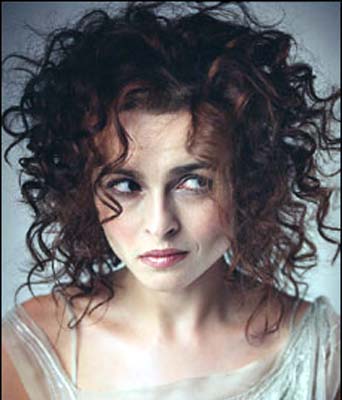
Helena Bonham Carter
As for Helena Bonham Carter (another staple in a Burton movies), there is a lack of females in Hunchback of Notre Dame and it’s up to the film’s direction if they’ll have more than just Esmeralda. I wouldn’t cast Carter as Esmeralda or Fleur de Lys ( if Fleur de Lys is in this adaptation). Pending on film direction I would cast her as Sister Gudule, Esmeralda’s mother. However if the film doesn’t go for Esmeralda’s back story which I’ve only ever seen twice in adaptations, Carter will have some cameo of some sort maybe La Falourdel (the women who house Phoebus rents a room from in order to seduce Esmeralda). In case I would predict her to be in the film is some capacity.
I hope they get someone who is more akin to Esmeralda in the book; someone who is not overtly sexy and youthful, that would be refreshing to see.
Anyway these are all rumors and predictions, but I would love to hear what you think on this upcoming movie.
Ah, the voice acting in Disney’s Hunchback of Notre Dame. Some of it’s great, some it is just ok and some of the casting is off, which seems to weaken the believability of the characters. This is more or less in the order of rank, as I see it or hear it.. yeah.. I know lame joke.
Tony Jay as Judge Claude Frollo
Tony Jay
The highlight of the voices in the movie is Tony Jay’s rendition of Judge Claude Frollo. Jay’s cold sounding baritone mixed with his British accent makes for the perfect bad guy voice. He gives Frollo’s voice an air calm control that at any second could explode into fevered anger. Also his voice is seductive, you can believe this guy is a charmer and yet he speaks with command and authority. Jay’s voice helps make Frollo a more interesting character.
Jay had been a veteran Disney voice actor and voice actor in general. He’s been in a number of Disney related films and television shows as well many other non disney films, television and recordings of broadway shows. On his IMDB page he has 150 credits but I think he most known for Frollo mainly because Frollo is a horrible person and his voice accentuates brilliantly.
Tony Jay was nominated for an Annie Award for Outstanding Achievement in Voice Acting.
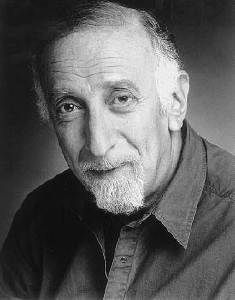
Paul Kandel as Clopin
Paul Kandel
Paul Kandel voiced Clopin and is a Broadway performer. He’s probably the best singer in the film (the crescendo at the end of Bells of Notre Dame gets me every single time) and that’s probably why he ended up with the most songs in the movie. In fact Clopin sings more than he actually speaks. Kandel gives Clopin a sense of fun and whimsy but he also gives him a flair for the dramatics which is a boon for the introductory scene since it’s not funny.
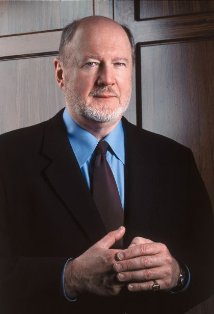
David Ogden Stiers as Archdeacon
David Ogden Stiers
David Ogden Stiers voiced the Archdeacon. Stiers like Jay is a veteran voice actor and has been in many major Disney movies. He’s also primarily a television actor. Stiers runs the gambit of tones with the Archdeacon’s voice; tenderness, command, authority, concern and a little amusement (the Archdeacon sounded a little amused when he thinking about Esmeralda’s merry chase). Just because the Archdeacon is by all account a glorified extra Stiers’ voice helps makes the character more interesting.
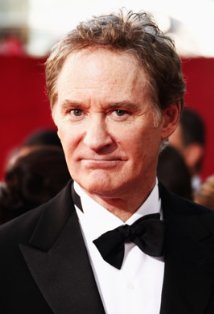
Kevin Kline as Captain Phoebus
Kevin Kline
Kevin Kline voiced Phoebus. Kline does well as Phoebus but I think he falls short of Jay and Kandel because I mean really, Phoebus isn’t a hard role to play. Phoebus has a dry wit but so Kline, I mean Kline is practically playing himself. I give Kline credit, he made Phoebus funnier than probably was originally intended which makes him more interesting as character. Because without the humor would Phoebus have been memorable? My guess is no. Kline is also partly responsible for Achilles’ name. He insistent that horse have a name, so they gave the Phoebus’ horse a name at Kline’s insistent.
Fun Fact about Kline’s process – to get into the character of playing a knight, Kline held a sword in hand during recording sessions. He even ruined some recordings because he would hit the microphone (accidently, I’m sure.)
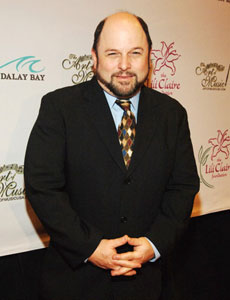
Jason Alexander as Hugo
Jason Alexander
Jason Alexander voiced Hugo. As much as I dislike the gargoyles, I think the voice acting is fine. Jason Alexander is best known as George Costanza on Seinfeld. George is uptight and neurotic, the total opposite of Hugo. Hugo is fun-loving and laid back. I think Alexander does very well in the role. But again, is a fun-loving partier a demanding role? No, not really.
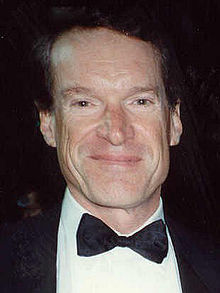
Charles Kimbrough as Victor
Charles Kimbrough
Charles Kimbrough voiced Victor. Kimbrough has been in many types of media; film, TV and voice acting. Kimbrough does well enough as the prim, more serious-minded Victor, but it’s hard to lay out Victor’s personality compare to Hugo and Laverne. So it’s hard to identify how well Kimbrough did as Victor.
Mary Wickes as Laverne
Mary Wickes
Mary Wickes voiced Laverne. Later in Wickes’ career she played cranky old ladies. Two of the movies I remember her in were Little Women (Aunt March) and Sister Act (Sister Mary Lazarus), both characters are tell-it-like-it-is, cranky old ladies much like Laverne. So while she does well in the role she definitely playing her type of role.
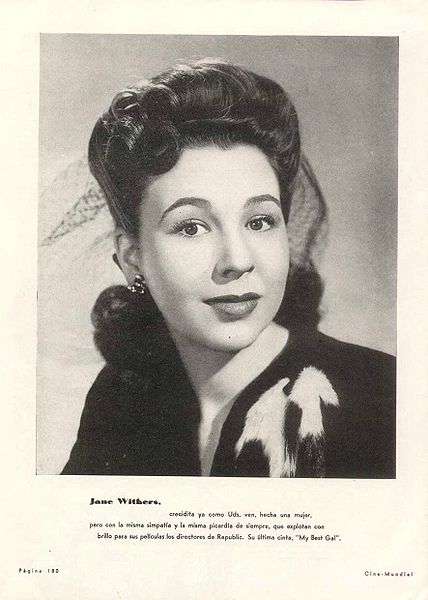
Jane Withers as Laverne (recast)
Jane Withers
I want to mention Jane Withers briefly. Mary Wickes died as the film was being recorded and so Jane Withers stepped in to finish the recording and took over the role of Laverne. There are some lines where Wickes started and Withers finished, which is testament to Withers; acting to able to sound almost identical to Wickes.
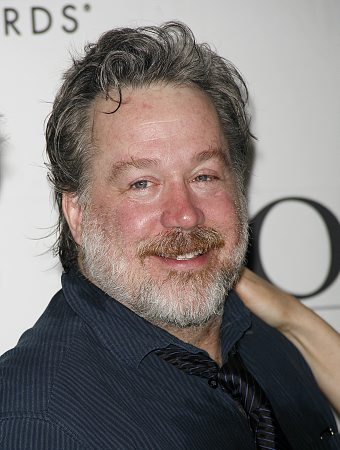
Tom Hulce as Quasimodo
Tom Hulce
Tom Hulce voiced of Quasimodo. Tom Hulce is most known for his role in Amadeus Mozart. I do not find any fault with Hulce’s acting, I think he does a good job giving Quasimodo tenderness, gentleness and a bit of pitiable emo-ness. I also think Hulce does well exhibiting both Quasimodo’s natural disposition and in contrast to his attitude when he’s with Frollo.
So Why is Hulce’s performance second to the last on this Blog post? Well that is because I wonder what the directors were smoking in making Quasimodo a school boy that’s gentle and sweet. Quasimodo is suppose to be gentle but only to Esmeralda. He’s not suppose have a school boy. I can understand why Disney did this and I understand why Hulce’s voice is good for this type of role but just because I can understand it doesn’t mean I have to condone it. Honestly they made Quasimodo into a Disney Princess. Hulce has a clear voice which is a commonality to the Disney Princess trope. Think about, Quasimodo is a Disney princess, he just a male and not very pretty.
2026 Edit – After years of reflection and change of heart, I get the idea behind a sweet voiced Quasimodo but in 2011 I was stuck on the adherence to the book as a gold standard. So now I do condone the concept and concede that Hulce was fine in the role as the Disney movie depicted the character.
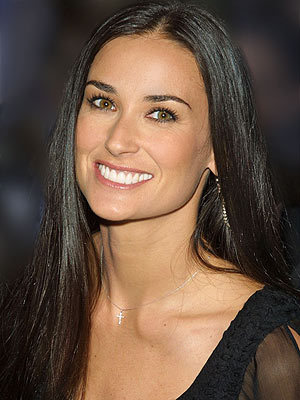
Demi Moore as Esmeralda
Demi Moore
Demi Moore voiced of Esmeralda. Like Quasimodo, I think casting was way off. I get that they wanted something different. The directors liked Moore’s husky and rough tone of voice and they liked that she also had a tenderness to it, but Moore ages the character. It’s weird looking at the concept art, how youthful Esmeralda started and how mature she looks/acts in the movie. I understand that the decision to cast Moore was intentional and as part the process of animation is that Esmeralda took on Moore’s looks and mannerism but I don’t think the pay off was good in the long run.
I think Esmeralda is too much like Moore and effectively Moore was playing herself (or at the most her type-cast role) so she didn’t exactly have to exert her acting prowess. Also I think Moore got the role due to sex appeal and popularity. And point Deductions for being the only one of the cast not able to sing her character’s song, though if can’t sing than she can’t sing, but they could have just had Heidi Mollenhauer do the role in it entity, she is an singer/actress after all. They fact they they didn’t just mean that Moore was cast for her popularity and appeal.
2026 Edit- Again it’s been years since this blog post was written and I have long since changed my mind on The Disney version. Disney’s Esmeralda is vastly different from the book and a lot of the differences comes from Moore being an inspiration for the character. So I’m a still on fence about the voice choice. But Moore does add a sense maturity and warmth that work for the story of the Disney version so I think she does a good job with the acting of the role.
Shout Outs/Kudos
Gary Trousdale
Shout out/Kudos to GaryTrousdale voice of Djali (that not a bleat) and the OldHeretic.
Corey Burton
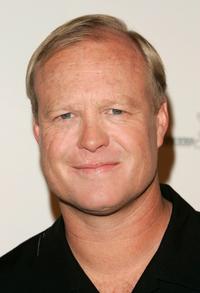
Bill Fagerbakke
Shout out/Kudos to Corey Burtonand BillFagerbakke, Brutish and OafishGuardsthese two made those characters hilarious.
I’ve already mention Clopin’s over all look in his character analysis, So to Recap
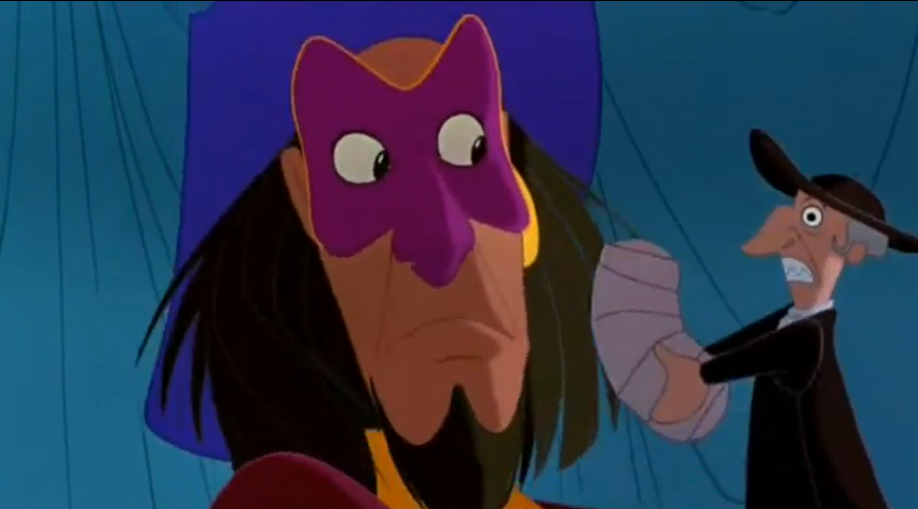
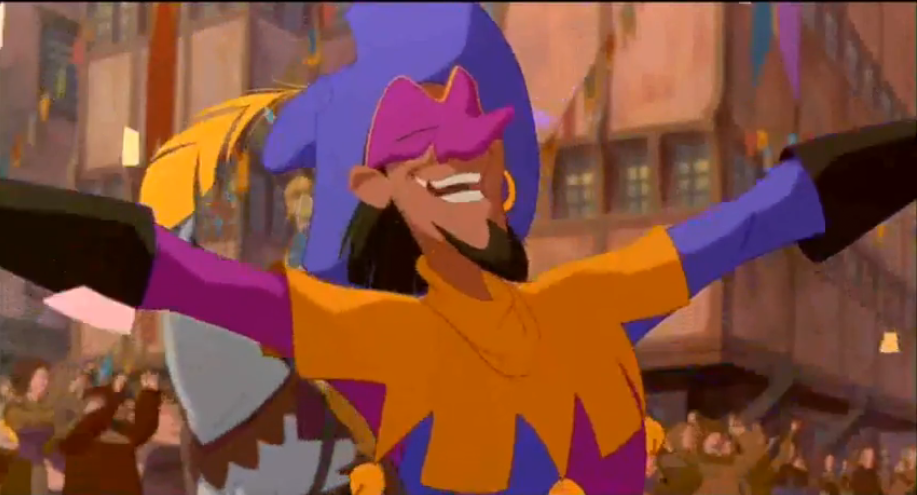
“Clopin has looks very similar to Kuzco from the Emperor’s New Groove. Has a long pointy long face, straight long black hair, pointy nose, and thin. Clopin is older and has a few age lines, balding (a little bit) a beard, bushy eye brows and some missing teeth. Clopin gets two costumes, a performance look and a casual look. Unlike Esmeralda he is seen more in this performance outfit. It Harlequin that is purple and yellow with bells on his neck piece, a purple mask, and long back gloves. He has wears a purple hat with a big yellow feather. The hat is akin to the one that Thomas Mitchell wore in the 1939 version. Clopin casual costume looks similar to this performance garb but it all purple and less festive. He also wears the same hat. Like Esmeralda and Djali, Clopin also wears a single golden hoop earring. He cosplays (costume play) as Frollo. He also makes awesome expressions.”
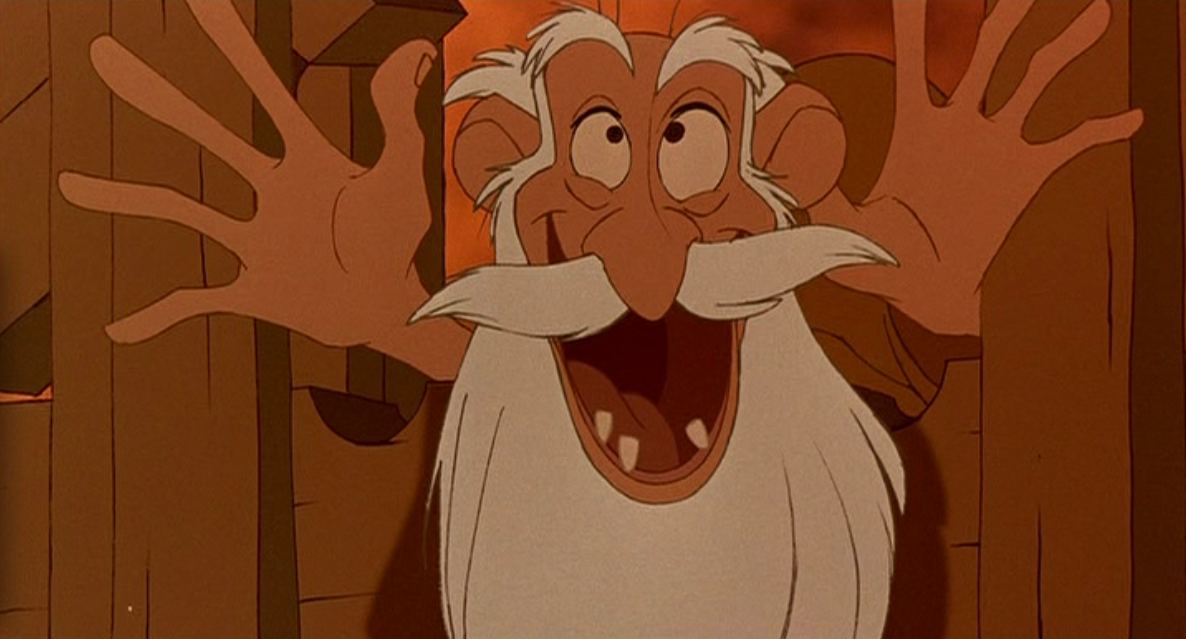
Clopin noticing Quasimodo during the Feast of Fools Disney Hunchback of Notre Dame
Kuzco from The Emperor’s new Groove Disney
Clopin Disney Hunchback of Notre Dame
Clopin’s look is kinda a model look of certain Disney characters. Much like how Disney villains can fall into two basic groups, thin and big, the good guys have their models too. For instance the fathers in Disney movies are usually dumpy old men.
Lumiere and Babette Disney Beauty and the Beast
Clopin at the end Disney Hunchback of Notre Dame
The point I’m getting at is Clopin is reminiscent to the look of other characters like him; the larger-than life sidekick.
Typically this character is not human, Sebastian, Lumiere ( through is human spends the bulk of the movie as a candlestick), Genie, Timon, Mushu etc, etc . However take a look at Lumiere as human, and you can see the resembles to Clopin. Lumiere has a long face, pointy nose, and thin. Of course Clopin is a little more rough around the edges but Lumiere works in a castle and Clopin is a busker.
But they are both entertainer, what was Lumiere’s job exactly?
Clopin with Frollo Puppet Disney Hunchback of Notre Dame
Lumiere Disney Beauty and the Beast
One could say that Kuzco as man character doesn’t fall into this category and Clopin similarity to Lumiere is a coincidence. I would point out that Kuzco is pretty over the top and spend most of his time as Llama so I think he can fit into the category and he a slight exception.
Clopin Disney Hunchback Notre Dame
So Clopin’s look follows a grand tradition of Disney character design which places character into conventional models which aids them in their quest for more money, by making the same old stuff. Actually Disney can you go back to the same old stuff, I miss it.
Concept Art of Clopin Disney Hunchback of Notre Dame
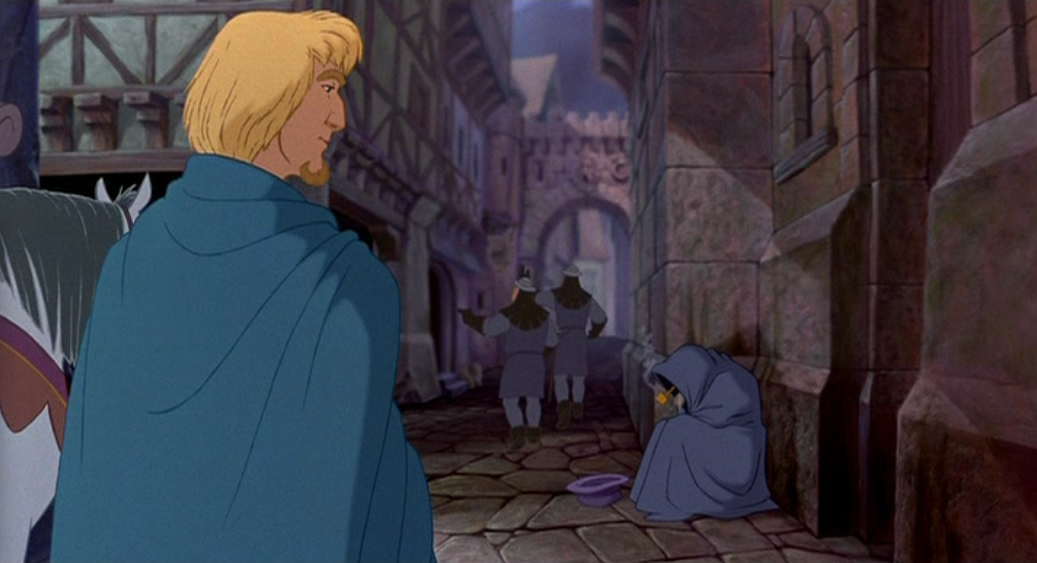
Phoebus asking for Esmeralda’s name Disney Hunchback of Notre Dame
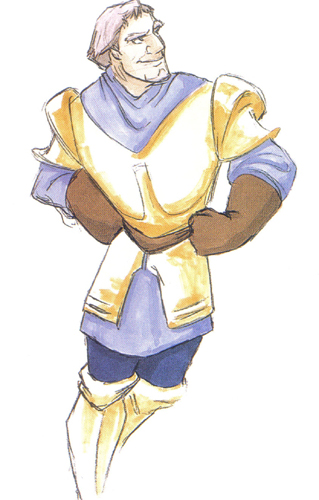
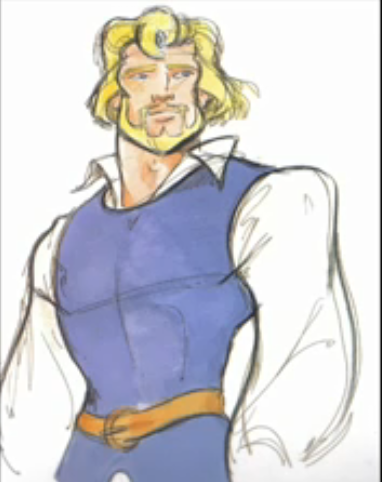
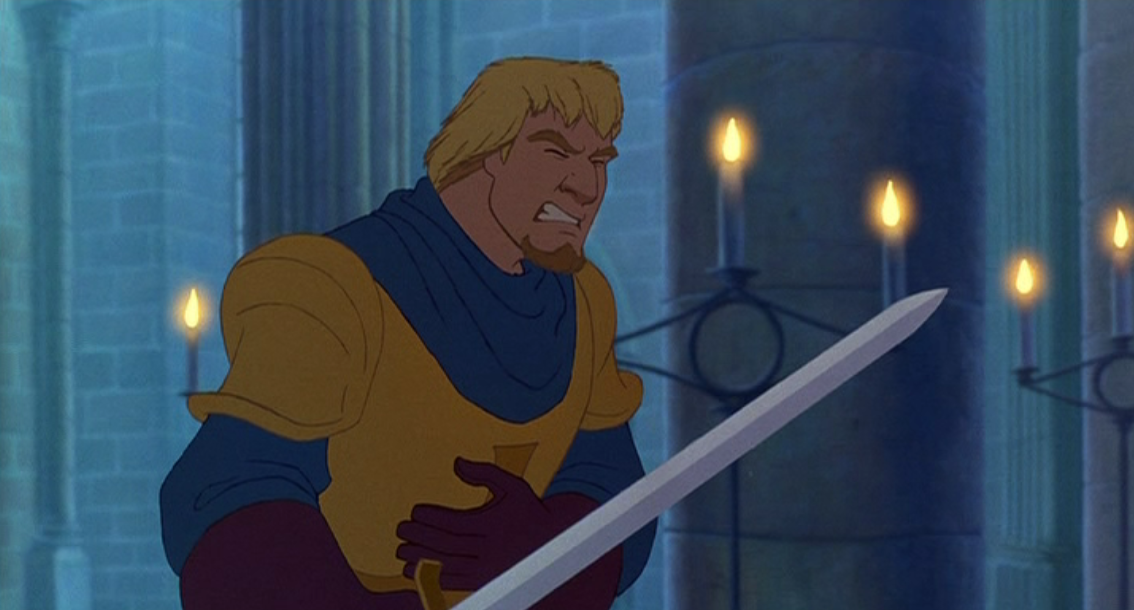
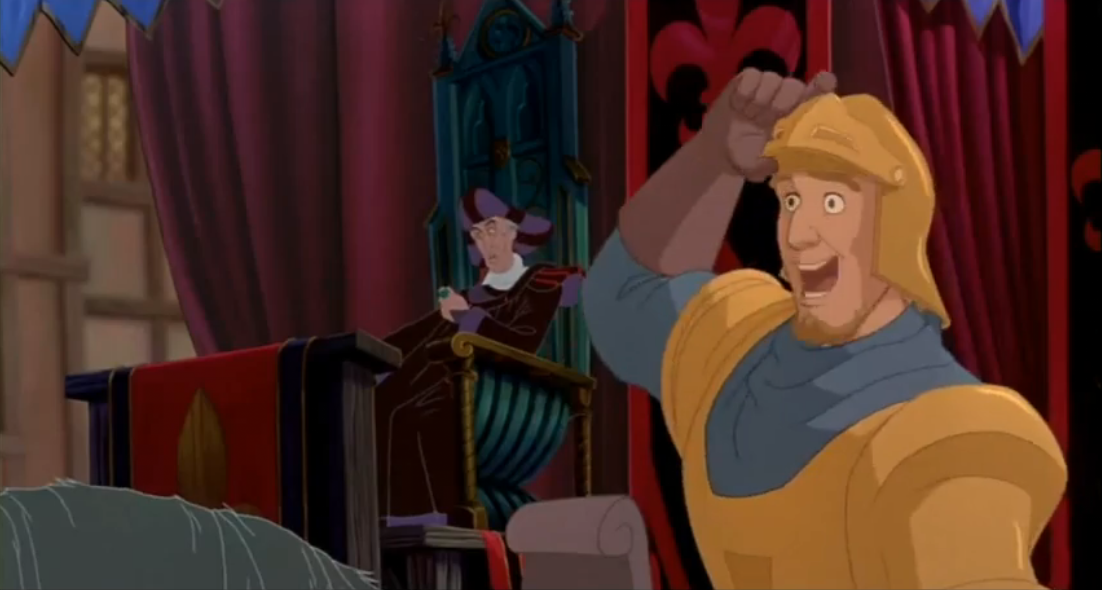
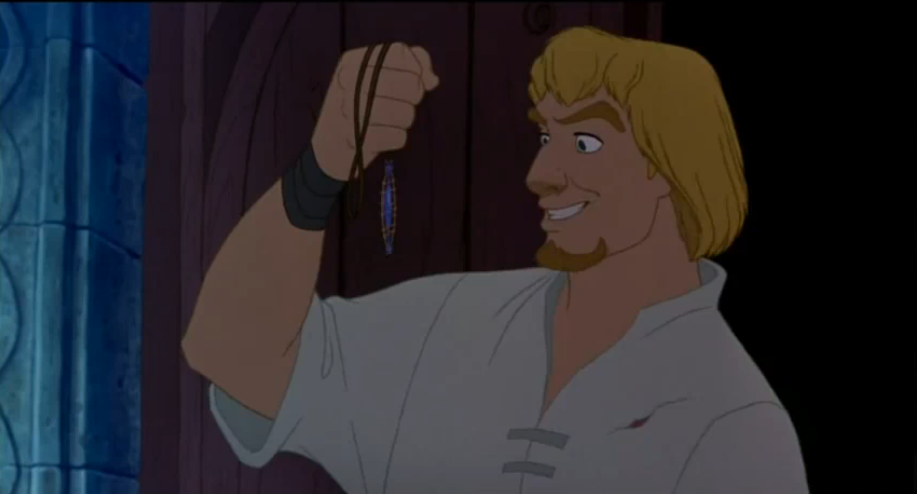
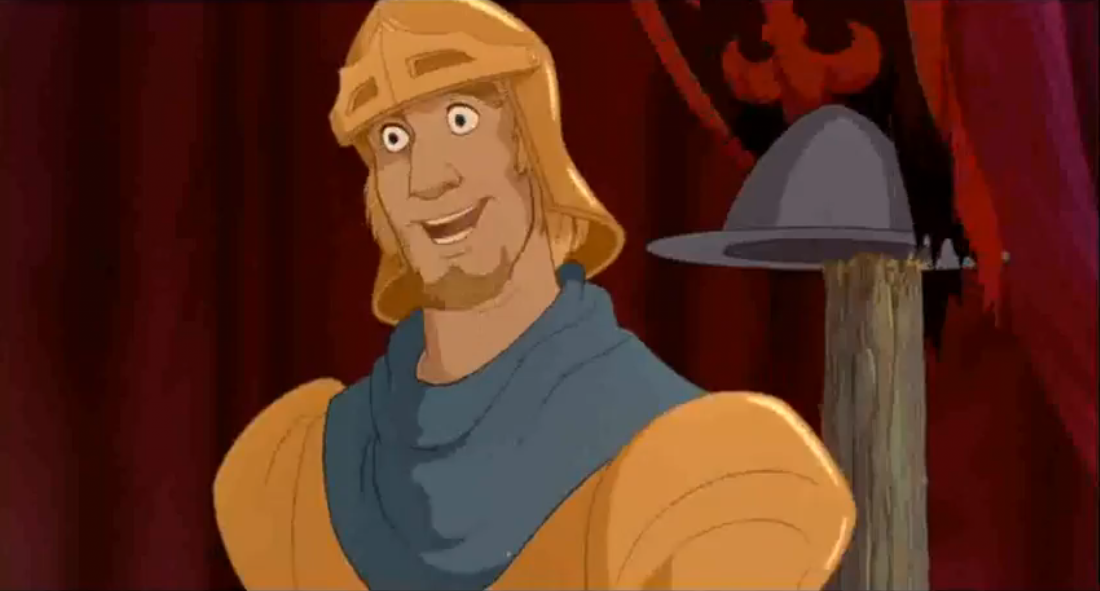
Phoebus is the dashing and handsome captain of the guard. Due to this namesake, Phoebus (Apollo) he has a very yellow look, gold armor, blond hair and a beard. He has a bit of a Roman look. His beard, with cape his hair style, aquiline nose are all more Roman than late medieval.
Oddly enough, Phoebus’ only describe featured in the book is his mustache which is in the “Burgundian Style.” Phoebus is first Disney guy to get facial hair, so kudos to Disney for at least taking something from the book as a basis. Well one could argue that in the 23 version and the 39 version Phoebus had a mustache, so who knows what Disney was going off of, besides the production crew. At least they went there and gave him some form of facial hair The important this is that Phoebus should be handsome, he can be a jerk, a hero or a gloried extra but he must be a pretty boy, and Disney at least did that.
Phoebus Disney Hunchback of Notre Dame
Disney Phoebus Hunchback of Notre Dame
Phoebus Disney Hunchback of Notre Dame
Phoebus concept art isn’t much different than how he appears in the movie. However he looks like John Smith from Pocahontas. For More Concept Art of Hunchback
Concept Art of Phoebus Disney Hunchback of Notre Dame
Concept Art of Phoebus Disney Hunchback of Notre Dame
Concept Art of Phoebus Disney Hunchback of Notre Dame
John Smith Disney Pocahontas
I mean, It’s John Smith with a beard.
Phoebus’ Useless Golden Armor
Phoebus’ armor Disney Hunchback of Notre Dame
Phoebus wears the most useless armor ever, honestly I don’t know why he bothers with it, maybe the gold makes him feels special or pretty but clearly it’s just for show. Djali hits him in the gut and inflicts some pain but when a candelabra hits him the face he shakes it off. He gets shot with an arrow through back and yet it almost got his heart and he nearly drowns in it.
Djali in gut Disney Hunchback of Notre Dame
Phoebus after getting hit by Djali Disney Hunchback of Notre Dame
Phoebus being hit by Esmeralda Disney Hunchback of Notre Dame
Phoebus being hit by an arrow Disney Hunchback of Notre Dame
Frankly he’s better off without the ornamental armor.
Phoebus noticing Esmeralda’s “Disgusting Display”
Phoebus’ look is pretty generic looking considering the rest of the characters. He’s conventionally handsome with a slight roman look mix with a little John Smith through for good measure.
Phoebus and the Map Disney Hunchback of Notre Dame
Phoebus Disney Hunchback of Notre Dame
The result is a tad on the boring which is why his look didn’t change much from the concept art.
Esmeralda is the most divergent character in the Disney version from the book in both looks and personality. I already talked about her personality, now let’s look at her looks.
Disney Esmeralda Hunchback of Notre Dame dancing
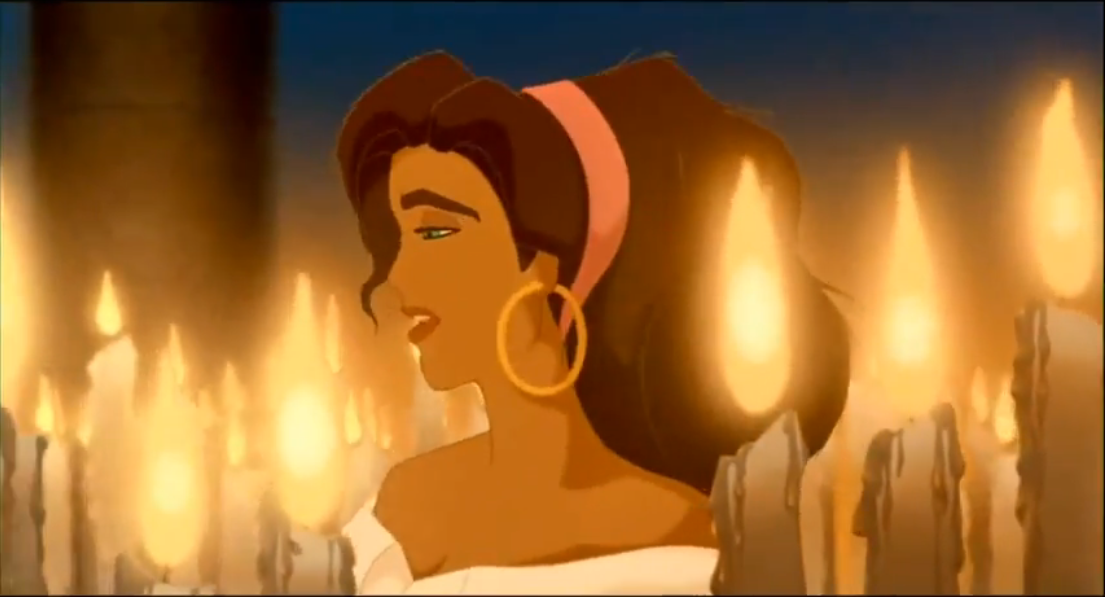
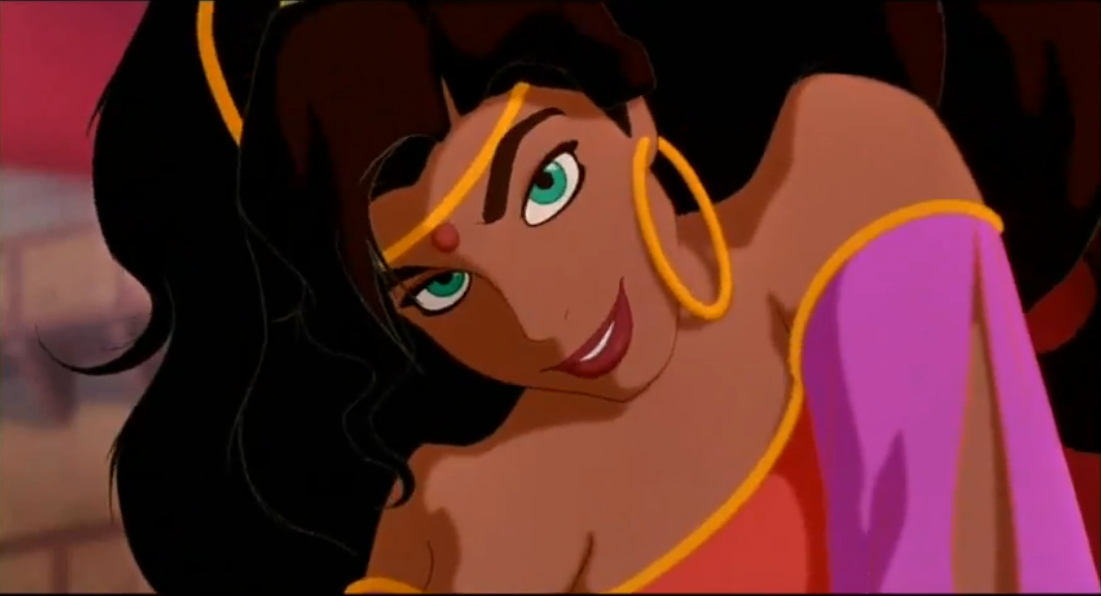
The Disney Esmeralda looks 100% a traveler*. She has a darker complexion, dark hair, and light green eyes (with no glint). Her eyes also do not change color pending on how much light is in the space, which kind of makes them look witchy. She keeps her hair pulled back which it creates volume. This bigger hair makes her look older. When her hair is down she looks younger. Her hair also has a slight curl. Though in the middle of the epic running away from Frollo, her hair looks straight but that could just be inconsistencies in animation or the wind, take your pick. But it does look straight. However it also fair to point out that this voluminous hairstyle was on trend in the late 90s.
Esmeralda complimenting Quasimodo Disney Hunchback of Notre Dame
Her age is very vague. Most of the Disney characters have a rough age range or they just say how old they are like Ariel and Jasmine. With this shift in Disney heroines being somewhat more independent and less dreamy, they appear to be older than the typical “Disney princess” (except Tiana, I would say she is like a compromise between the archetypal Princess and the confident independent heroine of the late 90s).
The question is how old is Disney’s Esmeralda? With the age inflation that Disney implements, I’d say she most likely 22 at the youngest, which is “old” for a Disney heroine. The long and short of it is, Esmeralda is meant to be older like “she’s been around.” This is not my phasing, watch the commentary, it’s the scene where Esmeralda is helping Quasimodo from the pillory. To listen to the commentary, The DVD.
One reason why this version made her older could have been to help establish her relationship with Quasimodo as more maternal, more like a big sister than romantic. This could have made her pairing with Phoebus appear more palatable for the audience, though given a lot of bad-faith internet discourse it didn’t really work that way.
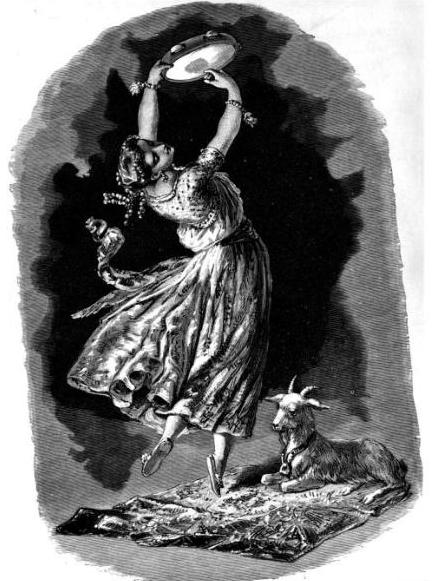
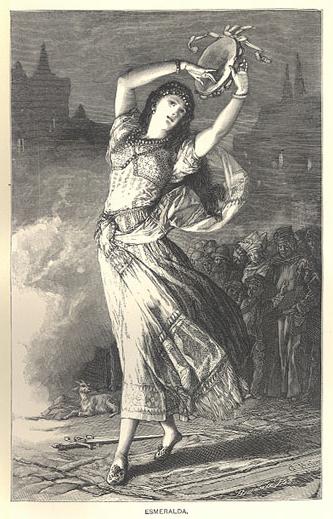
19th Century Illustration of Esmeralda with Djali
Esmeralda Disney Hunchback of Notre Dame Dancing
How Does the Disney Character Design Compare to the Novel?
Against the original novel by Victor Hugo, Esmeralda’s looks are very different. Esmeralda is never described in graphic detail but she’s described as very beautiful frequently by many characters. Disney Esmeralda is meant to be beautiful certainly but she is never called beautiful in the movie. The closest mention to her looks is Clopin saying she’s “The Finest Girl is France.”
19th century Illustration of Esmeralda
Esmeralda’s Dance Disney Hunchback of Notre Dame
Esmeralda in the book is not genetically a full traveler*. Her mother is a French women and while her Father could have been a traveler, it is never actually mentioned who was her father.
Esmeralda has a golden skin tone, black hair and black eyes. Part of Esmeralda’s charm in the book is her innocence and her total unawareness of her own beauty. Disney’s Esmeralda is the complete and utter opposite; she knows her appeal, exploits it and given that quote by the director Kirk Wise that I mention earlier, I’m not sure how innocent is in the movie. So it safe to say that Disney did not use Hugo for even a basis of Esmeralda’s design.
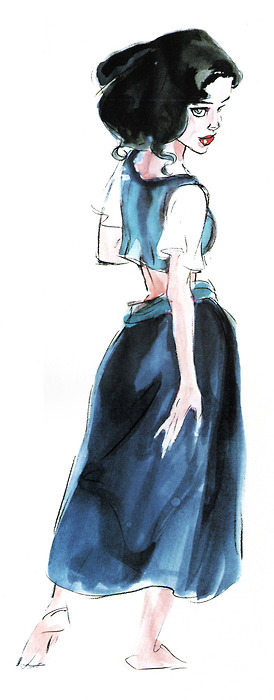
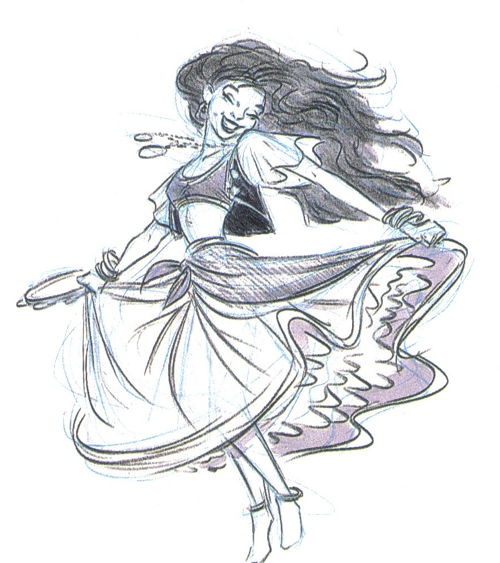
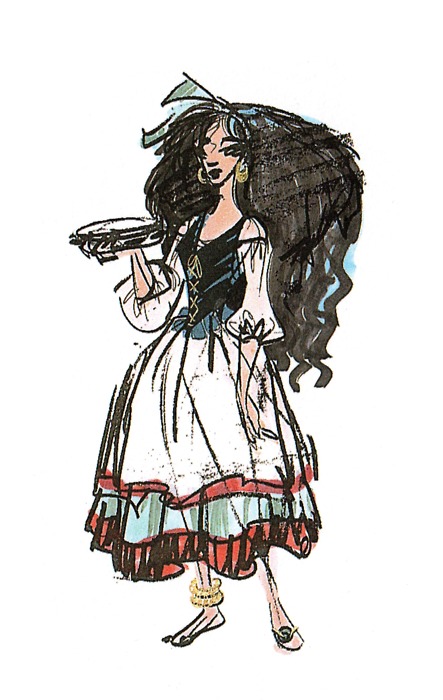
Concept Art for Esmeralda Disney Hunchback of Notre Dame
Concept Art for Esmeralda Disney Hunchback of Notre Dame
Concept Art for Esmeralda Disney Hunchback of Notre Dame
Looking at the concept art, Esmeralda started off looking more youthful and somehow along the way she lost the youthful look. My guess the vocal inspiration turned the tables on the character design. Alas Demi’s Moore doesn’t sound youthful, at least not when the film was recording the voices. For More Concept Art of Hunchback
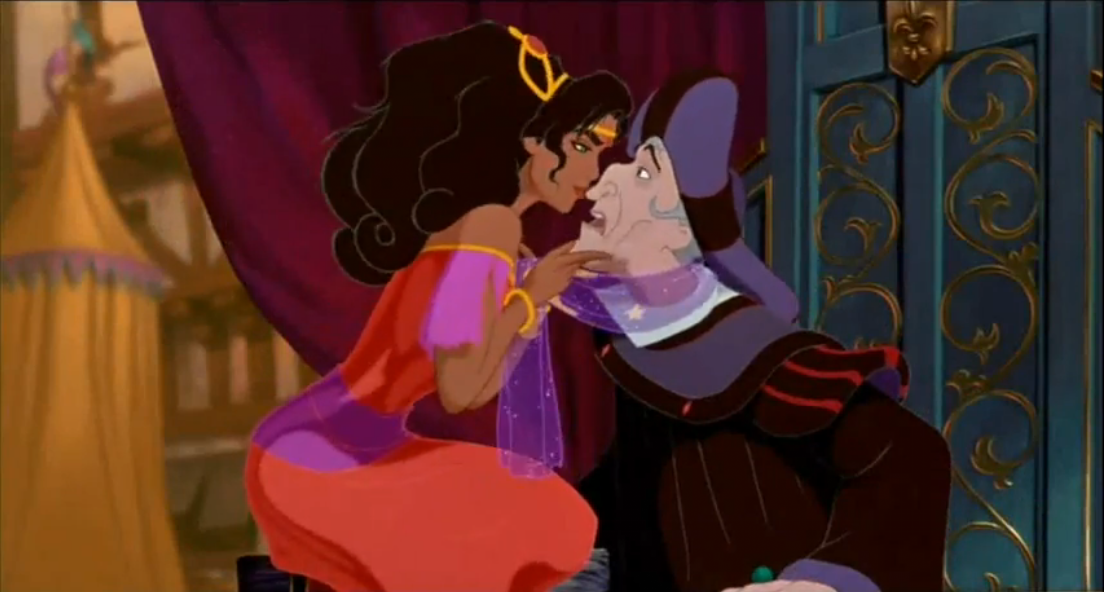
Esmeralda giving Frollo a peck on the nose Disney Hunchback of Notre Dame
It’s actually not Disney’s fault that Esmeralda’s looks/acts sexy whereas Hugo’s Esmeralda did not. The fault lies in the film history of Hunchback movies.
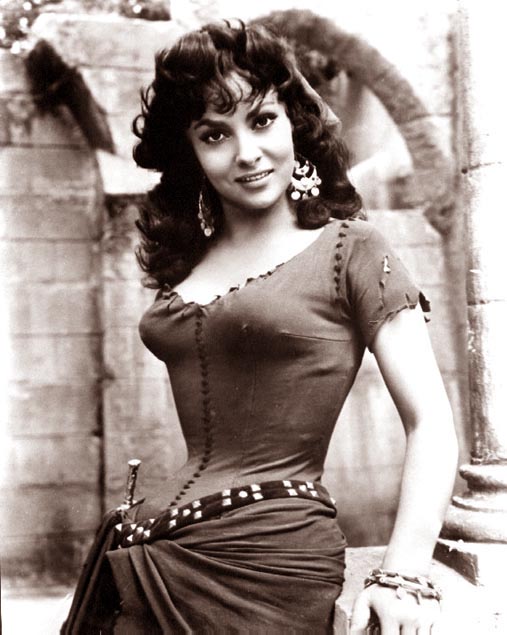
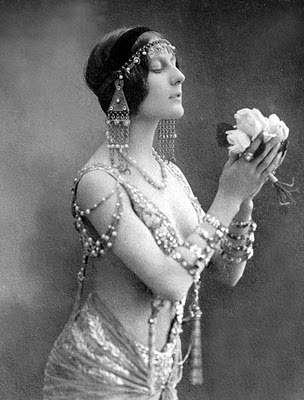
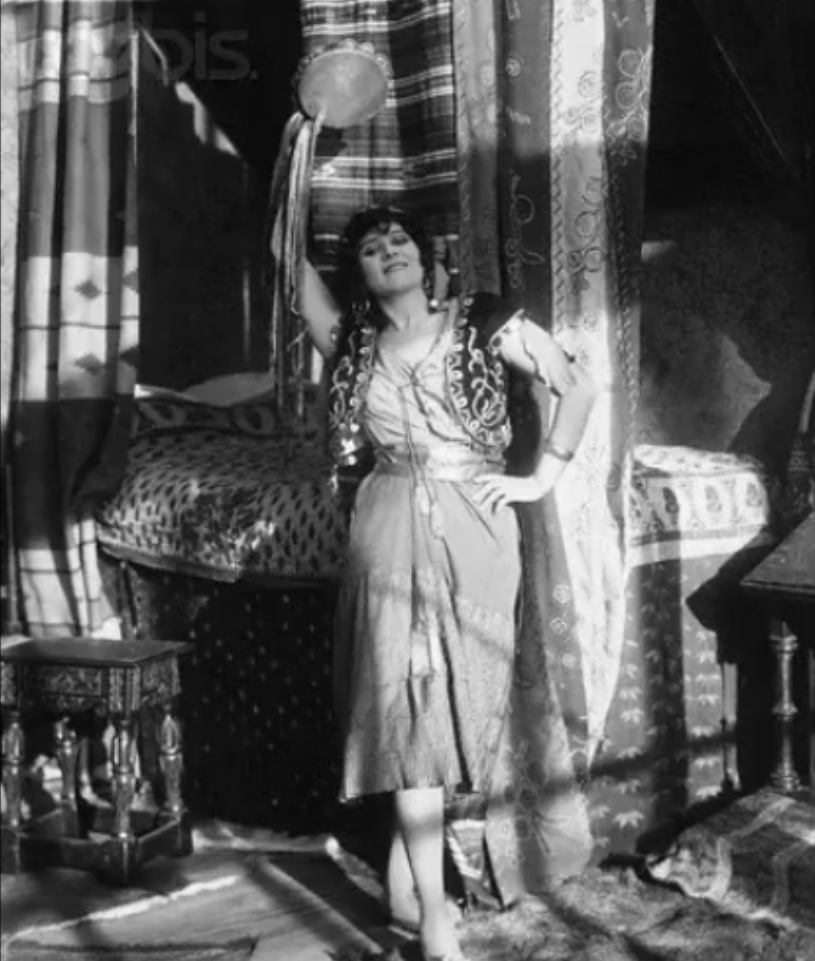
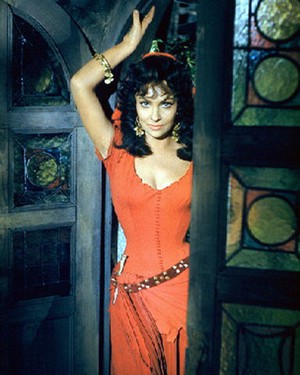
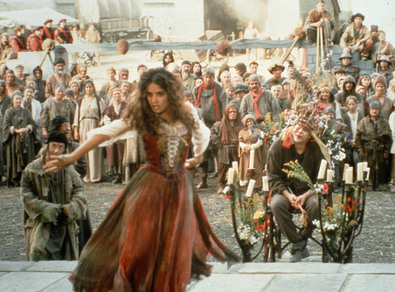
Esmeralda has long been depicted as sexy or at least no stranger to feminine charms. Esmeralda has also been depicted by actresses who are more known for their sex appeal. Such actresses have been Stacia Napierkowska, Theda Bara, Gina Lollobrigida and Salma Hayak. Also Disney models their characters after the voice actor playing them, so with the choice of Demi Moore it was inevitable that Disney Esmeralda was going to be sexy and follow the line of sexy Esmeraldas.
Demi Moore
In a featurette of the movie, Moore said she could see herself in Esmeralda’s animation. While Disney took their cues from the 1939 version, I think Esmeralda’s look was based somewhat on Gina Lollobrigida’s Esmeralda as well as Demi Moore (maybe, I can’t really tell, I haven’t seen a ton of Moore’s films discern her mannerism and/or acting style in Esmeralda’s animation.)
Esmeralda Disney Hunchback of Notre Dame
Gina Lollobrigida as Esmeralda Hunchback of Notre Dame 1956
*Since 2021 the blog has been using the words Travelers or Nomads or Romani to convey the group of people that Esmeralda is associated with while trying to be respectful. You can read that post here. I do tend to favor the travelers usage.
So I found this video a while ago. It a video of the Hunchback of Notre Dame to “why is the Rum gone”. There two videos like this on youtube but I find this video more fun, plus ye olde heretic is in this one ^_~ so I thought I’d share
The main characters of Disney’s Hunchback don’t give us much indication of how “normal” people of Paris conduct themselves. Quasimodo is a forced shut-in, Frollo essentially King, Esmeralda and Clopin are outcasts, and Phoebus, well he just comes off too perfect to really be associated with “normal people.”
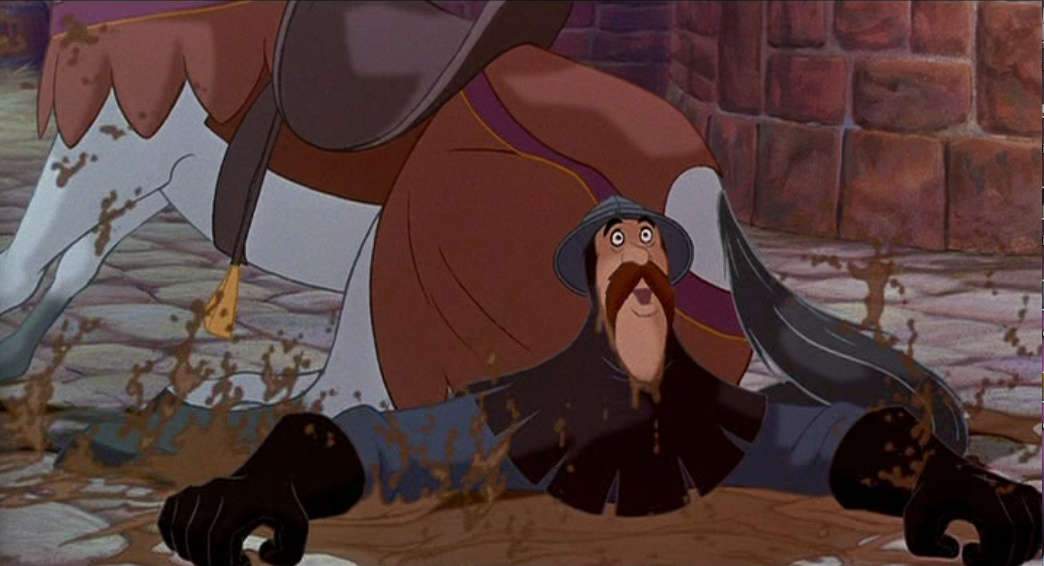
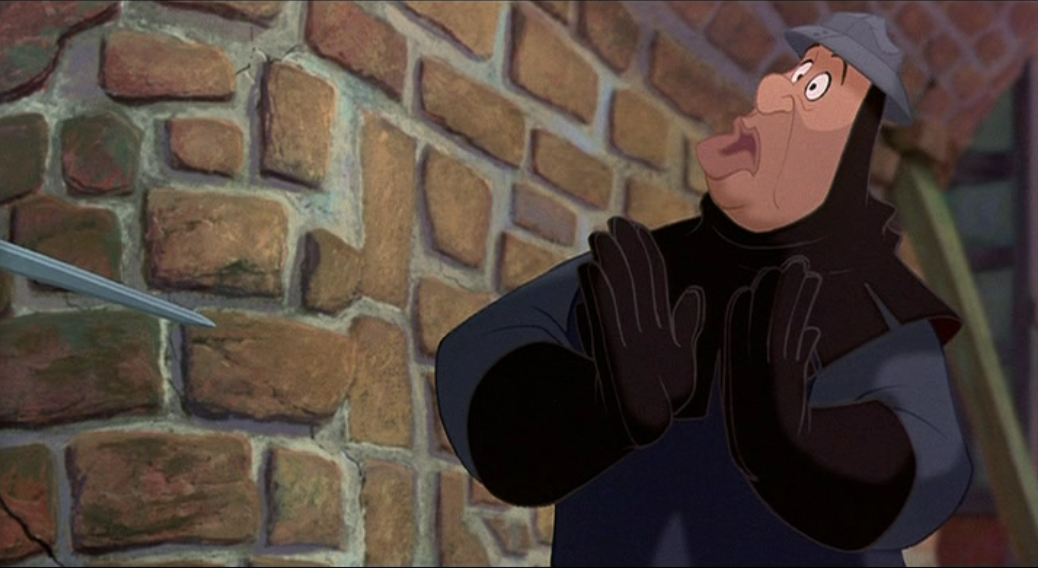
So which characters represent as Frollo put it are part of “the common, vulgar, weak, licentious crowd”? That would be the two guards that are seen throughout the movie. They are credited as the Brutish Guard (voiced by Corey Burton) and the Oafish Guard (voiced Bill Fagerbakke aka Patrick from SpongeBob SquarePants. ) I’m just going to call them as Brute and Oaf.
Esmeralda, Brute and Oaf Disney Hunchback of Notre Dame
Brute and Oaf Disney Hunchback of Notre Dame
Brute and Oaf Disney Hunchback of Notre Dame
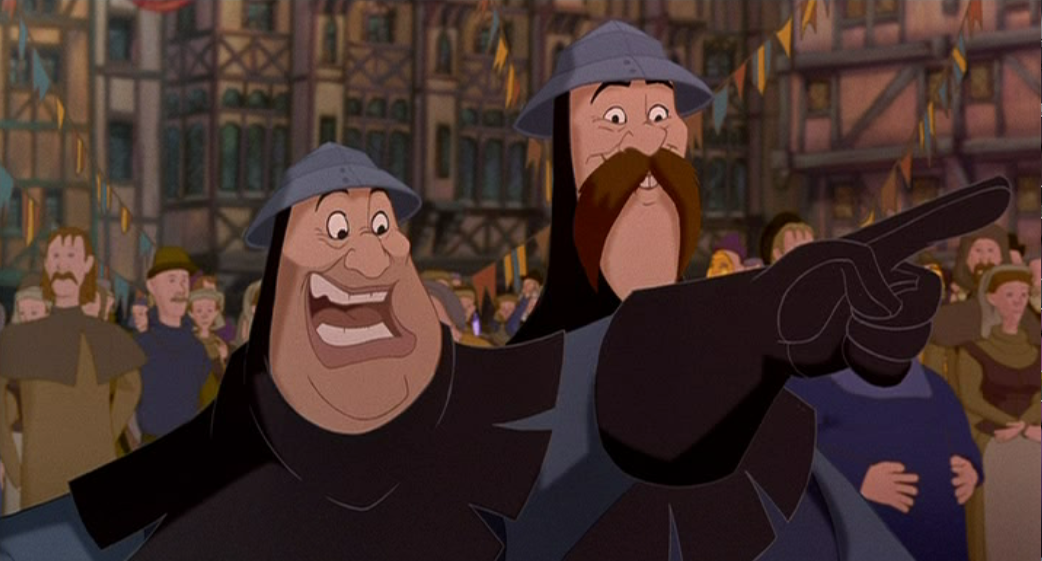
We first see Brute and Oaf harassing Esmeralda because she’s a Romani and judging by all the gold in her hat, she is probably better paid then them. Anyway they try to assert their authority but then became submissive when Phoebus out ranks them. They are quite stupid, they shoo away people to show Phoebus to the Palace of Justice, but when viewed from behind you can hear them still shooing people but there is no there. These guy are all talk and no action, Djali can take them with very little effort.
Brute and Oaf Disney Hunchback of Notre Dame
Brute and Oaf Disney Hunchback of Notre Dame
Brute and Oaf Disney Hunchback of Notre Dame
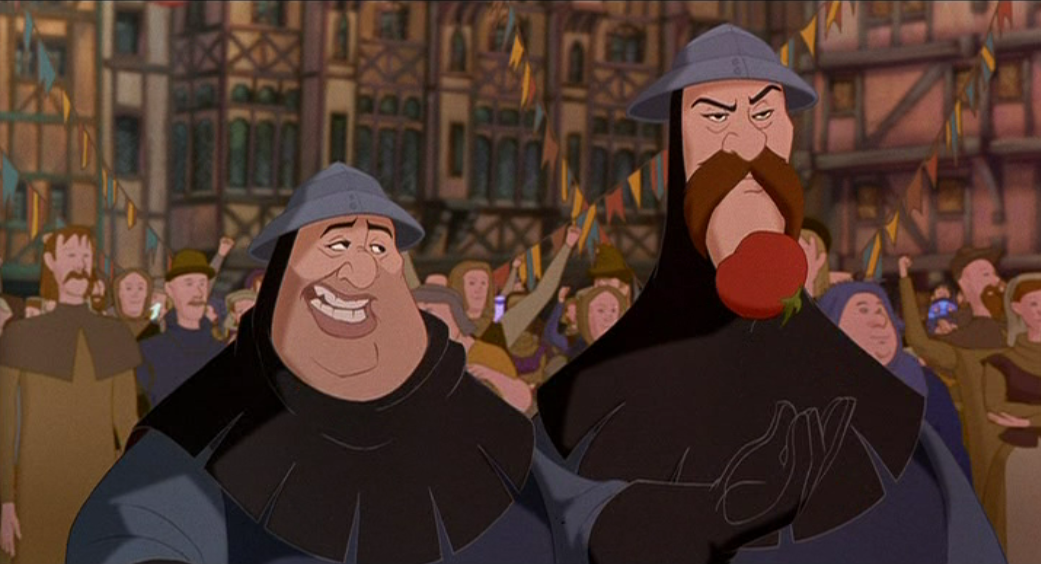
Brute and Oaf are the main cause for the getting the plot moving. Yes, it’s all them. If wasn’t for them, Quasimodo would have been King of Fools without incident and Frollo would just have been mad at him. But because Oaf throws a tomato (where did he even get that) it sets the chain of events into motion. The Crowd throws food at Quasimodo then ties him down, Frollo refuses to help, Esmeralda helps Quasimodo, Frollo gets mad at her, she defies him and hello chase scene and obsession. Thank you Oaf and Brute for being common, vulgar, weak, and licentious and getting the plot in motion.
Brute and Oaf Disney Hunchback of Notre Dame
Brute and Oaf Disney Hunchback of Notre Dame
Brute and Oaf Disney Hunchback of Notre Dame
So Brute and Oaf represent the common people, they promote distrust in authority figures for Esmeralda, cause the plot to take off but that not it. They also provide some humor. Brute provides Achilles with a sit and oaf provides some amusement being an oaf and all. Plus Oaf’s voice sounds comedic (Patrick from Spongebob). But don’t count on them in a pinch – storming a certain cathedral – they’re no help at all.
Brute and Oaf Disney Hunchback of Notre Dame
Basically Brute and Oaf are glorified extras but they do something for the plot unlike some glorified extras that are memorable but do nothing for the plot, just add humor.
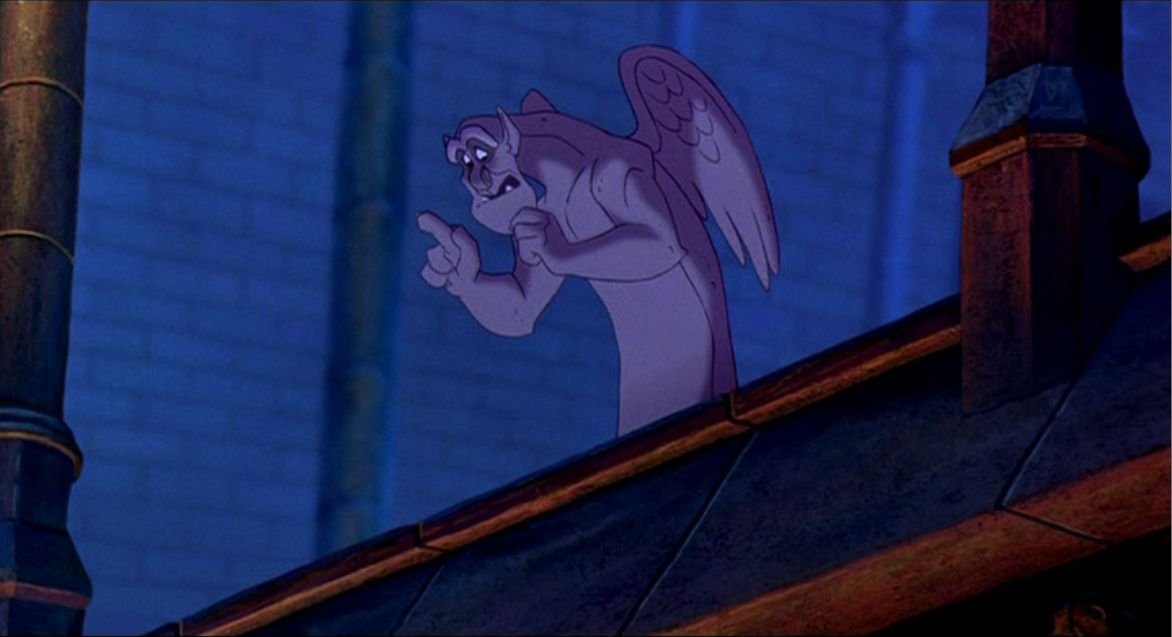
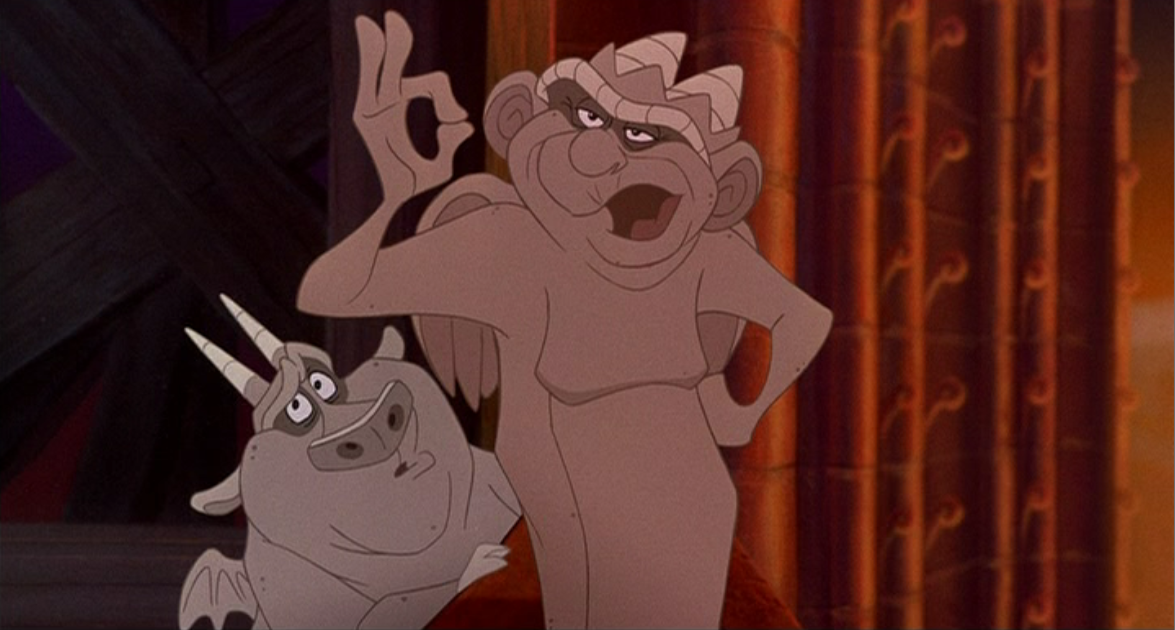
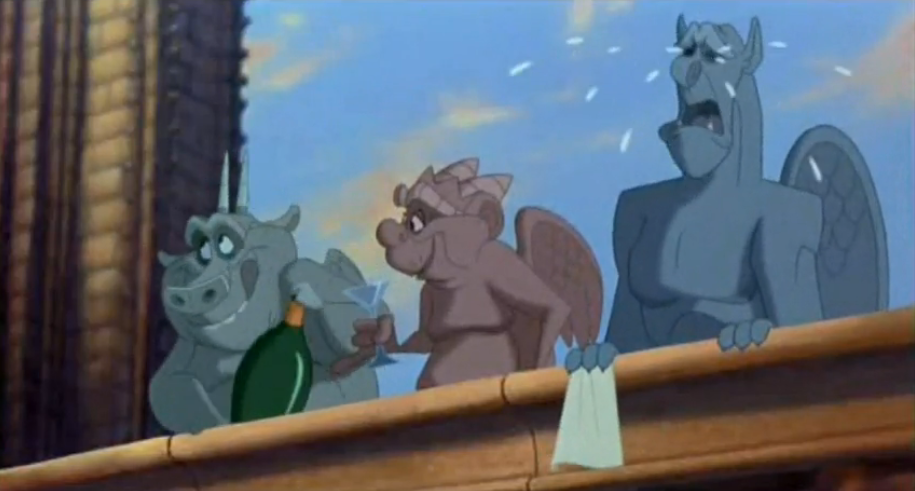
The Gargoyles; Hugo Laverne, Victor, Disney Hunchback of Notre Dame
The Gargoyles are the most annoying characters in this movie. They’re the comic relief but they fail at it (ok there are some funny bits but they’re few and very far between).
Hugo, Disney Hunchback of Notre Dame
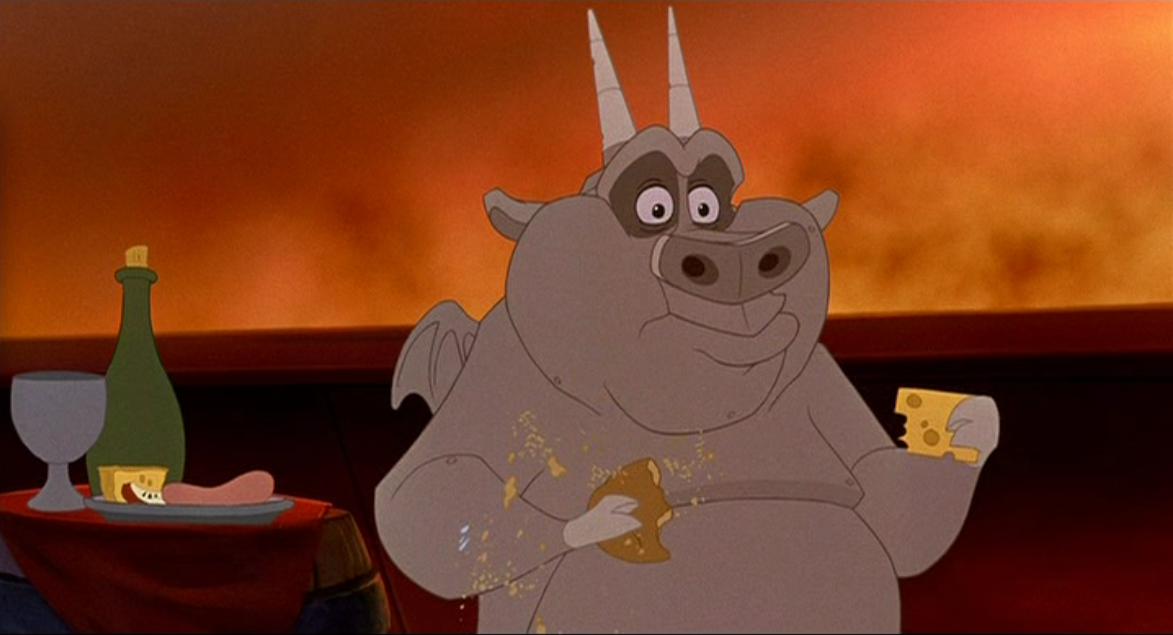
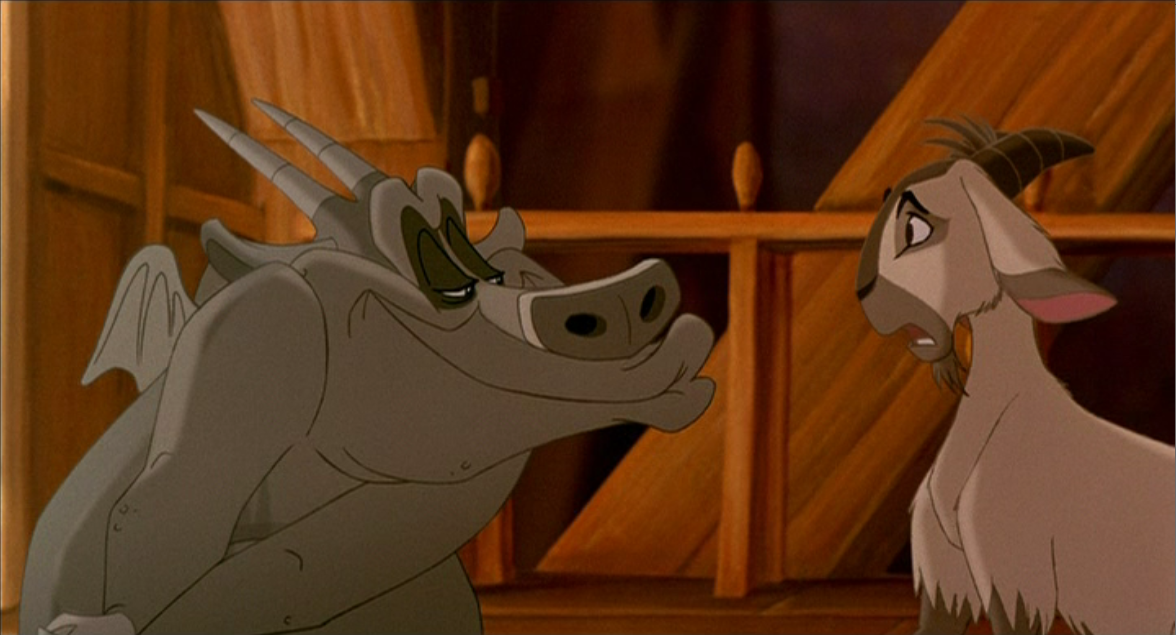
Hugo (voiced by Jason Alexander), the short piggish one, is a load mouth and the most annoying. He also has a thing for Djali.
Victor, Disney Hunchback of Notre Dame
Victor (voiced Charles Kimbrough) is the tall prissy serious one. He is the least interesting.
Laverne Disney Hunchback of Notre Dame
Laverne (voiced by Mary Wickes/ Jame Withers) is the old one who tells it like is. She is probably the most of tolerable of the gargoyles.
Victor and Hugo were named for Victor Hugo the author, the writers thought they were being clever and they really wanted to prove they had read the book. Laverne was named after Laverne Andrews, one of The Andrew Sisters. They each have their own personalities and at least they balance each other out.
Hugo and Djali Disney Hunchback of Notre DameLaverne and the birds Disney Hunchback of Notre DameGargoyles – Victor, Hugo and Laverne at the end Disney Hunchback of Notre Dame
The theory goes that the Gargoyles are aspects of Quasimodo’s imagination because he is a forced shut-in who is desperate to be love. However the Directors who thought they were being all smart and junk by trying to deep and profound, forgot (actually they didn’t forget they’re just inconsistent) that Djali interacted with Hugo and they fought to defend Notre Dame. Quasimodo’s main squeeze also saw the Gargoyles in the Sequel {shudders at the thought of the sequel shudders.}
So let’s say that the directors are right and their theory that the Gargoyles are imaginary holds water; does this mean Quasimodo imagines Djali seeing Hugo? Does his means when Quasimodo is crowned King of Fools he imagines the Gargoyles cheering him on? Does he imagines the Gargoyles throwing stuff off off Notre Dame and the soldiers getting hurt especially when Quasimodo is occupied? Does this mean that Quasimodo is the source the pop culture anachronisms? And if the Gargoyles are Quasimodo’s imagination does this mean that after Quasimodo made some real life friends and was accepted by the people the Gargoyles would cease to be? Because they’re still around in the {shudders} sequel {shudders}. If Quasimodo lives in his head this much does this mean Quasimodo in the book is more functional? Plus he must be contently winded from lugging three stone statues around the place, then again maybe that’s why he can lift up Phoebus in full armor one handed.
Personally I think that the Gargoyles are Pan’s Labyrinthesque beings; only those who are innocent and pure can see them, hence why Quasimodo and Djali can see them but they can some effect on the actual world. Though in the German Musical, Der Glockner van Notre Dame, they are imaginary and they have different names.
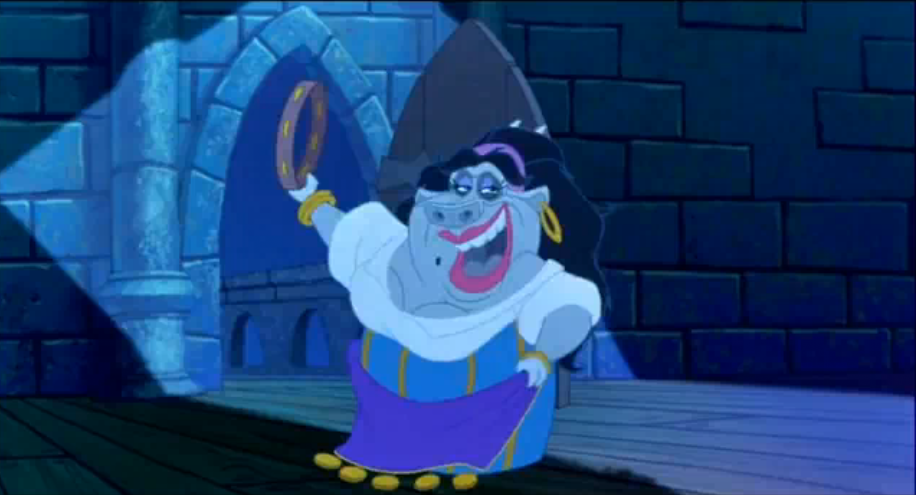
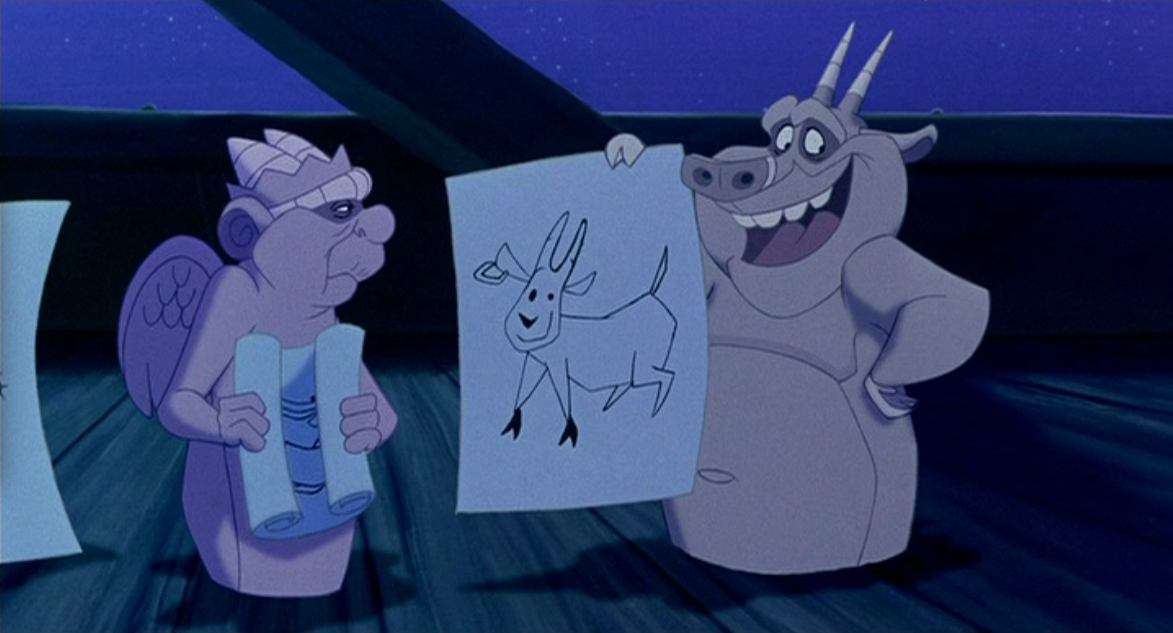
Victor, Hugo and Laverne singing A Guy like you Disney Hunchback of Notre dameVictor, Hugo and Laverne draw pictures Disney Hunchback of Notre DameHugo in drag Disney Hunchback of Notre Dame
So why are the sidekicks Gargoyles in the first place? Well the oh so smartie directors said in the commentary that Quasimodo speaks to the Gargoyles in the book. They also claim that Quasimodo has long conversations (plural) with the Gargoyles.
Looking over the book, I found that he was fond of a ‘grotesque personages sculptured on the wall,’ and to this he says “why wasn’t I made of stone like you” (Book 9 Chapter 4 Earthenware and Crystal). I’m not sure what version of the novel they read where Quasimodo had long conversations with Gargoyles ( maybe the 1939 movie version? In the 1939 version Quasimodo utters this line to a gargoyle).
If they were going to base a sidekick character off of objects that Quasimodo had a relationship with, it should have been the bells. They could’ve a sassy bell named Patti (Patti the Bell (Patti LaBelle, bad joke, sorry) that would have much better than the Gargoyles.
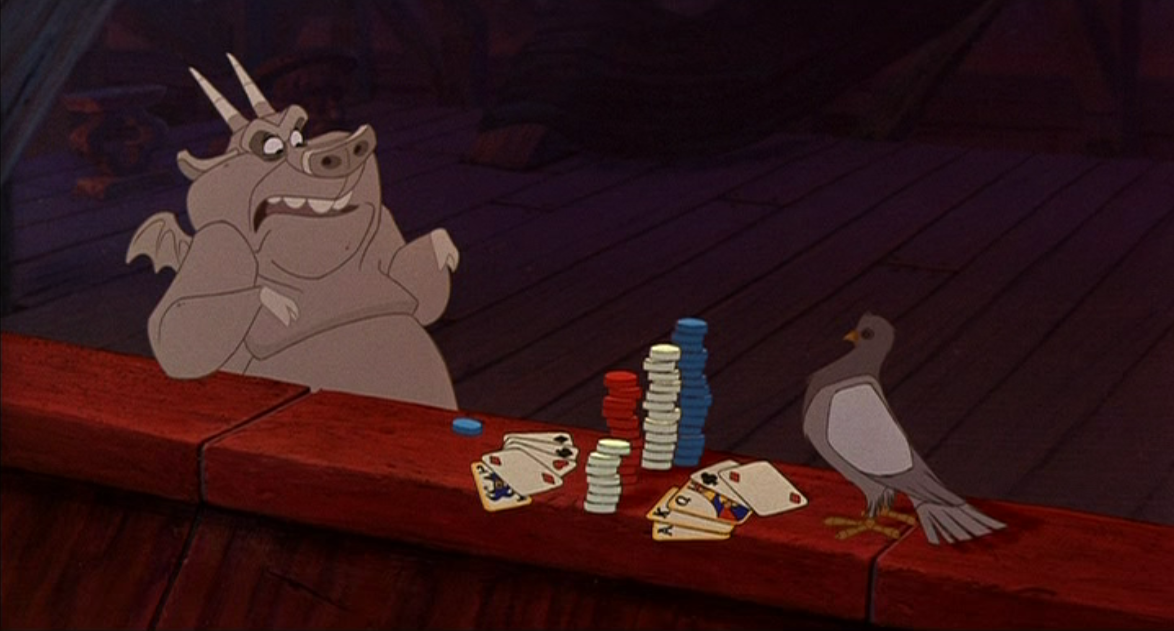
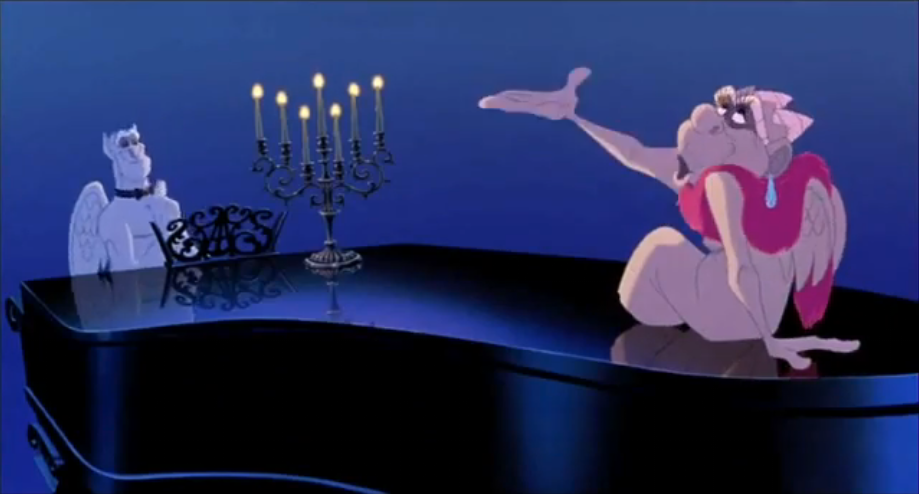
Hugo playing poker Disney Hunchback of Notre DameVictor and Laverne singing A Guy like you Disney Hunchback of Notre dameA Guy Like You
So what do the Gargoyles do in the film?
They’re Quasimodo’s friends and guardians. They make [try] funny quips. They also make pop culture references. Disney has a habit of doing this. They started with the Genie in Aladdin. With the Genie it makes a level of sense because Genies are a supernatural beings, but in Hunchback this doesn’t work as well. The Gargoyles are part of Notre Dame, so how can they have inferences to the future? I don’t care that they magically – they’re part of an ancient building, they should be funny without making stupid references, Djali doesn’t resort it. Plus if they’re in fact imaginary, this means Quasimodo is the one doing it, so it makes even less sense. The only thing that the Gargoyles do well is they get Quasimodo off his ass and encourage him. But they also build Quasimodo’s expectations up too high. They convince him that Esmeralda is in love with him, which leads to some of Quasimodo’s emoness when she doesn’t reciprocate.
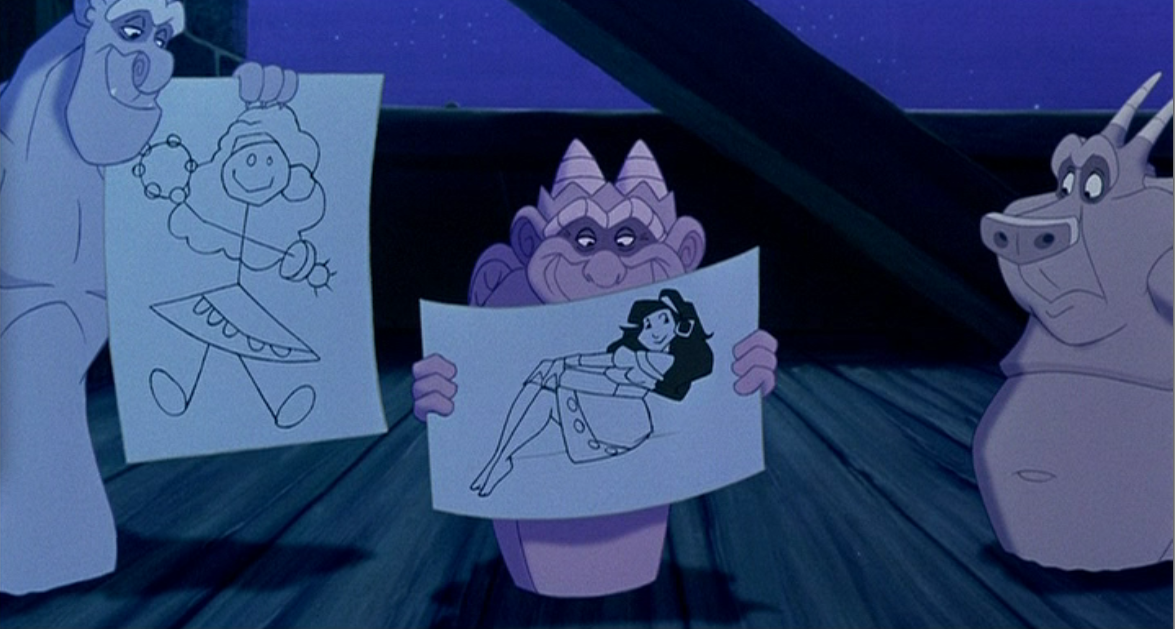
Victor and Laverne’s drawing of Esmeralda Disney Hunchback of Notre DameHugo draws Djali Disney Hunchback of Notre DameVictor, Hugo and Laverne trying to liberate Quasimodo in emo-mode Disney Hunchback of Notre Dame
So the point of the Gargoyles is to provide levity but they just distract from the movie. Disney boasts the Hunchback as being their darkest movie but the Gargoyles hinder it. Plus the movie has some good levity already, Phoebus, Esmeralda, Clopin, Djali, Achilles, those bumbling guards, the old heretic, the torturer guy etc, they all provide good comedy while keeping the flow of the movie and without making references. Disney really could have done better in the sidekick department for Quasimodo.