

Playing Cleopatra
For centuries, Cleopatra has captured the imagination of many artists, musicians, authors, and filmmakers. Her story contains no shortage of drama, romance, and tragedy, so it’s not surprising that many artists have created works that imagine what she was really like. In so doing, each artist has put their own spin on her story and legend.
This post is dedicated to those actresses who over the years have brought the fabulous Queen of the Nile to life from notable adaptations. Though I more than missed some.
(post contains affiliate links)
Sarah Bernhardt (1891)
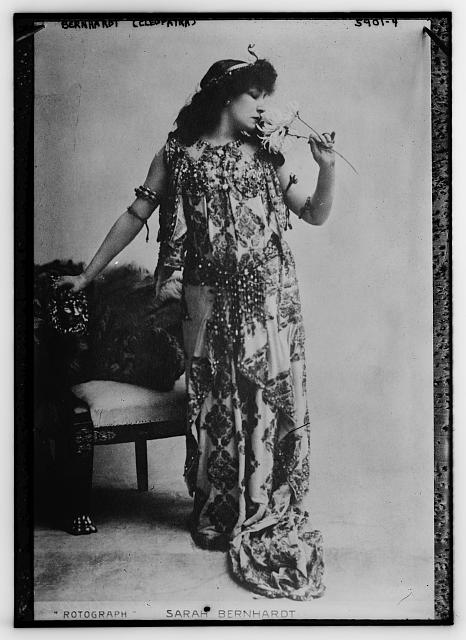
Title: Cléopâtre
Playwrights: Victorien Sardou and Émile Moreau
The French stage actress Sarah Bernhardt played Cleopatra in an 1891 stage production. The hugely successful melodrama, entitled Cléopâtre, featured elaborate costumes and a very memorable death scene in which two live garter snakes played the deadly asp.
Theda Bara (1917)
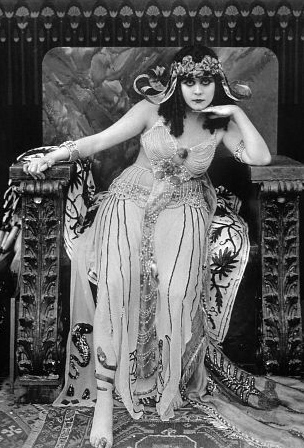
Title: Cleopatra
Director: J. Gordon Edwards
Co-Starring: Fritz Leiber Sr. as Julius Caesar, Thurston Hall as Mark Antony
One of the earliest film depictions of Cleopatra was this silent film made in 1917 which starred Theda Bara as the Egyptian queen.
The screenplay, written by Adrian Johnson, was based on several sources, including H. Rider Haggard’s 1889 novel, Cleopatra; the play Cléopâtre by Émile Moreau and Victorien Sardou (the Sarah Bernhardt stage production discussed above); and William Shakespeare’s plays Antony and Cleopatra and Julius Caesar.
At the time this film was made it was the most expensive movie project ever undertaken. It cost the studio $500,000— the equivalent of over $12 million today. The high costs were due to the film’s opulent sets and costumes.
Censorship Issues
Interestingly, some of the costumes got the movie into trouble with city and state censorship codes, which required that certain shots that were deemed to be too risque be cut. Later, after the Hays Code was introduced in Hollywood, this movie was declared too obscene for public viewing.
Most of the original film is now lost. The last known prints were burned in a fire at Fox Studios and the Museum of Modern Art in New York. However, a few fragments of the film survive.
Claudette Colbert (1934)
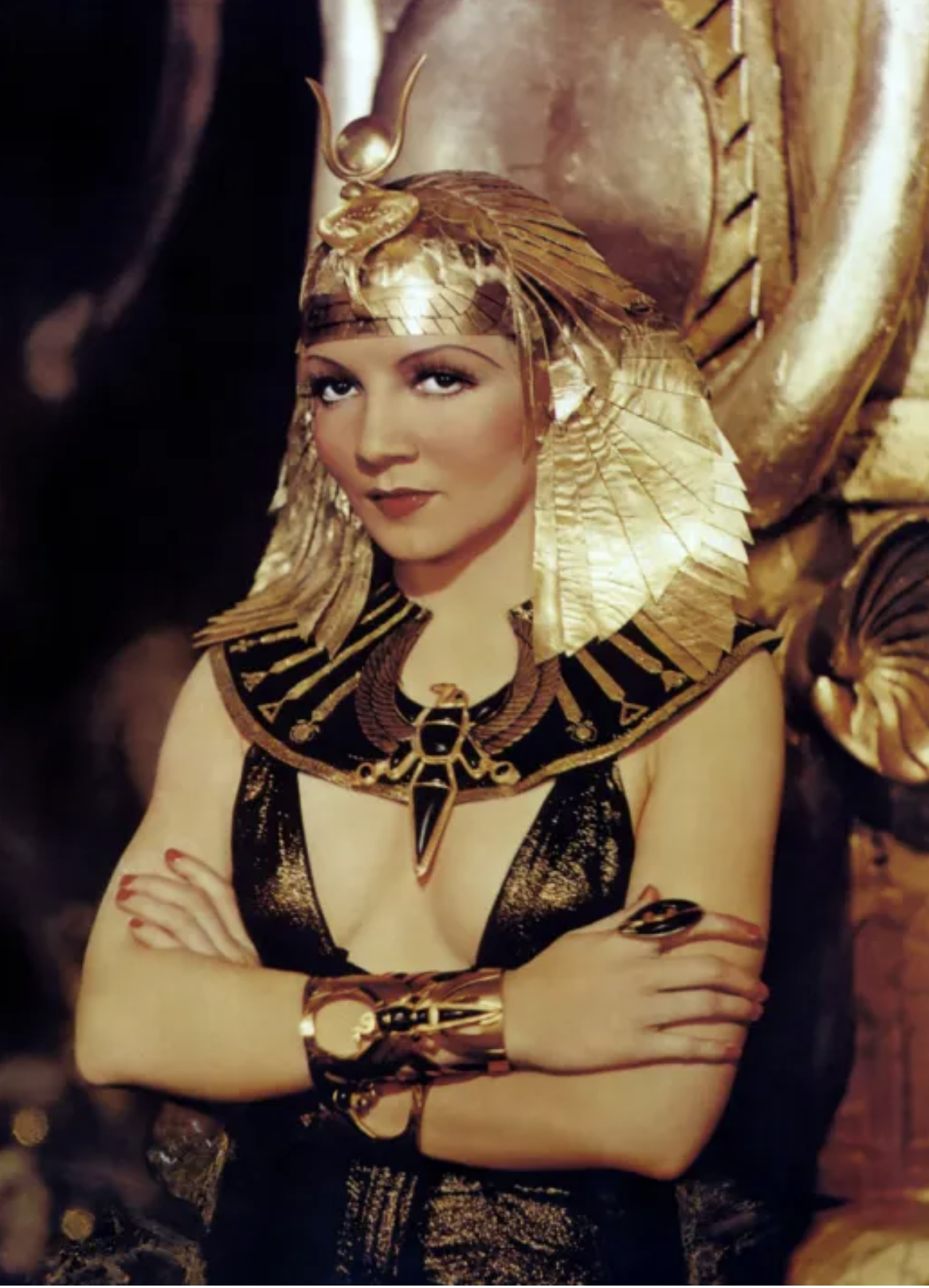
Title: Cleopatra
Director: Cecil B. DeMille
Co-Starring: Warren William as Julius Caesar, Henry Wilcoxon as Mark Antony
The next major film version of Cleopatra was made in 1934 by Cecil B. DeMille. Claudette Colbert as Cleopatra uses both her smarts and her sultry methods to get what she needs. As well as flattery and appealing to the egos of men.
The film has a very art deco feel to it, as evidenced by the costumes and sets. Because the Hays Code was being implemented just as this film was coming out, DeMille managed to get away with more provocative costumes than would have been allowed under the new code.
The film was nominated for five Academy Awards including Best Picture (at the time, this award was called Outstanding Production), and it won Best Cinematography.
Vivien Leigh (1945)

Title: Caesar and Cleopatra
Director: Gabriel Pascal
Co-Starring: Claude Rains as Julius Caesar
This 1945 British film, based on a 1901 play by George Bernard Shaw, was the first colorized film of Cleopatra. Unlike most other versions of the Egyptian queen, this version is a romantic comedy that wasn’t meant to be particularly historically accurate. Leigh’s Cleopatra is girlish and coquettish. This version is the only version to have a coming-of-age aspect to it.
Unfortunately, this version didn’t do well at the box office, and it ended Pascal’s career. Although the film did poorly, it was still nominated for an Academy Award for Best Art Direction.
Sophia Loren (1953)
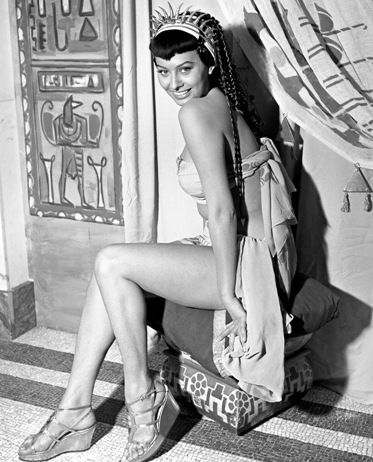
Title: Two Nights With Cleopatra
Director: Mario Mattoli
Co-Starring: Alberto Sordi as Caesar
In this 1953 Italian comedy, Sophia Loren stars in a double role: she plays both Cleopatra and a slave girl named
Nisca.
One evening when Cleopatra secretly visits Mark Antony, she sends Nisca to the palace to take her place. Caesar thinks Nisca is Cleopatra, and the story takes several unexpected turns. The film is regarded as fun and one of the great depictions of the Egyptian queen.
Elizabeth Taylor (1963)
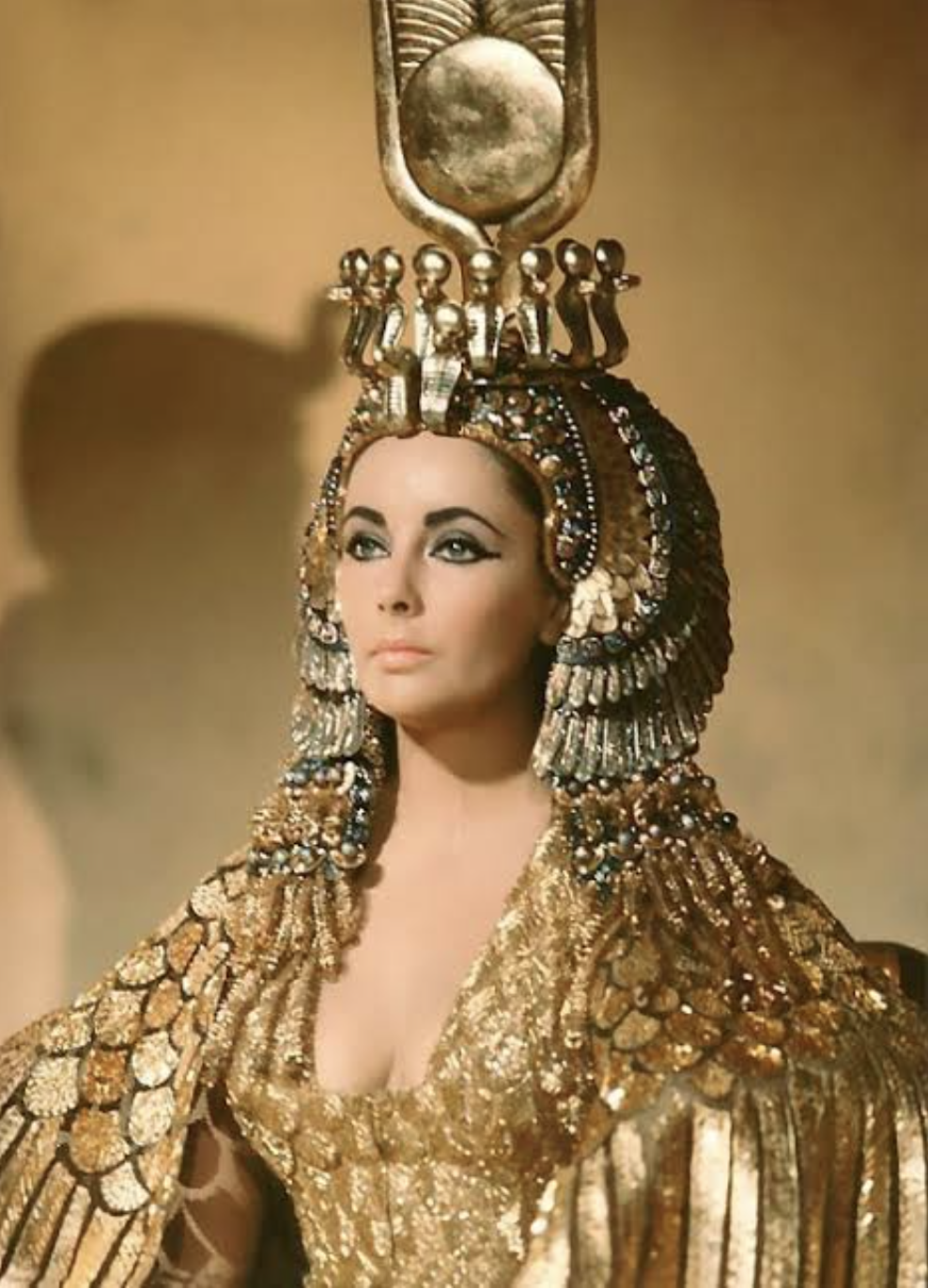
Title: Cleopatra
Director: Joseph L. Mankiewicz
Co-Starring: Rex Harrison as Julius Caesar, Richard Burton as Mark Antony
This 1963 film is very highly regarded and is the most popular version of the Egyptian queen’s life. It starred Elizabeth Taylor in perhaps the greatest film role of her career. Taylor’s Cleopatra was sophisticated and cool as well as sultry.
The film nearly bankrupted Fox Studios as it cost $44 million (about $750 million in today’s dollars). To this day, it remains one of the most costly movies ever produced. For all its lavishness, however, the film was not well received by critics. Despite this the movie performed well at the box office—in large part due to the off-screen love affair between Taylor and Burton.
At one point the film held the record for most costume changes in a movie (Taylor had 65 costume changes in this movie). This record was broken by the 1968 movie Star!, in which Julie Andrews had over 125 costume changes.
Taylor’s Cleopatra won Academy Awards for Best Cinematography, Best Art Direction, Best Costume, and Best Visual Effects. It was also nominated for Best Picture, Best Actor, Best Film Editing, Best Original Score, and Best Sound Mixing
Michelle Newell (1983)

Title: The Cleopatras
Director: John Frankau
Co-Starring: Graham Crowden as Theodotus, Robert Hardy as Julius Caesar, Christopher Neame as Mark Antony
BBC’s The Cleopatras is an eight part mini-series that covers the generation of the woman named Cleopatra.
Michelle Newell plays a dual role as both Cleopatra the III and Cleopatra the VII.
The series was intended to follow in the legacy of I, Claudius but it got mixed reviews. It was called “gaudy farce” and there were a number complaints regarding the nudity.
It is said that Newell’s portrayal of Cleopatra is an odd mix of childishness and ruthless cunning. Her performance feels akin to Leigh’s but a little less theatrical.
Leonor Varela (1999)

Title: Cleopatra
Director: Franc Roddam
Co-Starring: Timothy Dalton as Julius Caesar, Billy Zane as Mark Antony
This 1999 TV miniseries is based on the book The Memoirs of Cleopatra, by Margaret George.
Varela’s Cleopatra is fiery, ambitious, and sometimes vulnerable. She has great chemistry with both Dalton and Zane—and in fact Varela and Zane fell in love while working on this film, leading to a brief engagement.
Trevor Jones’s musical score for this version is very well done. The sets and costumes are also wonderful. Overall it’s a very enjoyable telling of Cleopatra’s story.
Monica Bellucci (2002)

Title: Asterix & Obelix: Mission Cleopatra
Director: Alain Chabat
Co-Starring: Gérard Depardieu as Obelix, Christian Clavier as Asterix
This 2002 film takes a different approach to the Queen of the Nile. For one thing, it’s an action/adventure comedy that is fun for all ages. This movie is based on the comic book Asterix and Cleopatra by René Goscinny and Albert Uderzo, and it was a sequel to the 1999 movie Asterix & Obelix Take on Caesar.
In the film, Bellucci’s Cleopatra wants to build a great palace for Caesar yet none of her architects will do it. Getafix from Gaul, a Druid, goes to Egypt to help his friend who has been made to build the palace. Asterix and Obelix accompany Getafix on his journey to Egypt.
The movie is funny in an intelligent and modern way, though it loses something in translation.
Lyndsey Marshal (2005-2007)
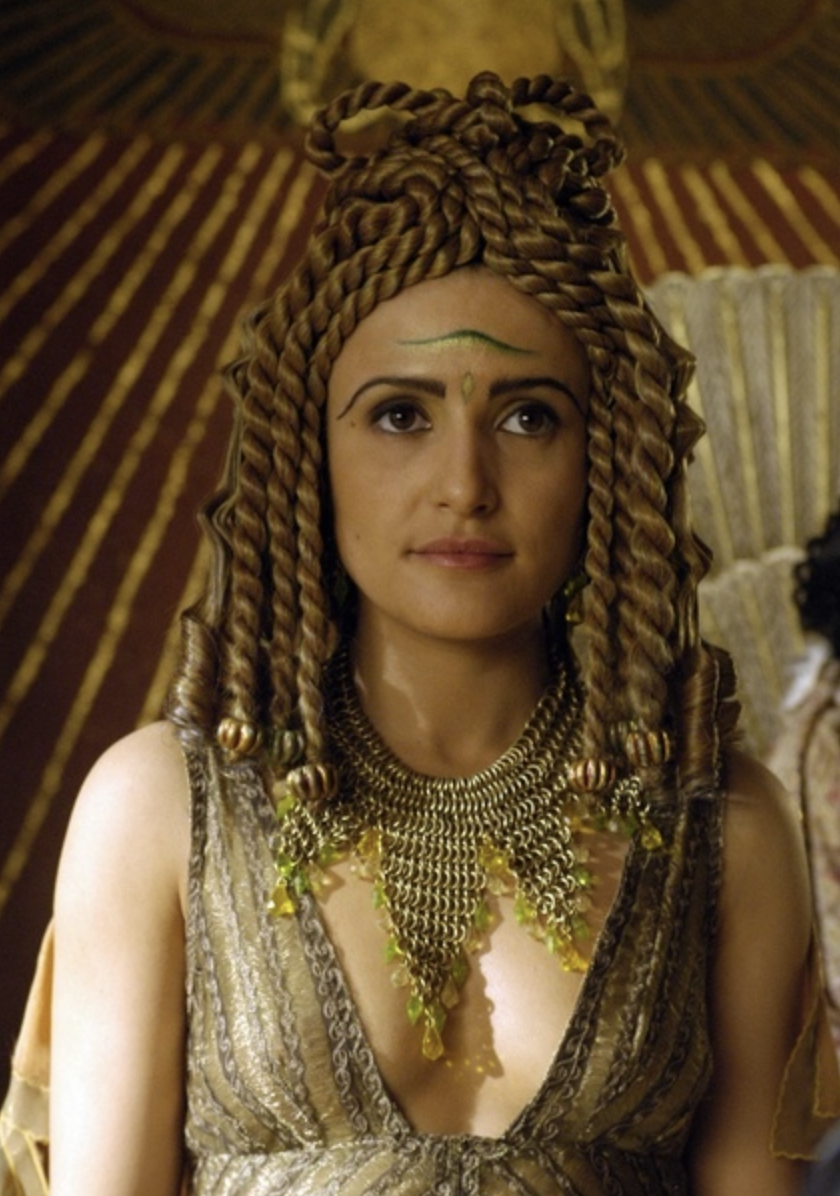
Title: Rome
Created By: John Milius, William J. MacDonald and Bruno Heller
Co-Starring: Kevin McKidd as Lucius Vorenus, Ray Stevenson as Titus Pullo, Ciarán Hinds as Julius Caesar, James Purefoy as Mark Antony
HBO’s Rome follows two roman soldiers in the First Century BC as Rome transition from Republic to Empire.
Lyndsey Marshal plays Cleopatra. In a departure from the norm Marshal’s Cleopatra is not depicted as glamorous. Instead she is gritty. she is still ambitious and sensual. She more of pollitical survivor than a Hollywood siren.
Marion Cotillard (2023)
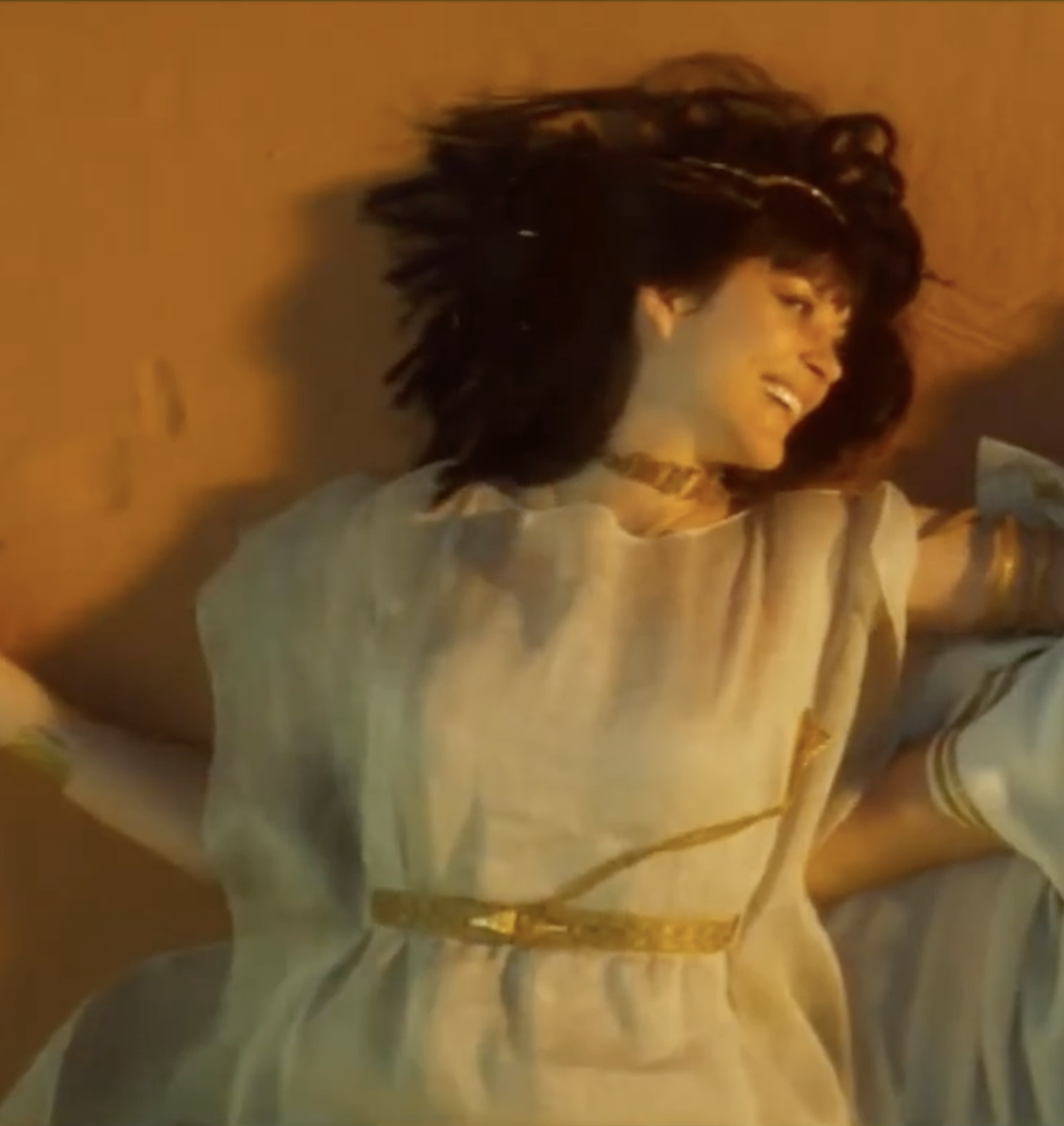
Title: Asterix & Obelix: The Middle Kingdom
Director: Guillaume Canet
Co-Starring: Guillaume Canet as Asterix, Gilles Lellouche as Obelix, Vincent Cassell as Julius Caesar,
Asterix & Obelix: The Middle Kingdom is the fifthe installmeant to the action/adventure comedy series of movie of the same name.
The plot is less about Cleoptra and is more about Rome and China. Cleopatra however in the movie is sick of Caesar and says that no one outside of Rome even knows who he is thus Caeasar goes to China to make a name for himself.