Les Misérables Poster, picture image

Les Misérables Poster

I finally got around to seeing the movie version of the musical of Les Misérables. Before I discuss this movie I will admit that I’m not the target audience for it. I was not well acquainted with musical prior to seeing this film and while do like the idea of Musical movies I only really like a few of them. That said I really didn’t care for this movie, I didn’t hate I just didn’t like it. (WARNING; this gets ranty)
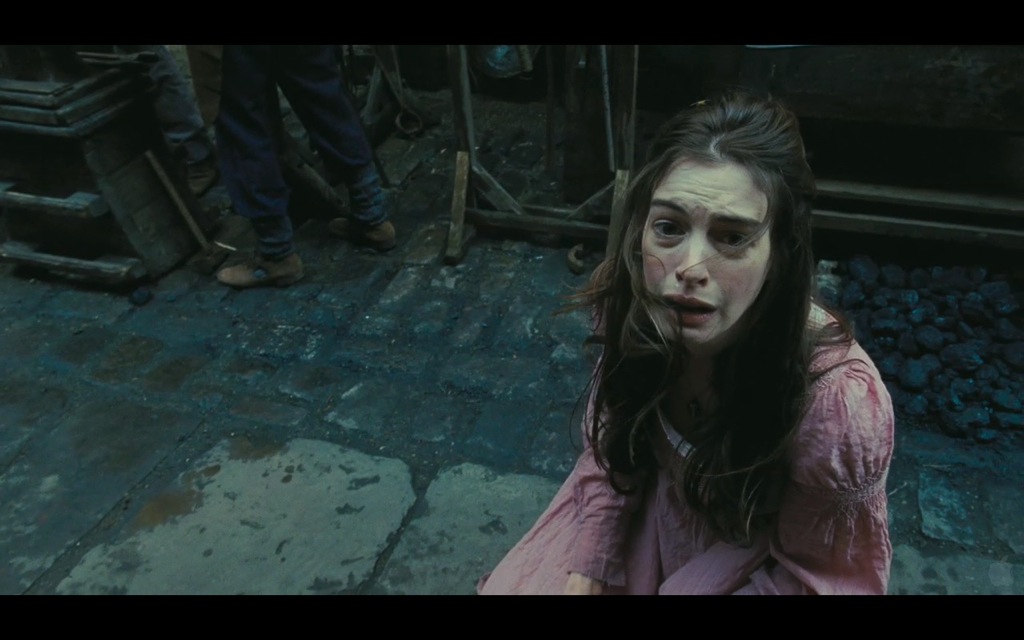
Anne Hathaway as Fantine, Les Miserables , picture image

Anne Hathaway as Fantine, Les Miserables (Get used to this framing style, it’s everywhere )


Les Misérables fails as movie. There is a visual language to movies that keep it interesting for a viewer. When a movie just has a actor perform without any camera work or interesting edits for 3 minutes the scene becomes stall. There is no point to filming a movie if you are not going to present the story in way that is visually interesting. I Dreamed a Dream is a prime a example.
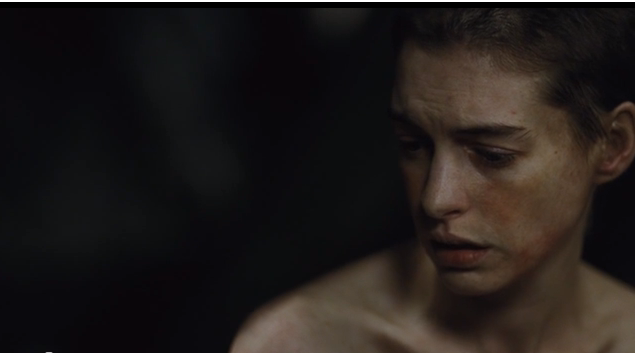
Anne Hathaway as Fatine performing  I Dreamed a Dream from Les Miserables, picture image

Anne Hathaway performing I Dreamed a Dream from Les Miserables (This looks more like an Ad than a still from a film)

Anne Hathaway gives a heartbreaking performance but after 30 seconds I became distracted by lacks of edits. How about a reverse shot? Even if was one take you can still have two camera angels. How about some zooms or pans. How about using the space in your sets? What’s with this stationary medium shot that is off center? It’s dull. The camera moves a bit but it’s really just to keep up with Hathaway’s movement and maintaining the frame. I understand that director Tom Hooper likes the off center placement of the shots and consider it “his thing”. It does promote a feeling of uncomfortableness and it worked well in The King’s Speech but it doesn’t work in Les Miserables. though it works in I Dreamed a Dream but I find it distracting after 30 seconds. Watching Anne Hathaway sing uncut for 3 minutes is not really any different from seeing the musical live but at least at live a performance you feel the energy of the actor. Then again, maybe I’m just heartless.


Paris, maybe, Les Miserables, picture image

Paris, maybe, Les Miserables

Then there is the issue that film doesn’t have any establishing shots and doesn’t give any indication of the passage of time. This make the narrative feel confused. But more than that without establishing shots you can’t see the sets. What is the point to having these sets that look like they could be great if you not going to show them to the viewer.
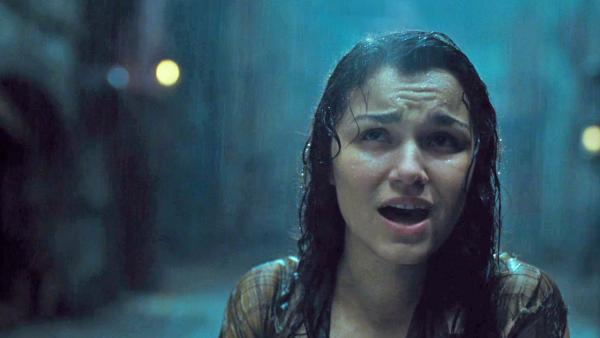
Samantha Barks as Eponine Les Misérables, picture image

Samantha Barks as Eponine Les Misérables

The point of taking a musical and making a film is to give the songs and story a visually interesting telling. The most interesting visual presentation of a song in this movie is Stars. Javert is walking on the edge of a bridge. That is interesting! (Even if Russell Crow was miserable in this movie) Jean Valjean pacing back and forth in a church, dull. Fantine crying about her life because of her crap day and half uncut, didn’t work visually . Epoine walking heart broken in the rain, zzzzzzz (and I like that song). What is the point of adapting this if your not going to be interesting with staging, filming or editing? Was it just to use establish actor is these roles? I think it might have been. Frankly I don’t give crap if the actor are singing live for a more a emotional performance. They played this way too straight. They should have been more artistic. The whole of this movie feels like gimmick to use the live singing and promote it. After all that seems what the film and the director are concern about not the viewer’s experience watching a movie.
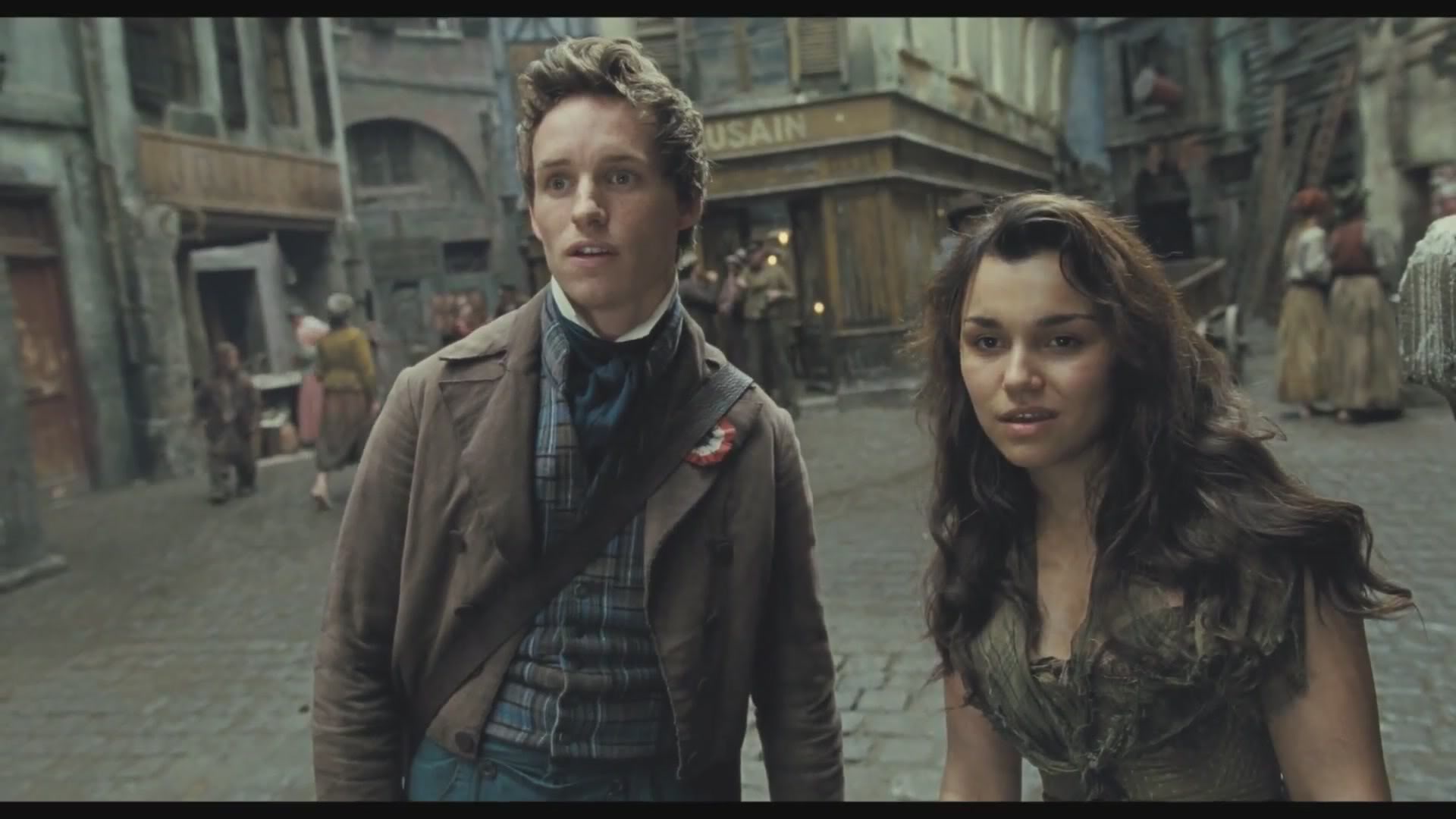
Samatha Barks as Epoine & Eddie Redmayne as Marius Les Miserables 2012, picture image

Samatha Barks as Epoine & Eddie Redmayne as Marius,
Les Miserables

However, because the film tries to play with the viewers’ emotions about these people we have to look at the characters to see if the film was successful. Because the film steamrolls over the narrative I can’t feel for any of these characters. It’s like BAM here is a character, BAM here’s their issue, BAM they’re in trouble don’t you feel sad? Answer, Not really. You meet Fantine, I don’t know who this character is so don’t feel that much when she goes through her hellish day and half (without time passage I don’t know how much time pass between her firing and death). How did she die? I know she dies of TB in the book but in the movie it seem it like death by plot….? Sorry Fantine, I wasn’t moved. I didn’t get a sense of your character so meh to you. Epoine same, you like Marius that’s nice he’s not into you….. ok…. oh you’re dead…… oh well. Javert’s obsession? Didn’t see it at all.
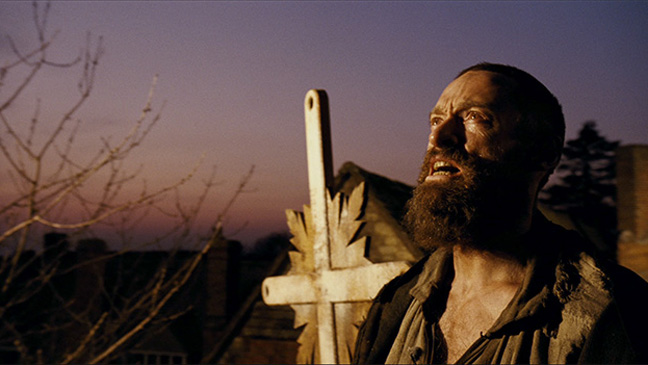
Hugh Jackman as Jean Valjean,  Les Misérables, picture image

Hugh Jackman as Jean Valjean, Les Misérables

Oddly enough the rare lines that are spoken (like 3 lines) were most genuine parts of the movie. I feel like Hathaway and Jackman were trying to win awards. Crow didn’t seem to care very much. Redmayne, Tviet and Barks did seem to try and they were at least successful for the most part. I think Tviet was probably the best as Enjolras.
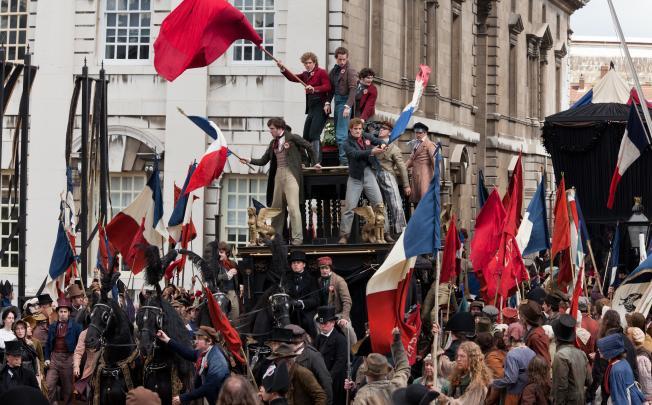
Do you hear the people sing, Les Miserables, picture image

Do you hear the people sing, Les Miserables

Do you hear the people sing felt like a movie, with visuals, that were slightly interesting, that kept your attention. Though I could do without the Dutch angles…. a pox on Dutch angles.
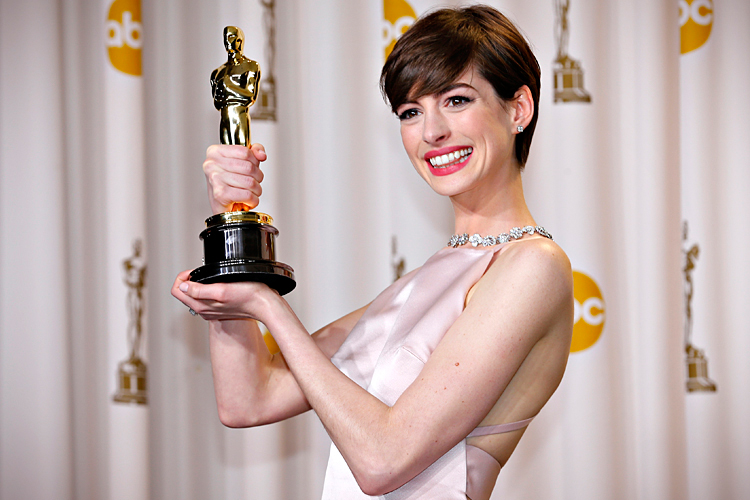
Anne Hathaway and  her Oscar,picture image

Anne Hathaway and her Oscar

I feel like this movie was blatant Oscar bait and considering it was nominated or 8 Academy Awards and won three I guess it was successful. It also won heaps of other awards and earned $437,710,466 at the box office, its budget was $61,000,000, and grossed $376,710,466. So, it was successful at that end of movie making which is the important part for studio. The film however has a polarizing effects on audiences and critically was not much cared for. Had the movie had clear establishing shots, clear passage of time indication, and more interesting presentations of scenes and songs it could have been much better. But for m,e as a viewer, it failed to be visually entertaining and emotional interesting.
The Bechdel test is a litmus test used to identify gender bias in fiction but its main application is for movies. The test was named after Alison Bechdel for her 1985 comic strip, Dykes to Watch Out for. Passing or failing the Bechdel test does not indicate the quality of the movie, a great movie will fail and a terrible movie will pass.

To pass the Bechdel test a work needs to meet 3 criteria; 1) It has to have at least two named female characters, 2) That talk to each other 3) About something other than a male.   Though some people thinks the duration of the conversation should be at least a minute. Most movies fail the Bechdel test.


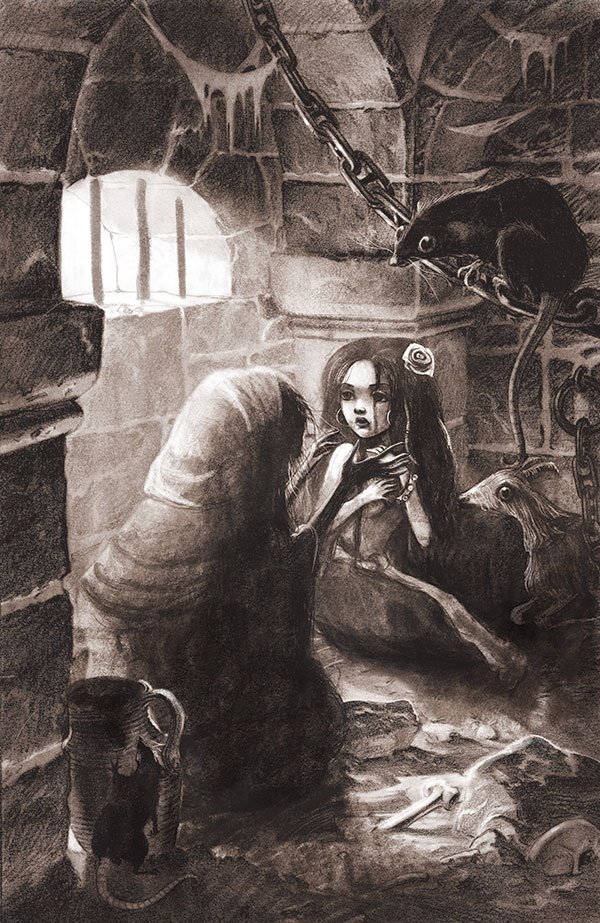
Esmeralda and Sister Gudule by Benjamin Lacombe, Notre Dame de Paris Tome 2 picture image

Esmeralda and Sister Gudule by Benjamin Lacombe from Notre Dame de Paris Tome 2

Most versions of the Hunchback fail the Bechdel test because there is typically only one to three named women in the movie; Esmeralda, Fleur de Lys, and Madame de Gondelaurier (given name Aloyse) and they never speak to one another in a conversion. Interestingly enough the novel passes as Esmeralda and her mother, Sister Gudule, (a.k.a Paquette Guybertaut, a.k.a. “La Chantefleurie” {talk about being named}) have a conversation about their identities. .


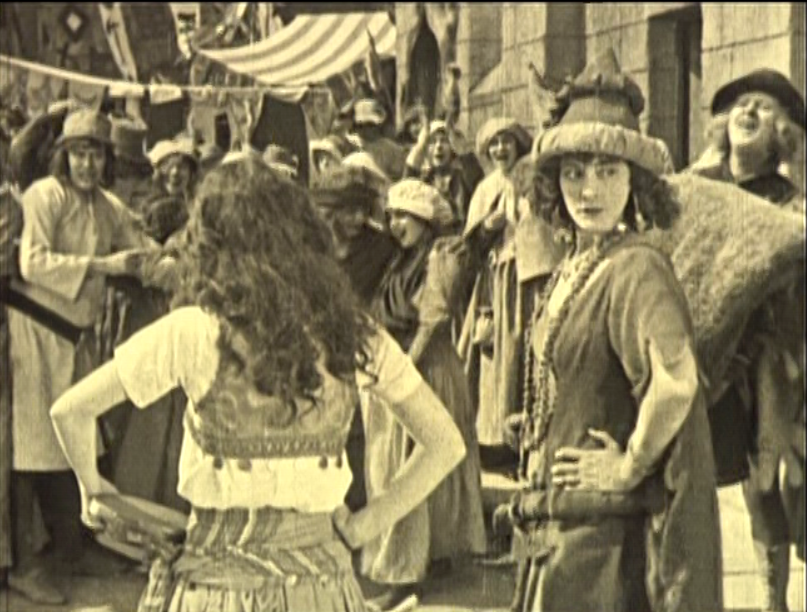
Gudule (Gladys Brockwell) Hunchback of Notre Dame 1923 picture image

Gudule (Gladys Brockwell) Hunchback of Notre Dame 1923

With exclusion of Sister Gudule’s character the story loses its overall female presence. Only three works maintain Gudule (or the mother figure) has a character; the 1923 version, the awful Enchanted tales version, and the abysmal Dingo version.


Marie; Queen of the Gypsies (Eulalie Jenson) Hunchback of Notre Dame 1923 picture image

Marie; Queen of the Gypsies (Eulalie Jenson) Hunchback of Notre Dame 1923

The 1923 version, out of all the Hunchback versions has the biggest female presence as it has five named females; Esmeralda, Madame de Gondelaurier, Fleur de Lys, Sister Gudule and Marie. Esmeralda, Marie and Sister Gudule have a scene where they sort of converse and Esmeralda and Marie have a conversation in another scene but it’s very unclear what it’s about. Fleur de Lys and Madame de Gondelaurier are always in scenes with Phoebus and they never really converse with other. But the scene with Marie, Esmeralda and Gudule would give it a pass for Bechdel test.


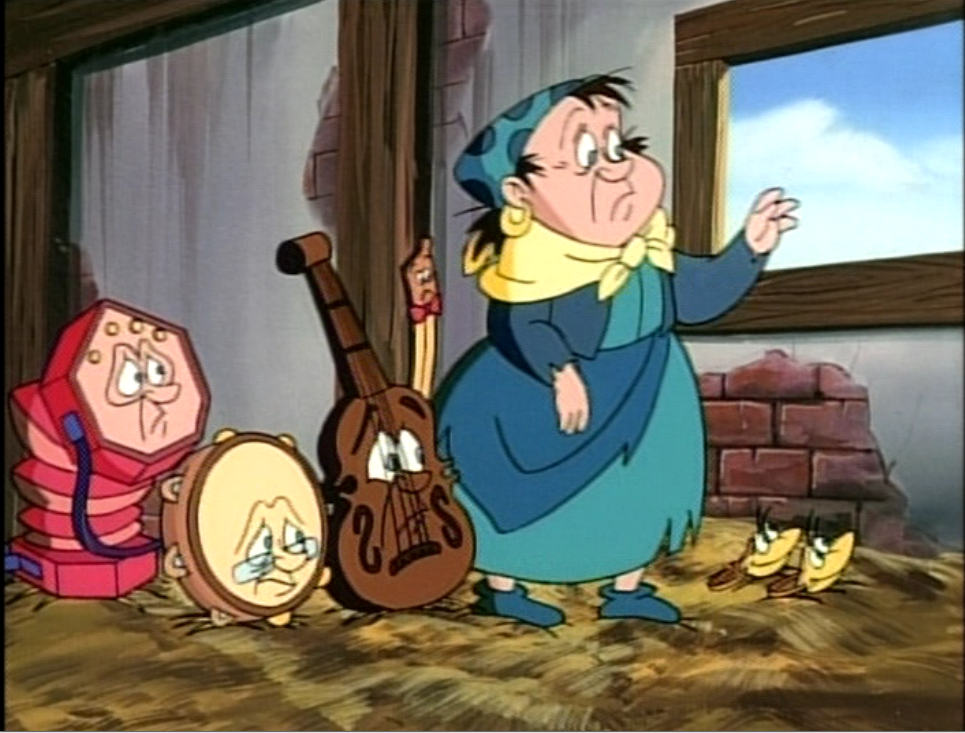
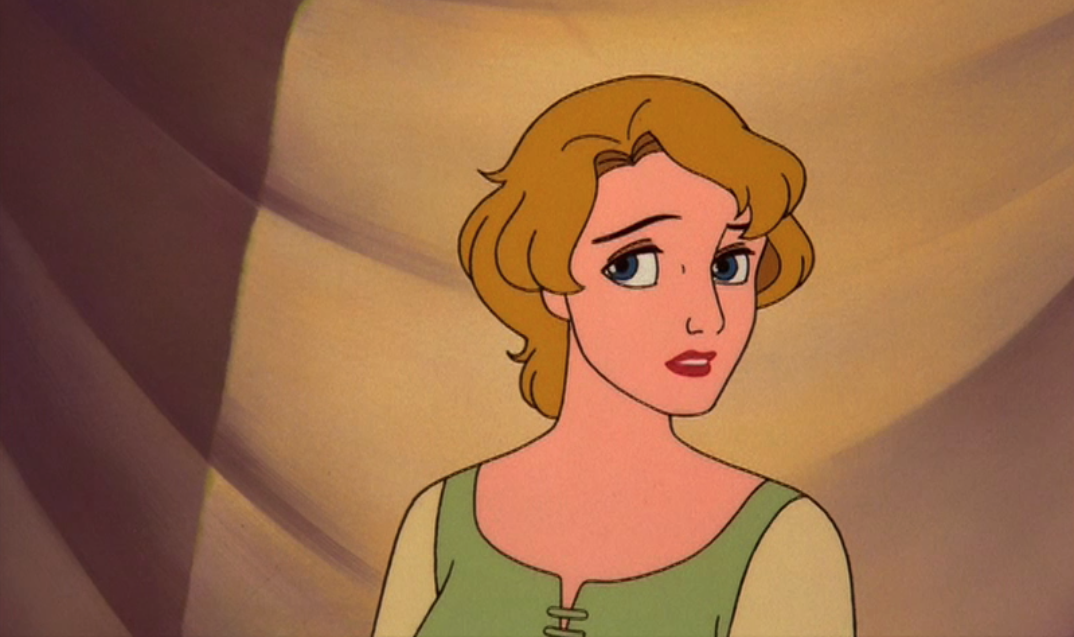
Genevieve with the Annoying Instruments, Enchanted Tales Hunchback of Notre Dame picture image

Genevieve with the Annoying Instruments, Enchanted Tales Hunchback of Notre Dame

The Enchanted tales version has Melody (Esmeralda) and her mother, Genevieve but they don’t have an conversation with each other plus those annoying instruments are in the way.  So it doesn’t pass.

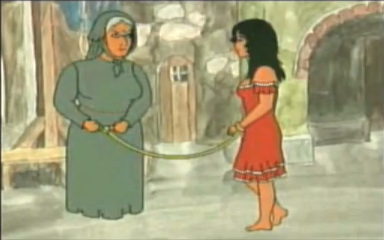
Esmeralda and her mother, Dingo Hunchback of Notre Dame, picture image

Esmeralda and her mother, Dingo Hunchback of Notre Dame


The Dingo version for all its badness does have Esmeralda and Sister Gudule speaking to each other about who there are so it sort of gets a pass and sort of fails because Sister Gudule isn’t referred to by name it only if you make the connection to the book that you know her name. Though this could be an oversight in the dub.


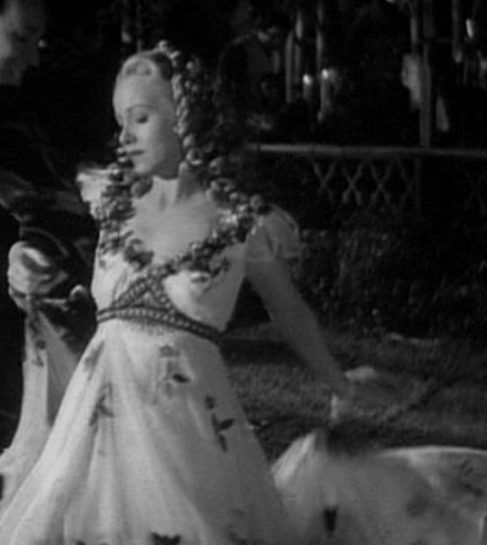
Fleur de Lys (Helene Whitney) 1939 Hunchback of Notre Dame costume picture image

Helene Whitney as Fleur de Lys, 1939 Hunchback of Notre Dame

The other Hunchback movies fail. In the 1939 version it’s really only Esmeralda. Fleur de Lys is a featured extra that is mentioned by name but they share no dialogue with other.


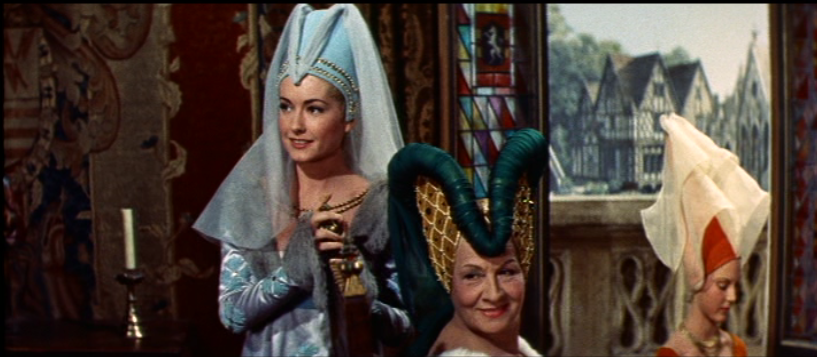
Danielle Dumont as Fleur de Lys, 1956 Hunchback of Notre dame picture image

Danielle Dumont as Fleur de Lys, 1956 Hunchback of Notre dame

In the 1956 version there is Esmeralda, Aloyse de Gondelaurier, and  Fleur de Lys. Aloyse de Gondelaurier, and  Fleur de Lys only shared dialogue is about Phoebus and  Madame de Gondelaurier’s husband.


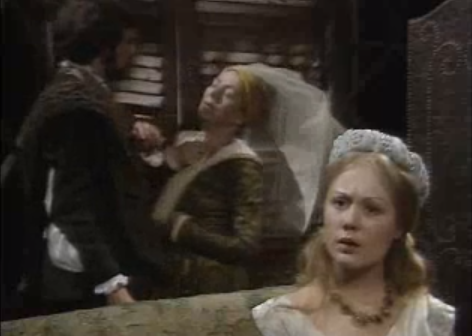
Hetty Baynes as Fleur de Lys, Ruth Goring as Madame de Gondelaurier, and Richard Morant as Phoebus, 1977 Hunchback of Notre Dame picture image

Hetty Baynes as Fleur de Lys, Ruth Goring as Madame de Gondelaurier, and Richard Morant as Phoebus, 1977 Hunchback of Notre Dame

The 1977 has  Fleur de Lys and Madame Gondelaurier but Phoebus is in all their scenes.

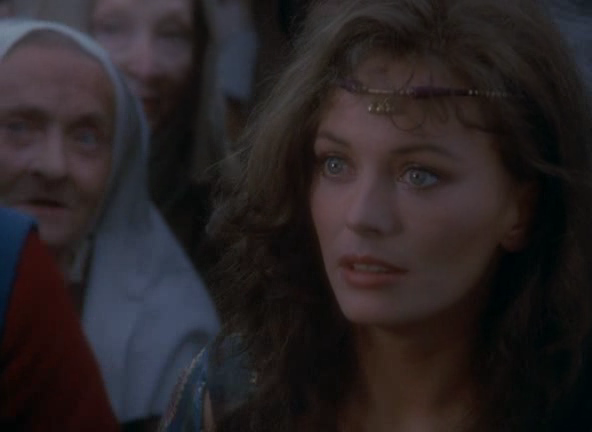
Lesley-Anne Down as Esmeralda, 1982 Hunchback of Notre Dame, picture image

Lesley-Anne Down as Esmeralda, 1982 Hunchback of Notre Dame

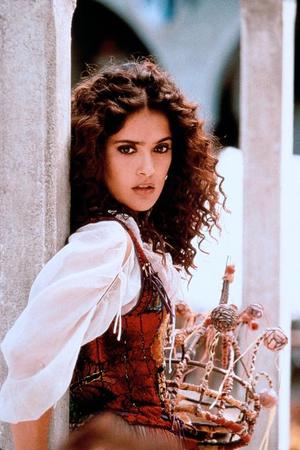
Salma Hayek as Esmeralda, 1997 Hunchback of Notre Dame, picture image

Salma Hayek as Esmeralda, 1997 Hunchback of Notre Dame


The 1982 and the 1997 version only really have Esmeralda as the only female character.

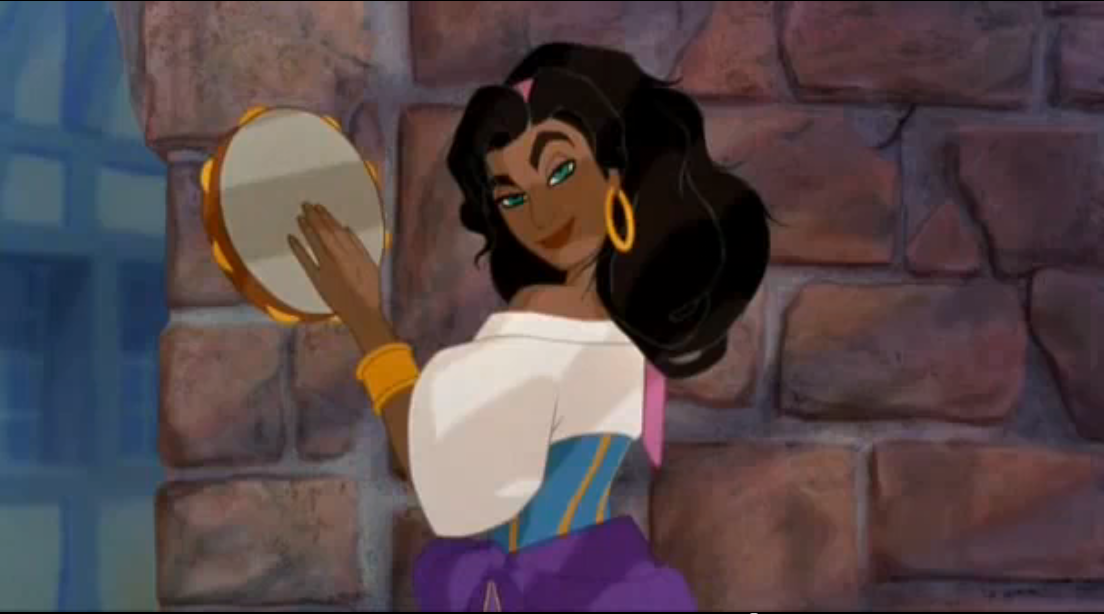
Esmeralda Disney Hunchback of Notre Dame picture image

Esmeralda, Disney Hunchback of Notre Dame

Laverne Guy like you Disney Hunchback of Notre Dame image picture

Laverne Guy like you Disney Hunchback of Notre Dame

Madeline Sequel Hunchback of Notre Dame II Disney picture image

Madeline Hunchback of Notre Dame II Disney


The Disney version has two named females; Esmeralda and Laverne and they never speak to each other. This goes for Der Glöckner von Notre Dame as well.  As for the Disney sequel we get three females with the addition of Madeline.  However none of these characters speak to each other.   3 Fails.


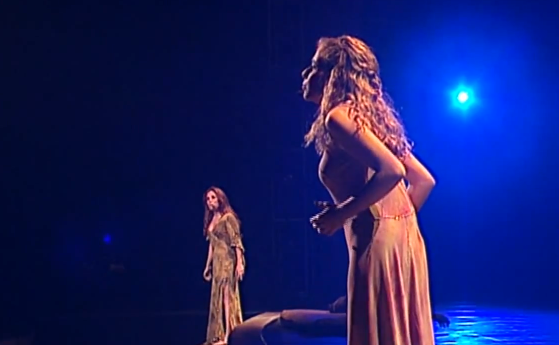
Juie Zenatti as Fleur de Lys & Helene Segara as Esmeralda, Notre Dame de Paris Original Cast, picture image

Juie Zenatti as Fleur de Lys & Helene Segara as Esmeralda, Notre Dame de Paris Original Cast

The musical Notre Dame de Paris has Esmeralda and Fleur de Lys and while they share a song Beau Comme Le Soleil it’s clear that they singing isolation and it’s very much about Phoebus. So it fails.

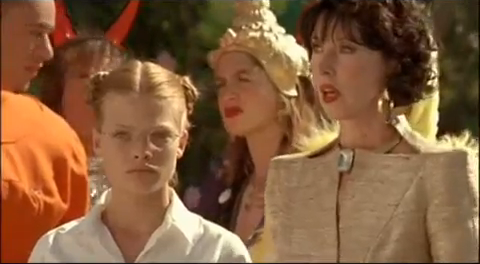
Mélanie Thierry as Esmeralda/Agnes and Axelle Abbadie as Mme Le Gouverneur, Quasimodo d'el Paris, picture image

Mélanie Thierry as Esmeralda/Agnes and Axelle Abbadie as Mme Le Gouverneur, Quasimodo d’el Paris

The parody version Quasimodo d’El Paris has a few named females characters Esmeralda/Agnes, Mme Le Gouverneur (if that counts as a name), Gudule, and Mme Jackson. They don’t really have a conversation with each other. Esmeralda and Mme Le Gouverneur exchange a line of dialogue before it shifts to a man. Fail


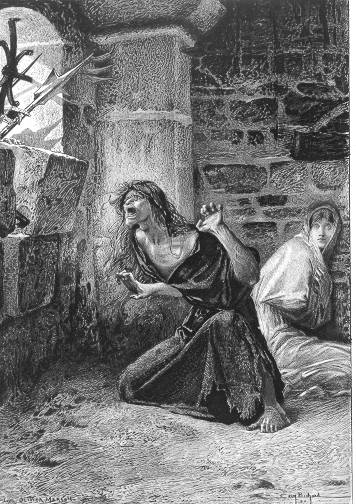
Illustration Sister Gudule and Esmeralda by  Luc Oliver Merson picture image

Illustration Sister Gudule and Esmeralda by Luc Oliver Merson

The point of  The Bechdel test isn’t to pass or fail, its point is to show the overall presence of females in media and how integral they are to the story but it mainly shows gender bias. The Hunchback is at a core a story of how one women impacts men, so by its very concept it has to have more males. However even though it’s a story that center around a women it’s still a male driven story. With Sister Gudule there is a more female presence and the exclusion of character from the majority of the retellings does pretty much kills female presence in the story.

The last time I spoke about the movie Hotel Transylvania I admitted I hadn’t seen it (read here). But now I have. So I took the time out my busy schedule of sitting down to sit down and watch this movie.

Hotel Transylvania picture image

Hotel Transylvania

So the movie of a whole was “meh-to-bad.”  It’s a pretty standard premise and homaging the universal monsters isn’t a new thing. Plus humans in the monster world isn’t anything new The pop-cultural reference were very annoying but I did enjoy the atmosphere.  BUT we’re here to talk about Quasimodo and his depicted in this film or lack there of.

Quasimodo & Esmeralda from Hotel Transylvania Game picture image

Quasimodo & Esmeralda from Hotel Transylvania Game

So after I watched Hotel Transylvania and re-reading my previous post I will say I was wrong. Esmeralda is a mouse. She is not a rat. I’m sorry.

Quasimodo in Hotel Transylvania picture image

Quasimodo in Hotel Transylvania

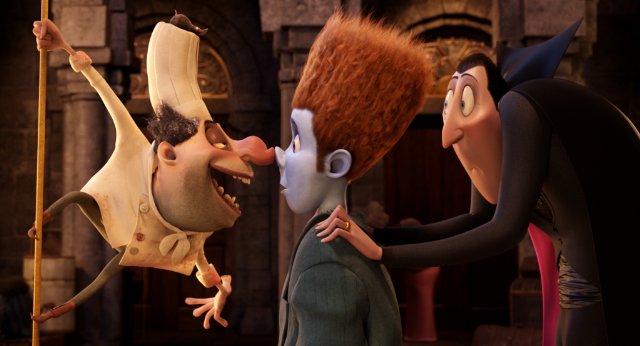
However Quasimodo’s depiction is just really mind boggling. First he’s the key antagonist as he gives Jonathan, the token human, the out. But why? Why is Quasimodo even at the hotel. Why is he a chef? Why does he want to eat a human? So since Quasimodo is a human himself he has cannibal tendencies? I still see this role as a plug in. They had a a villain chef who has a mouse to copy Ratatouille and they needed one of the Monsters to fill in  and since who ever wrote this didn’t care much for the source materials, as none of the monster  bare much in common with their original movies, the just used Quasimodo as he is French and French chef is a nice little trope. From there the just gave him acrobatics to do since it looks cool. Really, the most Quasimodo-ish thing he does is he kidnaps someone but that is it.

Not-Quasimodo Wilson, Jonathan the Human and Adam Sandler Hotel Transylvania picture image

Not-Quasimodo Wilson, Jonathan the Human and Adam Sandler Hotel Transylvania

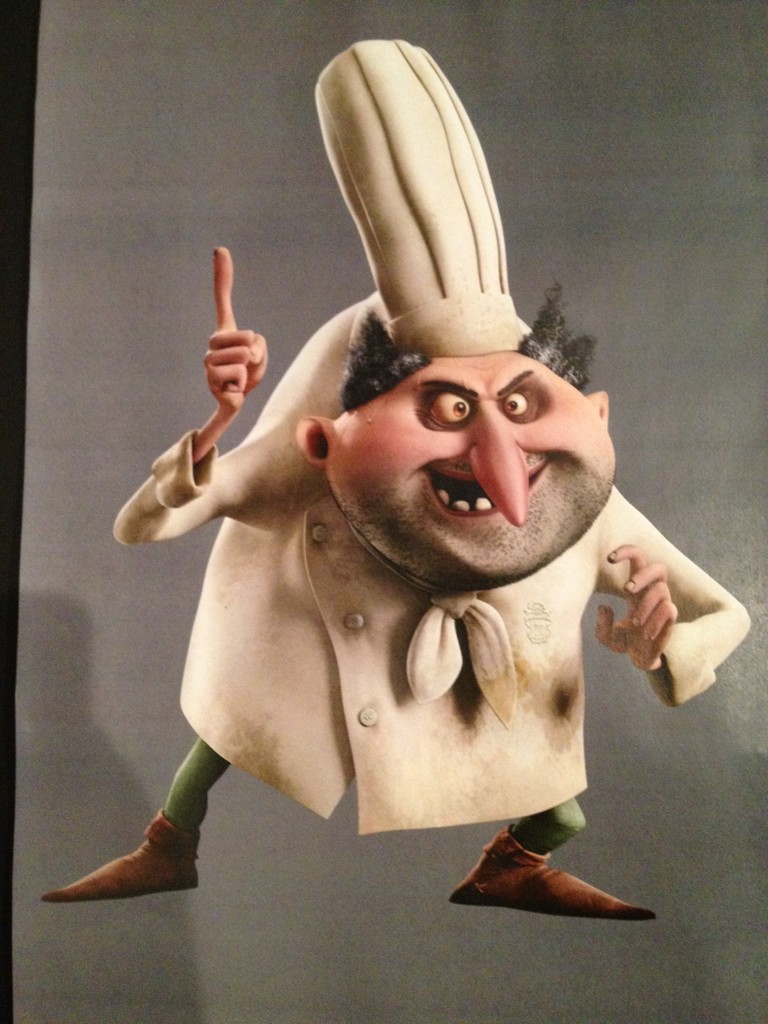
Now I had read that they designed the Monsters after the people voicing them. But Quasimodo doesn’t look much like Jon Lovitz nor does he look like Quaismodo. I mean sure he has a hunch and one eye is slightly smaller but geez is this most bland Quasimodo depiction. Quasimodo is his look you can’t separate that accept out. The legging and shoes look the most like Quasimodo and that is because they copy that from the Disney movie.

Art of Quasimodo, Esmeralda the Rat and Jonathan by Pete Oswald Hotel Transylvania picture image

Art of Quasimodo, Esmeralda the Mouse and Jonathan by Pete Oswald Hotel Transylvania

I won’t say that this couldn’t have worked. Had Quasimodo made a villain speech about how he was cast out his beloved home after the love of his life left and he found comfort in cooking and meet his pet mouse.  Or had he just called the kitchen his “Sanctuary” it would have been something. With references to original character instead nothing it would have better but instead of paying  homage the Universal Monsters which was kind of the point  the movies  references to LMFAO and other insipid pop-culture stuff. But that is the main problem with the movie it doesn’t have any character development except Dracula who has to learn to let his child go which same lesson as King Triton in The Little Mermaid.  The movie is more concerned with trying to convince its audience that’s its fun instead of having fun characters.

Also Why Wilson? Why is that his last name? Is it because all the monsters got normal names?  I mean he didn’t need a last name only Mavis got a last name. But why Wilson ? It doesn’t make sense and it’s not silly. So why????

For a while I have been thinking about films that has similar character types to The Hunchback of Notre Dame. Like movies that feature Hunchbacks, Gypsies, Obsessed creepy guys, etc.

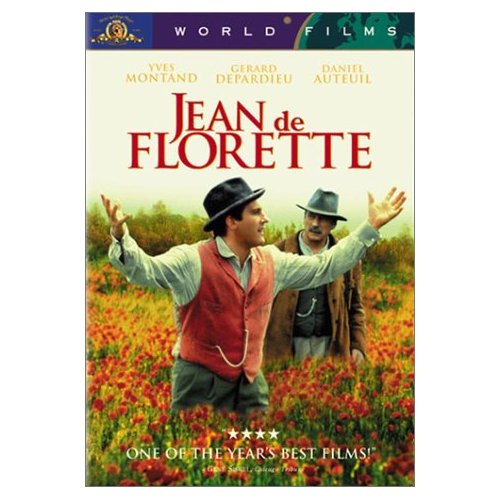
One famous movie to feature a Hunchback in it is called Jean De Florette.

Gérard Depardieu and Yves Montand inJean De Florette picture image

Gérard Depardieu and Yves Montand inJean De Florette

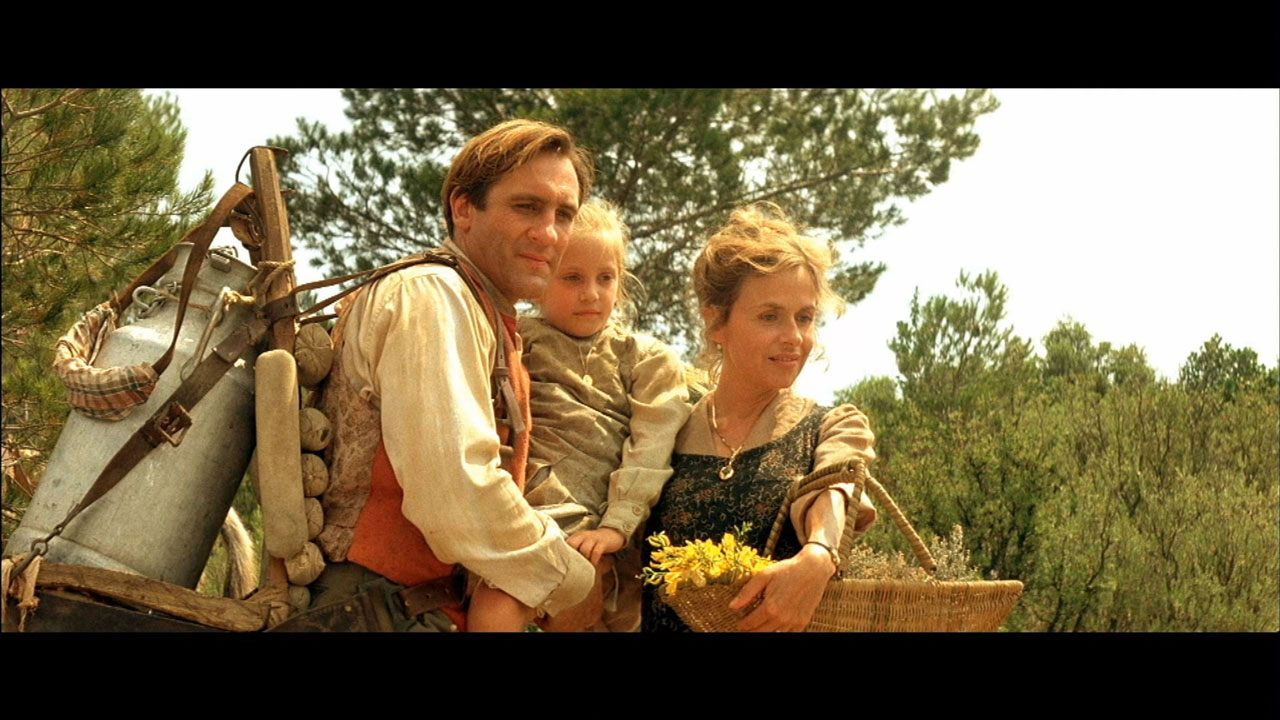
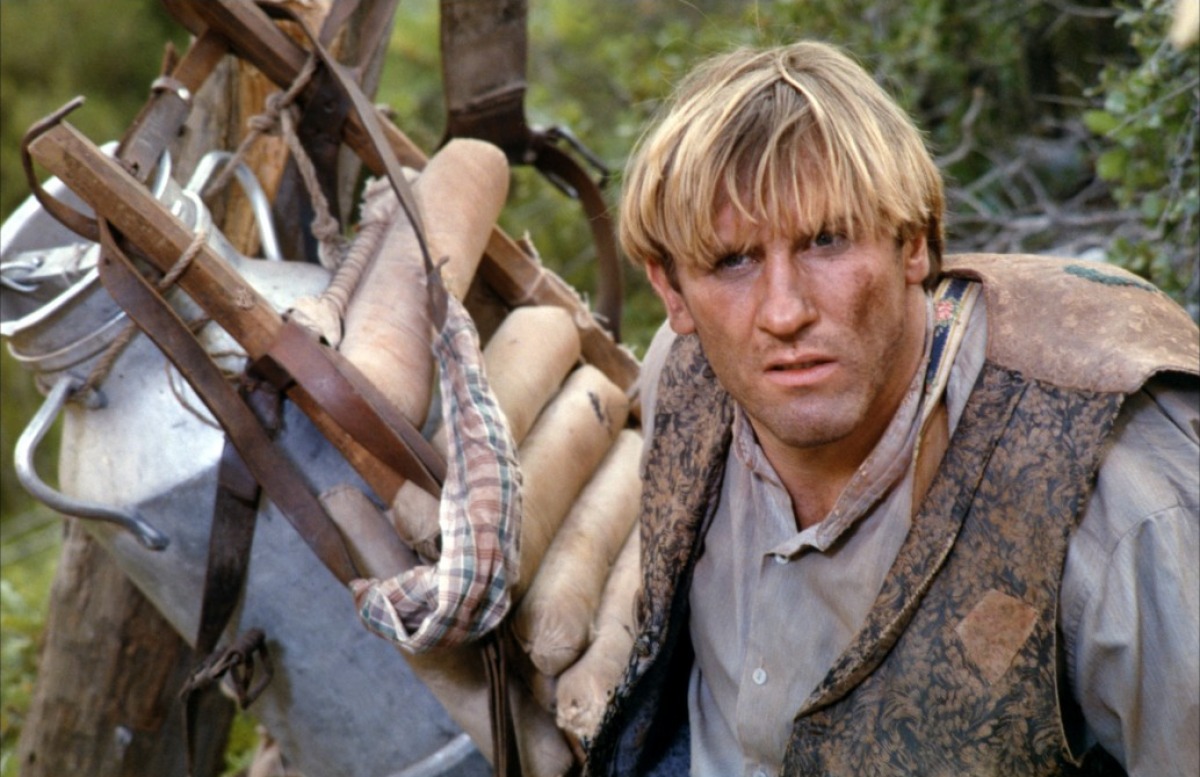
It stars Gérard Depardieu as Jean de Florette who is a hunchback. Unlike Quasimodo he is not ugly, Daniel Auteuil’s character, Ugolin covers that as well as creepy romantic obsession in the second part Manon of the Spring (more on this in another post). The two films make up one story.

Gérard Depardieu as Jean with his wife Aimee (Elisabeth Depardieu) and Daughter Manon (Ernestine Mazurowna), Jean de Florette picture image

Gérard Depardieu as Jean with his wife Aimee (Elisabeth Depardieu) and Daughter Manon (Ernestine Mazurowna), Jean de Florette

So what is the movie about? Basically, a greedy landowner, Cesar Soubeyran (Yves Montand) and his nephew Ugolin want the property next to them. When the owner is killed in a fight his nephew Jean Cadoret, a tax collector and a hunchback, inherits the property. He moves in with his wife Aimee and young daughter Manon and tries to live off the land. But Cesar and Ugolin’s designs on getting Jean’s property push them to ruin Jean.

Gérard Depardieu as Jean De Florette picture image

Gérard Depardieu as Jean De Florette

The sequel Manon of the Spring picks off where Jean de Florette left off and it gives a reason for why Jean was a Hunchback that could be applied to Quasimodo. I won’t say what it is but it’s fun to think about what caused Quasimodo’s deformity.


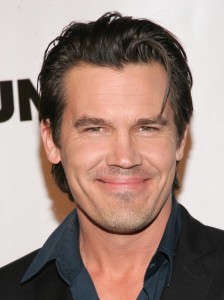
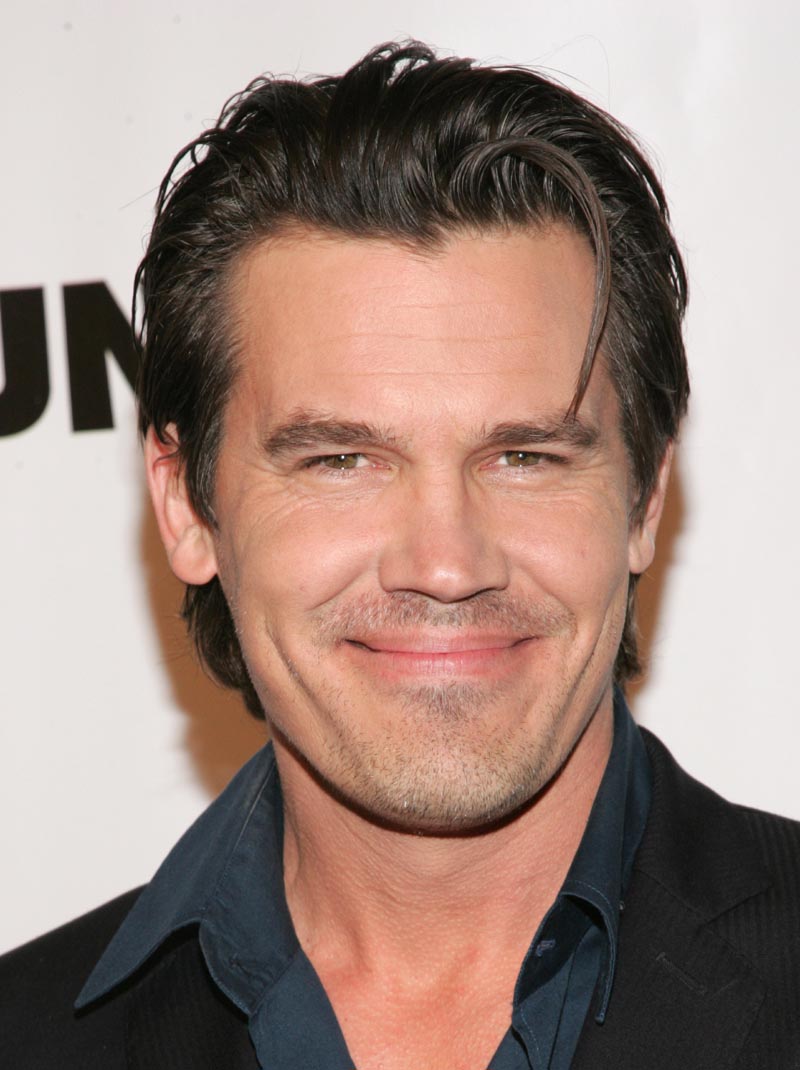
Josh Brolin picture image

Josh Brolin

So a new article regarding the upcoming Josh Brolin’s version of the Hunchback  has come out on Belfast Telegraph website on January 14th 2013.  So what new details have come to light? Apparently they’re going to use CGIs. Wow! You never seen that in films these day, clearly this is revolutionary.

Finale CG Crowds Hunchback of Notre Dame Disney

Finale CG Crowds Hunchback of Notre Dame Disney

All sarcasm aside this all the only new detail this article offers but there is some much else that is wrong here. First a quote, “Not only will this be the first version to use CGI ” Ummm, not to say you’re wrong but you’re wrong. The Disney version used tons of them. Remember the dated looking CG extras? Clearly either Brolin didn’t know or the writer didn’t, but I’m just going to blame Brolin.

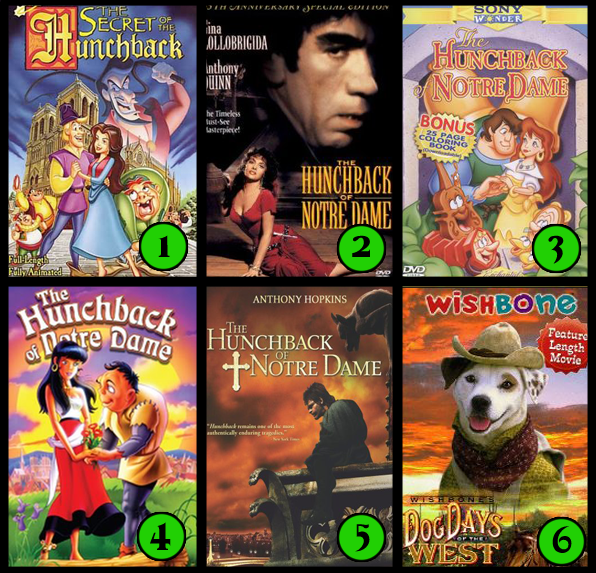
The secret of the hunchback, 1956, enchated tales, jetlag, 1982, wishbone picture image

Brolin only counted two of these versions and I bet he doesn’t know the other 4 exist

Second, Brolin has no idea how many versions of Hunchback there but knows the exact number of featured  movies.  Clearly, he has movie bias and isn’t concerned with the operas, ballets,  plays, musicals, graphic novels ect. Now I don’t fault him for not knowing the number of versions, I fault him for guessing two numbers that are wrong when he should has just used a vague term like “lots” or “tons” or the ever popular “many”. Just makes him look like an idiot. Maybe he is just bad at interviews or he was trying to be witty. Or he thinks he get any with because most people don’t know about half the versions.

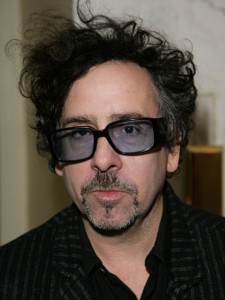
Tim Burton picture image

Tim Burton

But those things are not my main issue. My main issue is  that since this version has been made public about its development we have heard nothing beyond vague plot details, Brolin is  playing Quasimodo, Brolin is excited about the project and now they are using CGI. Who really care if the use CGI? We still have no idea of who  is going to in it beside smug-pants Brolin, if Tim Burton is indeed involved with the project or much else.

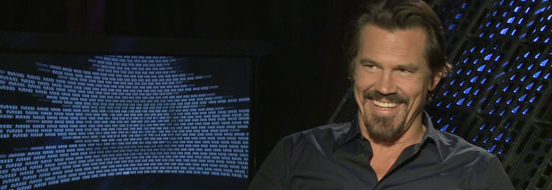
Josh Brolin Interview for Men in Black picture image

Josh Brolin Interview for Men in Black

I mean I get what Brolin is doing, he keeping up the buzz on the project. But just saying your exited about it every few months is not really interesting. Then again this movie could be development hell. I mean this project was made public on February 28th 2011. You would think after two years in pre-production of film that has already been made public they could at least tell people who was directing the movie. Though maybe this info in on IMDb PRO and regular users aren’t privy to the information.  So who knows many more articles like this we get till the Brolin offers up more info.

Read the article here;
http://www.belfasttelegraph.co.uk/entertainment/news/brolin-i-enjoy-hunchback-risk-16260934.html

Here’s a question, why hasn’t there been a well executed and accurate version of The Hunchback of Notre Dame outside of France? Is it because it just a hard book to adapted into a film? The answer is yes and no. First, the book doesn’t have a traditional happy ending. It ends with pretty much everyone either dead or unhappy in some capacity.

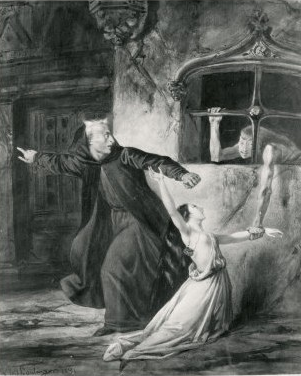
Louis Boulanger's Illustration of Frollo, Esmeralda and Sachette picture image

Louis Boulanger’s Illustration of Frollo, Esmeralda and Sachette

Typically when characters die in movie it’s for one of two reasons, either they die for someone’s else sake like Jack in Titanic or they get punished for for being bad like any number of movie villains. In Hunchback we have these death with Frollo and Quasimodo but Esmeralda’s death is the tricky one. She is neither punished nor scarified for anything. She dies because she didn’t want Frollo and no one was capable of saving her. Her death is very hard to accept which is why typically she lives in film versions. There have only been two movies where she dies, neither of them are American. However if a movie did want to be true to the book and have the same ending the audience could get over it and if the movie was well executed the audience might enjoy it as well.
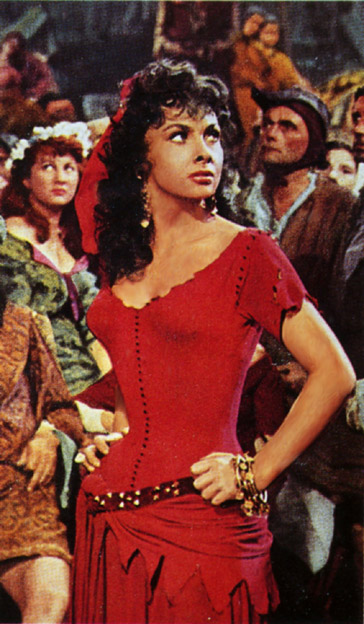
Gina Lollobrigida 1956 as Esmeralda picture image

Gina Lollobrigida as Esmeralda (1956)

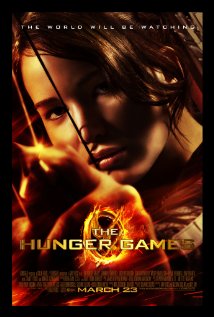
But there is more to it than filmmakers not wanting to deal with the death of the leading lady as the reason. Classic literature has often been tweaked by screenwriters since it allows for them to use established characters and plots but their is no pressure from the filmgoers to make the movie in line with book. Perhaps if the Hunchback of Notre Dame had the same die-hard fan-base as Twilight The Hunger Games or even Gone with the Wind maybe we would get an accurate version.
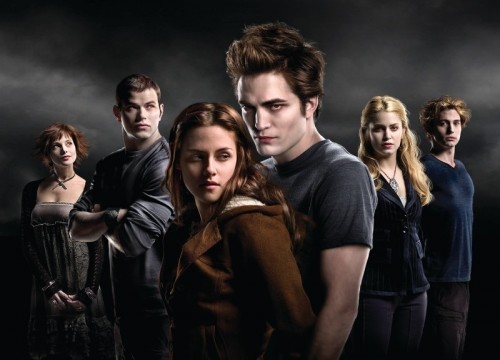
Twilight picture image

Twilight

The Hunger Games picture image

The Hunger Games

Gone with the Wind picture image

Gone with the Wind


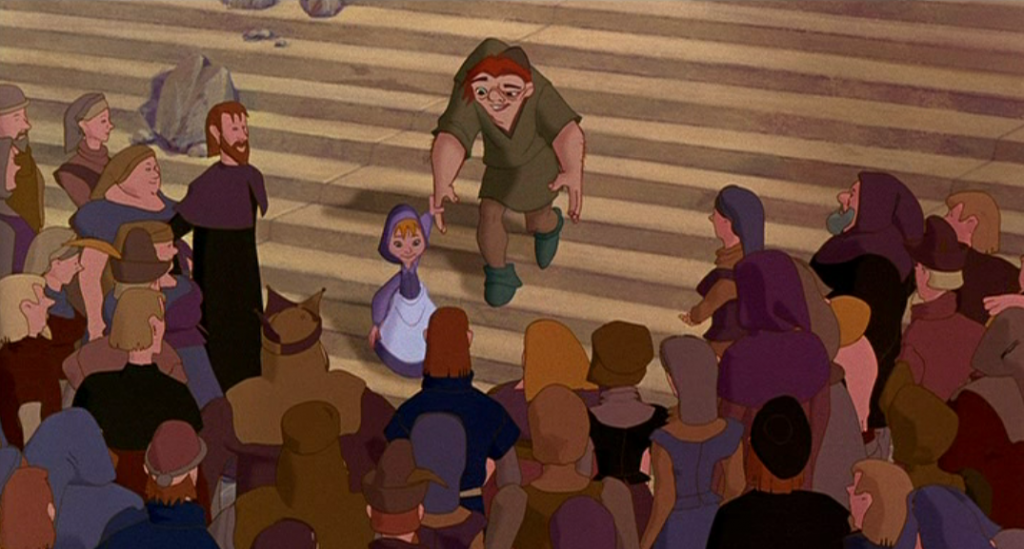
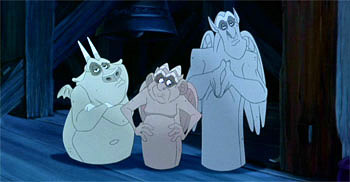
These three movies based on popular literature more or less capture the original book or series of books whereas Hunchback movies never do. Although Hunchback does have more complexity to plot and tone than Twilight, The Hunger Games and Gone with the Wind. But if Hunchback did have the same levels of popularity within popular culture as a book screenwriters would be less compelled to be creative with the story like making Esmeralda a champion for equality, have her pray, Frollo as a judge and a cat lover, singing semi-imaginary gargoyles who tell fart jokes etc.

The Gargoyles; Hugo Laverne, Victor Hunchback of Notre Dame Disney

The Gargoyles; Hugo Laverne, Victor Hunchback of Notre Dame Disney

Perhaps one day there will be a version that is well executed and accurate or at the very least captures the original mood of the book. Till then we have the “jazzy” Brolin movie to look forward to.

Josh Brolin picture image

Josh Brolin

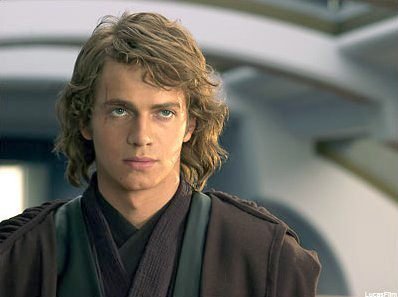
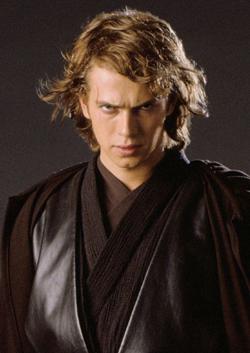
Hayden Christensen as Anakin Skywalker, Star Wars Episode III Revenge of the Sith picture image

Hayden Christensen as Anakin Skywalker, Star Wars Episode III Revenge of the Sith

Let’s consider  the Star Wars Prequel for a moment. Before the movies came out everyone wanted to know how Anakin went for being a nobel Jedi knight to an evil jerk called Darth Vader. However the way the “seduction” to dark side occurs in the Prequels was just stupid. Anakin was basically a bad-apple who was tricked into it because he couldn’t stand loss and didn’t have the power to fix his problem. It was lame.


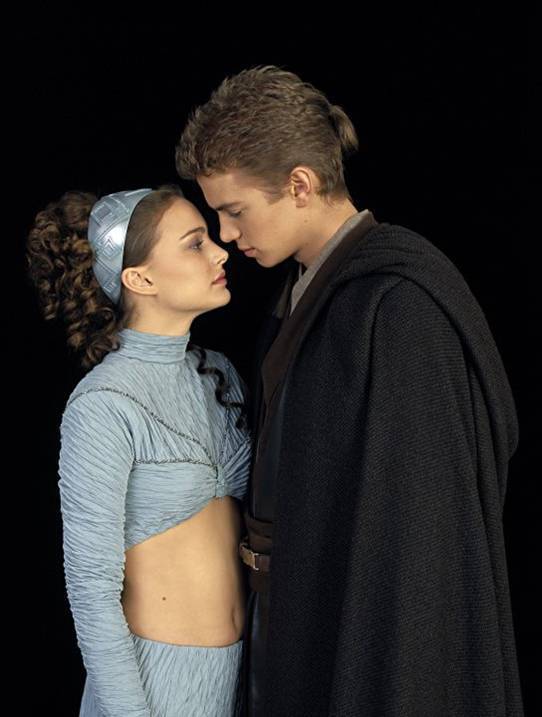
Natalie Portman as Padme & Hayden Christensen as Anakin Skywalker, Star Wars Episode II Attack of the Clones picture image

Natalie Portman as Padme & Hayden Christensen as Anakin Skywalker, Star Wars Episode II Attack of the Clones

There was also the his relationship with Padme.  Basically Anakin pressures Padme to giving into him by having a romantic/sexual relationship. But Anakin feels nothing about ignoring the Jedi doctrine  on having romantic attachments. Here is where I think Geogre Lucas should have taken a page from the Hunchback (pardon the pun).

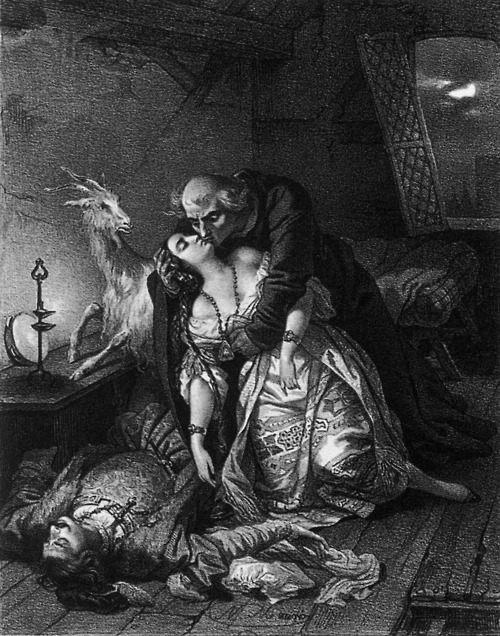
Frollo kissing Esmeralda, Illustration by Nicolas Eustache Maurin picture image

Frollo kissing Esmeralda, Illustration by Nicolas Eustache Maurin


Frollo would have been the perfect model in which Anakin could have been seduce by the Dark Side. Frollo starts out as upstanding nobel priest who worked hard to gain respect. However he really couldn’t capture people’s hearts but he maintained good and charitable acts. However once he saw a young girl he was undone and started to commit horrible acts in the pursuit of her.


Hayden Christensen as Anakin Skywalker, Star Wars Episode III Revenge of the Sith picture image

Hayden Christensen as Anakin Skywalker, Star Wars Episode III Revenge of the Sith

Not that I think Anakin should have done the same same things as Frollo but the torment of love for a women should have been there. He should have had more conflict between his desire for love and and his Jedi training. In Episode II, which was the core of the Love story takes place, there is no conflict for him. He begs for sex and Padme uses her career as an excuse. It was so dull and awkward.  The torment would have added so much drama and sympathy for Anakin just like Frollo

Get the whole Star Wars Saga

Hotel Transylvania picture image

Hotel Transylvania

I haven’t seen Hotel Transylvania yet so feel free to call me out on anything I get wrong. I had mentioned in another post that Quasimodo was a chef which parodies his being French rather than his role as a monster because let’s face it, Quasimodo is not a monster, he’s deformed, not a monster. Calling him a monster was just a marketing gimmick by Universal Studios. Remember Lon Chaney’s first big role was Quasimodo and was Universal’s first major film. The 1923 version started the monster trend. Putting Quasimodo in the league with Dracula, Frankenstein, and werewolves is moronic. I’m really surprised that the Phantom wasn’t shoehorned in the movie. Oh wait, a cave is shaped like the Phantom’s face so he was. Kudos movie.

Quasimodo in Hotel Transylvania picture image

Quasimodo in Hotel Transylvania

However my annoyance with the movie’s representation of Quasimodo goes a step further, Quasimodo is an antagonist. What? Huh? Quasimodo is a bad guy? Well that’s certainly a new spin on the character. I mean he did throw someone off a building in a fit of rage but is that enough to turn him into more are less a villain? Consider that Quasimodo is hardly ever depicted as anything but a kind soul. But wait there is more.

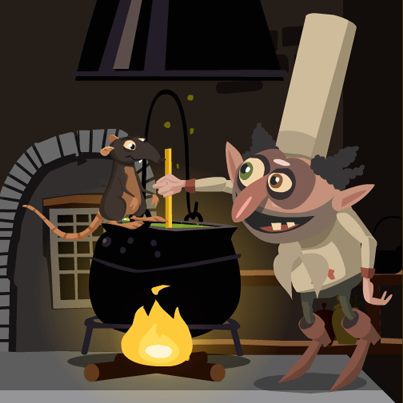
Quasimodo & Esmeralda from Hotel Transylvania Game picture image

Quasimodo & Esmeralda from Hotel Transylvania Game

Quasimodo has a side-kick rat named…. wait for it……..Esmeralda. What? Esmeralda is a rat? What? The Beautiful and Graceful Esmeralda is a rat? I can’t process this. So let me get this right Hotel Transylvania, Quasimodo is a chef and has a rat?  Maybe she is a pretty rat? Oh, I get it, they’ re knocking-off of Ratatouille. So Quasimodo wasn’t funny enough on his own merits so Sony Pictures had to reference a Pixar movie all while knocking-off classic monster movies? Or maybe because the writers had no idea how to included Quasimodo in the movie but they had to as The Hunchback started the Monster movie trend so they just made him the chef. And since there is nothing in Quasimodo’s characterization in this representation of him in this film they named the rat Esneralda to link him to movie even though it makes no sense to call the rat Esmeralda. He also has Gargoyle minions which is a reference to the Disney movie.

Not-Quasimodo Wilson, Jonathan the Human and Adam Sandler Hotel Transylvania picture image

Not-Quasimodo Wilson, Jonathan the Human and Adam Sandler Hotel Transylvania

One more thing, why is Quasimodo’s last name in this move “Wilson”? Why not give him some goofy French name, would have made more sense that “Wilson”. Or maybe there referencing something, that seems to film’s raison d’etre. I mean even the title is reference to the song Hotel California, because they both have the word “Hotel” and end in “nia.” It’s supposed to clever or something.
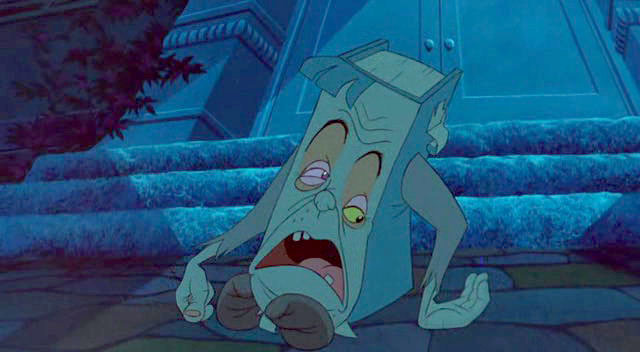
Art of Quasimodo, Esmeralda the Rat and  Jonathan by Pete Oswald Hotel Transylvania picture image

Art of Quasimodo, Esmeralda the Rat and Jonathan by Pete Oswald Hotel Transylvania

This isn’t Quasimodo and there isn’t enough of him to be a proper reference to any version of Quasimodo. It’s pretty clear that the writers knew of Quasimodo from the Chaney version and the Disney version but not enough to make a decent connection to the character’s legacy.

I have since writing the post seen the movie, you can read that post HERE

Horror from The Pagemaster  picture image

Horror from The Pagemaster

The Pagemaster is a forgettable little movie about a boy over coming his fears by reading books. In the boy, Richie, played by Macaulay Culkin, gets trapped in alternative library reality where he encounters three annoying books one is called Horror. Horror resembles Quasimodo. He also at one point shouts “Sanctuary” (no no real reason) and anyone who yells the word “Sanctuary” in a film is a referencing Quasimodo.

This featurette is all about how the actors in the Le Mis movie are all singing live in the takes and how in this approach they can add so much to their performance.  I think this approach is  a good one.  Les Miserables is a very gritty story so the vocal performance really should have a rawness to them.  I hope more movie musicals will take this approach in the future.