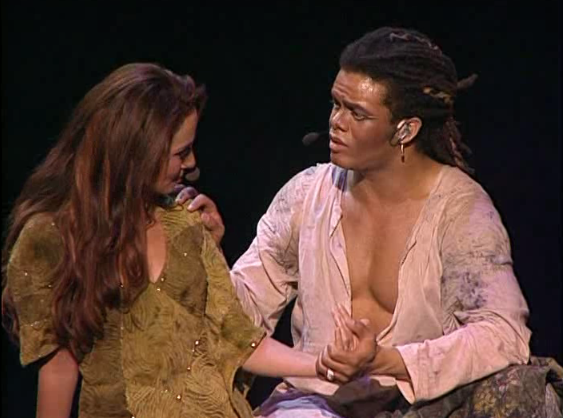
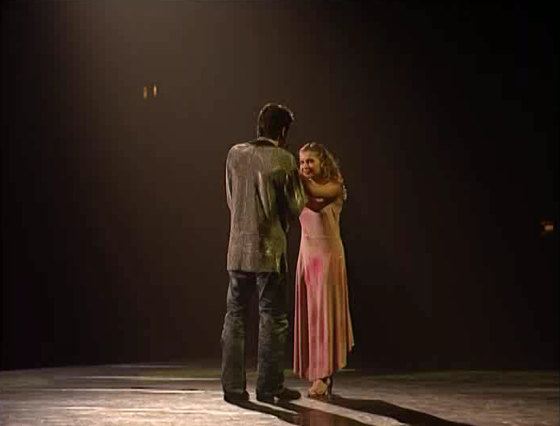
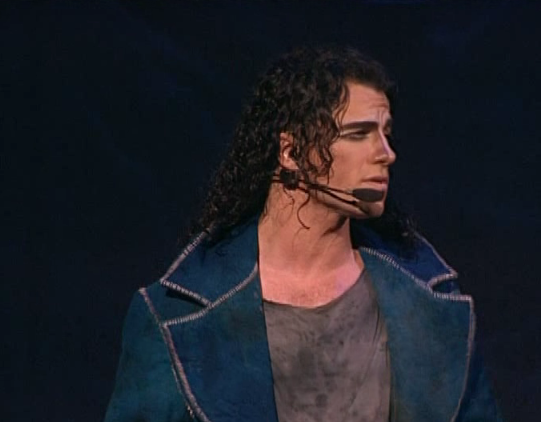
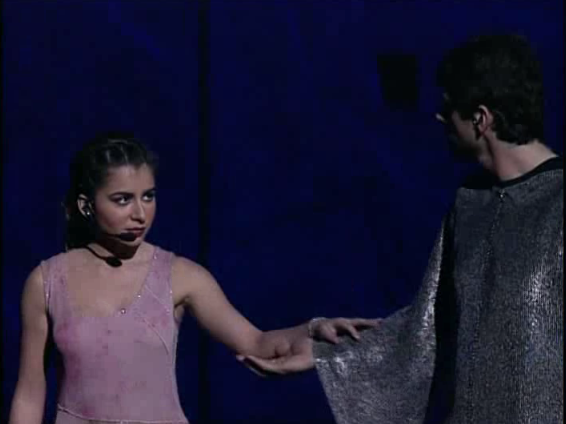
It has been said that the two most talked about things at a wedding are the wedding gown and the cake. Well we did wedding gown so ;et’s talk about cake and I just mean the look of the thing.

As I see it you should keep to being inspired by Notre Dame herself and will save you the two second don’t look up Notre Dame cakes on google it’s just the university.

Notre Dame Wedding cake Design picture image

Notre Dame Wedding cake Design

Typical with wedding cakes that are inspired from architecture is that you get the elements for the tier rather than making an exact replica. So this my very own crappy design of a Notre Dame de Paris, glorious I know.

Tiffany Style stained glass Wedding cake picture image

Tiffany Style stained glass Wedding cake

So could also just take inspiration from the Rose Window. Stained Glass window cakes are not uncommon but I haven’t seen one that is Notre Dame’s rose window but the point is clear.

Esmeralda and Phoebus figurine picture image

Esmeralda and Phoebus figurine

I would also recommend getting little bells as cake topper as wedding bells are cute and they fit the book. Of course if you can find a Disney Esmeralda and Phoebus figurine you could use that too.

One version I haven’t discussed very much is the 1977 British made for Tv-movie and that is because I haven’t reviewed it and I don’t really like it very much. However this is the only version that I know of that has TWO weddings. It has of course Gringoire and Esmeralda’s wedding and Fleur de Lys and Phoebus though it seem more like the reception than the actually wedding.

Let’s just with Esmeralda’s and Gringoire wedding.

Michelle Newell as Esmeralda with Christopher Gable as Gringoire 1977 Hunchback of Notre Dame picture image

Michelle Newell as Esmeralda with Christopher Gable as Gringoire

Unlike other version, Esmeralda gets a white veil in this version. I’m not sure why they added this and moreover I can’t tell if it’s cheesy as fuck or cute. I’m going for cheesy. They properly break the jug though the four shards for four years is not there, instead they are stuck together. However they get dancing, which is fun though I’m of the opinion that the Court of Miracles don’t need excuses for drinking and merriment.

Then we come to the wedding night. Esmeralda gives Gringoire some soup. Gringoire then both creepily and awkwardly tries to seduce Esmeralda. She on her part is not having it and puts him is his place quickly without any flowery language. Gringoire seems chill with their sibling-like relationship but he still tries to seduce her, like it’s pathetic.

Hetty Baynes as Fleur de Lys with Richard Morant as Phoebus de Chateaupers dancing at their wedding with corpses  1977 Hunchback of Notre Dame picture image

Hetty Baynes as Fleur de Lys with Richard Morant as Phoebus de Chateaupers dancing at their wedding with corpses

And then we have Fleur de Lys and Phoebus’ wedding thing. This part is like a giant F-You. At the end of the movie, Esmeralda has been hung and Frollo is dead on the cobblestone. As Esmeralda’s body hangs and Frollo’s body litters the ground, Fleur de Lys, who is a delightful bitch this movie, come parading out with Phoebus. And they dance around the bodies as a happy music plays. Why Movie? That is one of the worse endings of any hunchback version. I mean it’s amusing in darkly fuck up way but still.

Oh Fleur de Lys wore white. White for brides came in to fashion in 1840 with Queen Victoria’s wedding. In the Medieval period bride wore Blue as it was the color of purity. So her in white is just cheesy so at least both weddings are consistent in style.

Unlike Esmeralda and Gringoire’s wedding, the nuptials of  Phoebus and Fleur de Lys isn’t really presented in the book but mentioned as a bitter joke. At the end Hugo tells us of all the tragic endings the characters have even if they lived to the ending. For our old pal Gringoire he writes tragedies, clever. Phoebus‘ tragic end is that he gets married.

Hugo mean that they marriage was the tragic occurrence for Phoebus, as Fleur de Lys more than likely put him on a tight leash, though maybe they just like that sort of thing, (wink.)  So I guess that Fleur de Lys is the only character in Hunchback to get a happy ending, well her and maybe Djali.

Unlike Gringoire and Esmeralda humble quick wedding, you can bet that Fleur de Lys and Phoebus‘ wedding would have been a lavish late medieval affair, with dancing and flowy gowns and those princess hennin cones for the ladies.

To date, this wedding is only in ONE Hunchback movie and it was so shoe-horned in that is inappropriate but I will get to that later.

L’Ombre (The Shadow)
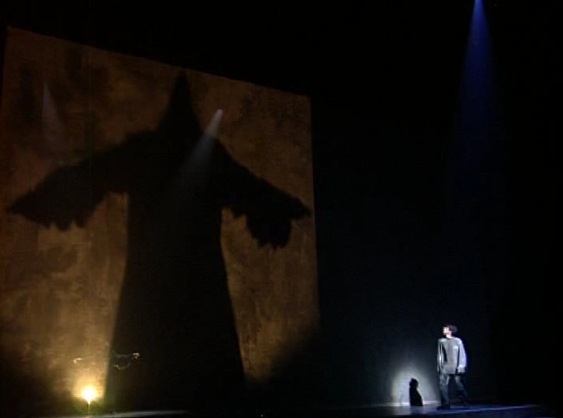
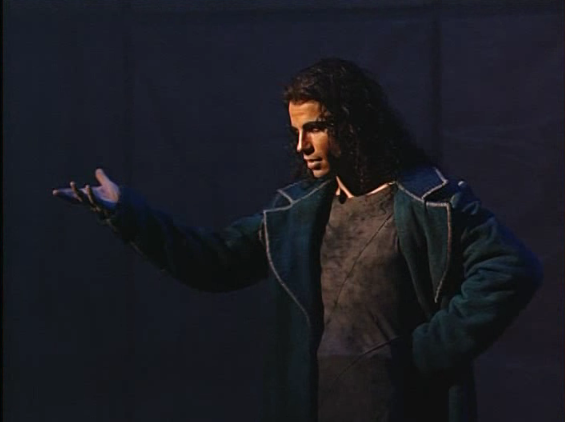
Daniel Lavoie as Shadow Form Frollo with Patrick Fiori as Phobus performing L'Ombre Notre Dame de Paris picture image

Daniel Lavoie as Shadow Form Frollo with Patrick Fiori as Phobus performing L’Ombre

I always found this song a little more than silly as Phoebus asks why his shadow is wearing a coat and a hat. I get that it’s lyrical but I would buy that Phoebus would wonder why his shadow was a better dresser that him. Also Frollo’s pose is kind of funny as he holds up his arms.

Again, L’Ombre is a bridge songs to get us to the encounter scene. It’s taken from the book which is called something like the Goblin Monk. It’s not as funny as the chapter. Frollo and Phoebus don’t have their witty banter where Phoebus wants to fight and is broke and Frollo offers to pay for the room but wants to watch.

The song is ok. I like the beats and melody. The Lyrics are a little weird. they start silly but then Phoebus aska who would follow him and them asks if he’s a man of god and he likes of course. So I have no clue if Phoebus knows who the shadow is or if he just being dumb. But it’s a good bridge song and it’s really the only song in Notre Dame de Paris that is suppose to be humorous.

Le Val d’amour
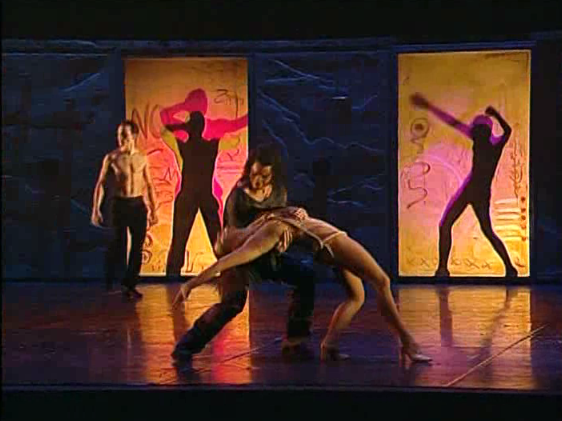
Bruno Pelletier as Gringoire with dancer during Le Val d'amour  Notre Dame de Paris picture image

Bruno Pelletier as Gringoire with dancer during Le Val d’amour

Literally means Valley of Love but it’s a brothel. What kind of guy would ask for a tryst at a brothel? Phoebus, what a charmer. My guess is that because he a frequent visitor, he gets a discount for the room.

This scene is a vast departure from the book as Phoebus meets Esmeralda at a inn type house called Pomme d’Eve (or something like that). I guess that isn’t as romantic of a name. Le Val d’amour brothel was mentioned in the book however as the place Jehan goes to for some paid loving.

Le Val d’amour itself is a fun number. Gringoire sings it and sells it as THE brothel to visit when you’re in town as it offers good quality for low, low prices. He even gives detailed directions which is so Victor Hugo. It’s also a great number for Gringoire as he back into his fun party mood like in the Feast of Fools number. Plus this also really the last fun number in the show, so enjoy it.

The dancing is very sensual but in the Italian version is even more sexual. Also when I first heard the original London version I swear I heard the lines “Guitars implore Ga-Glor-ka-Glor.” Not really sure how to spell what I heard….

La Volupté (The Sensuous)
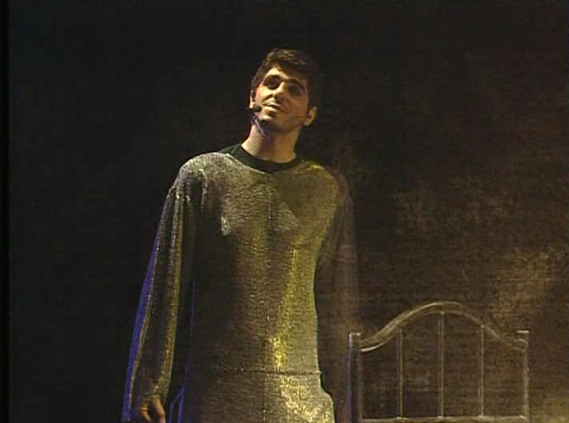
Patrick Fiori as Phoebus in La Volupté with his prize winning Smug look Notre Dame de Paris  picture image

Patrick Fiori as Phoebus in La Volupté with his prize winning Smug look

I’ll be blunt, I have never really liked La Volupté. The only thing I have really liked about is Phoebus’ smug look and that could just be Patrick Fiori. That being said I don’t think it’s a bad song, it didn’t make my hit list.

The music is fine and it has a nice sensual electric guitar thing but everything that is silly about the scene in the book is gone, except for that smug look. Also the song indicates that Esmeralda should have a darker skin tone than Phoebus, so at least with original cast, it takes me a little out of things but that is a major nitpick.

But you know what is NOT a major nitpick, we see shadow Frollo stab Phoebus but you also see Gringoire make the same gesture down stage. What this is meant to indicate is that Gringoire is telling the story and is pantomiming the actions, but it gets a little lost as it looks like Gringoire is the one doing the stabbing even though he is not.

All in all, it’s a okay song for moving the plot along but it’s a bit confused in execution. Thank goodness for that almighty smug look.

Fatalité (Fatality)
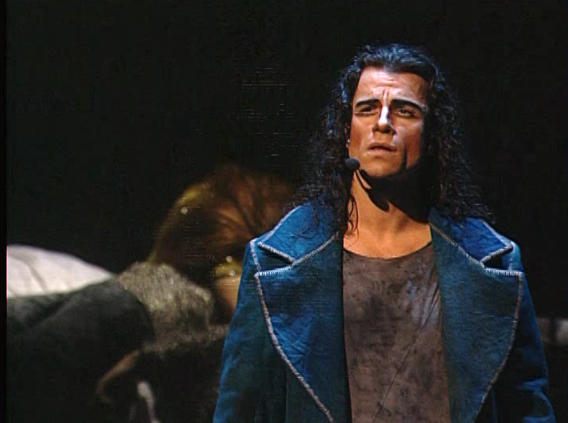
Bruno Pelletier as Gringoire singing  Fatalité  Notre Dame de Paris picture image

Bruno Pelletier as Gringoire singing Fatalité

Again like La Volupté, Fatalité is not my favorite. But it is one of the few songs in Notre Dame de Paris where all the principle leads are on stage together. I think Belle is the other time unless you want to count the encore.

Again Fatalité has that nice guitar riff that is heard in La Volupté. It is very dramatic as Gringoire sings about how no can escape Fate. It’s a nice closer to Act I but it seems a little lacking if I were to compare it to Le Mis (One Day More) or Phantom (All I ask of you reprise) or even Der Glockner von Notre Dame (Esmeralda). I mean it’s fine but it’s not a song I’m inclined to listen to a lot.

I’d give it a B- as a grade, though I’m not grading the songs so that doesn’t really mean that much.

End of Act I!

All in all, despite my criticisms, Act I is great.

Get the whole GLORIOUS ALBUM HERE

Anarkia

Bruno Pelletier as Gringoire & Daniel Lavoie as Frollo performing Anarkia Notre Dame de Paris picture image

Bruno Pelletier as Gringoire & Daniel Lavoie as Frollo performing Anarkia


Ok, I love this bridge but it is 43 seconds of three completely different subject matters.

Subject Number 1; 0:00-0:17

Frollo asks Gringoire about Esmeralda. Gringoire says that she is his wife and Frollo orders Gringoire not to touch her which Gringoire would never permit himself to do but not for the lack of trying, am I right?

Subject Number 2; 0:18-0:33

Gringoire asks about the word craved on the wall, Anarkia. Frollo tells him that it means “fate” in greek. Which is a simplified definition of the word but it’s not wrong.

Subject Number 3; 0:34-0:43

Gringoire sees Quasimodo being taken away and Frollo says (or sings) that God know why he got arrested but the jerk knows.

Anyway three magical subjects and my goodness do they not blend together at all. I mean they needed a song likeAnarkia but this song suffers from Attention Deficit Disorder. I mean I love that they put concept of Ananke in the musical but it so shoe-horned in.

ReallY just find the three subjects throw together hilarious but it does get us to the next scene, it sort of lifted from the books and helps the plot so I don’t hate it.

A Boire (A Drink)

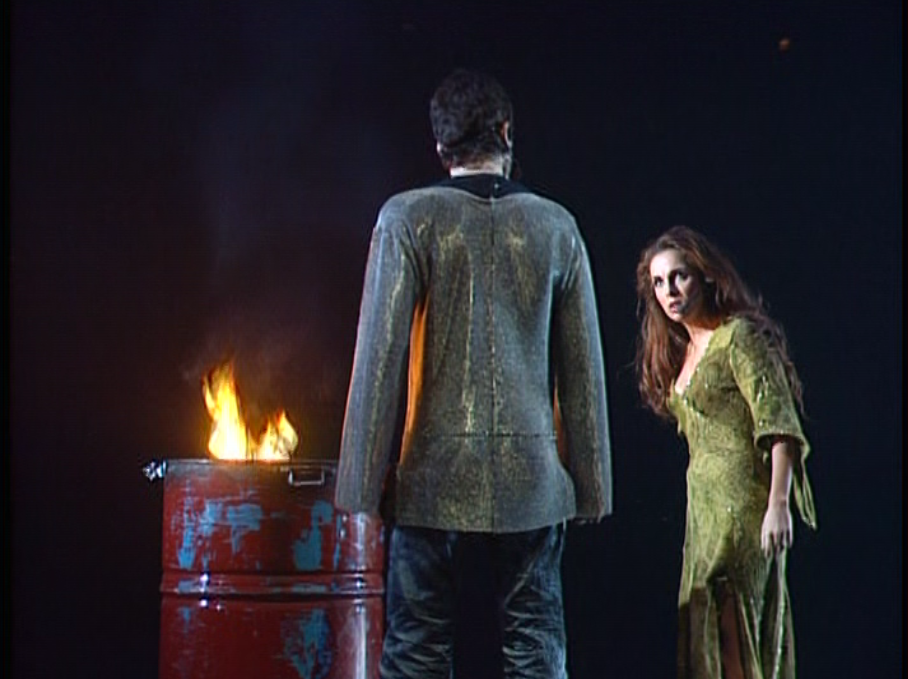
Garou Helene Segara Quasimodo and Esmeralda Notre Dame de Paris picture image

Quasimodo and Esmeralda

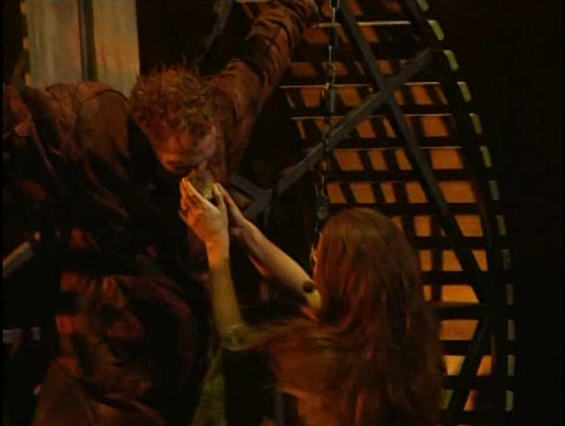
This scene is one of the most important scenes in the book as it’s when Quasimodo falls in love with Esmeralda after she gives him some water and pity. The song itself is fine, Quasimodo is emotional and pathetic as he tied to the pillory. I like how he is rocked back and forth as it’s a nice visual.

There isn’t really too much to A Boire though. It has a nice tonal shift with a march at the beginning then become sad and haunting. But that is pretty much it. It feels more like a bridge song to get us to the song of the show.

Belle

Notre Dame de Paris Belle Esmeralda Helen Segara, Garou Quaismodo, Frollo Daniel Lavoie Phoebus Patrick fiori picture image

Garou as Quasimodo , Daniel Lavoie as Frollo, Patrick Fiori as Phoebus and Helene Segara as Esmeralda performing Belle

There is very little contest over what the star of the show is and it is Belle. For many it was that first song they heard from the show, myself included.

Belle is a highly emotional song as it perfectly expressives the feelings for Esmeralda from three different perspectives. Quasimodo sings about a tenderness with underlying sexual desires, Frollo sings about a conflictions of desires against seeing her as combination of evil and pure and Phoebus just can’t resist wanting to have sex with her even though it hurts his fiancee.

These perspectives are not only perfectly captured by the lyrics but the key changes. Quasimodo is sweet and melodic, Frollo is a little stronger and his a heavy drum beats, and Phoebus has a more rock-like vibe.

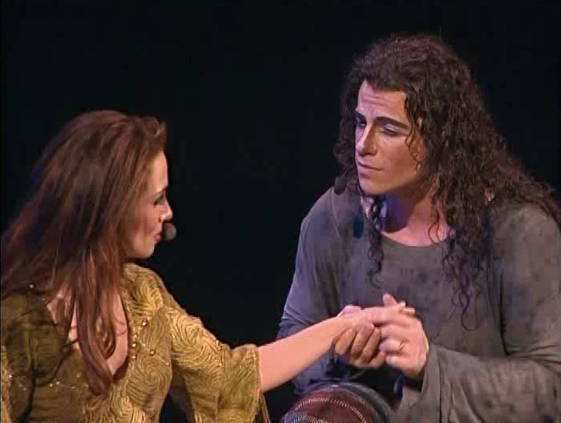
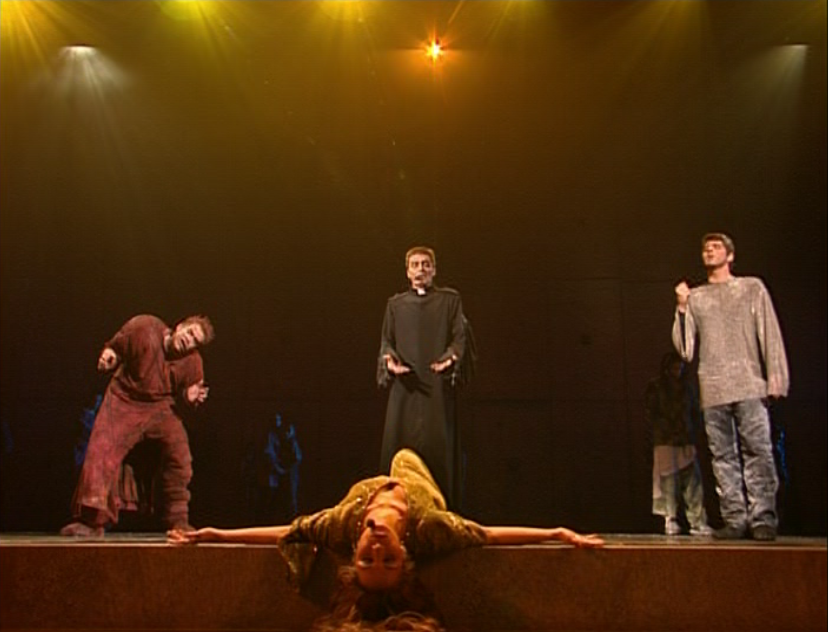
The staging is also wonderful. Pending on the version, Quasimodo either sits on top of the pillory for his part or his hands are still tied but he can make lunges towards Esmeralda. With him on the pillory it makes the part seem more dream-like but the other way makes him seem more protective towards Esmeralda. Frollo and Phoebus more of less just stare intently at Esmeralda, though Frollo knells before her and Phoebus motions toward Fleur-de-Lys. At the end when they all sing together Esmeralda lies on the floor in a crucifixion like pose as the three mean close in around her, foreshadowing these loves are fatal for her.

If I had one criticism of this song, it’s that I don’y have any criticism of it. It’s pretty perfect. Well maybe one but it has to with the staging, what are those guys doing with Fleur-de-Lys. they like push her around and then Phoebus saves her? Huh? Is it to show Phoebus likes Fleur-de-Lys while still desiring Esmeralda, because we kind of got that already. It’s just weird. But again that is staging and not the song.

Get the whole GLORIOUS ALBUM HERE

Can you guess the theme of these songs?

Le Mot Phoebus (The word Phoebus)

Bruno Pelletier as Gringoire with Helene Segara as Esmeralda in Notre Dame de Paris picture image

Bruno Pelletier as Gringoire with Helene Segara as Esmeralda

Le Mot Phoebus is one of my favorite little bridge songs in Notre Dame de Paris. First off the melody is very pleasant and sweet. Second this the ONLY time that Gringoire and Esmeralda get a duet, which is a shame, makes sense but a shame, though in other versions the get two lines in La Cour des Miracles but still.

In Le Mot Phoebus Esmeralda tells Gringoire he has been Friend-zoned and Gringoire isn’t that upset about it. I think he would have been happier with her be his muse, nymph, his lady but Gringoire is a chill dude and just goes with it.

It’s just a few nice lead into the next song.

Beau comme le Soleil (He is like the Sun)

Juie Zenatti as Fleur de Lys & Helene Segara as Esmeralda, Notre Dame de Paris Original Cast, picture image

Juie Zenatti as Fleur de Lys & Helene Segara as Esmeralda, Notre Dame de Paris Original Cast

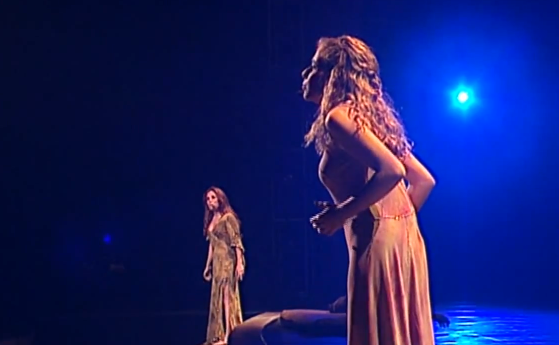
And what is this? It’s the next song, fancy that. Beau comme le Soleil is a rather interesting song as it’s another duet sung by Esmeralda and Fleur-de-Lys in tandem but not really together about the man-whore know as Phoebus.

Now Esmeralda has known him for a solid day and had two interactions with him. One she was more-or-less flirtatiously gave a vague account of her life and the second time she refused him after he saved her and then somewhat agreed to met him at a brothel and now she in totally in love with him, teenagers am I right? Whether or not it’s believable from a logical stand point, Esmeralda’s part is a directly foiled by Fleur-de-Lys’ part.

Esmeralda’s part is just about a growing love or fascination for a guy she doesn’t know at all. All she knows is he is handsome. Fleur-de-Lys knows more about him like he is rascal but she is attracted to me on a more physical level than romantic idolization. It’s an interesting pairing of two loves that are both shallow and immature.

The melody is nice and the part they sing together is really pretty. I love how great the original cast harmonizes toegther.

Also I haven‘t talked about the editing very much but that overlay at the end with Phoebus is so derpy. In other versions, Phoebus appears between the ladies but on the Original cast DVD, that overlay makes me laugh every single time.

Déchiré (Torn)

Patrick Fiori as Phoebus from Notre Dame de Paris picture image

Patrick Fiori as Phoebus Notre Dame de Paris

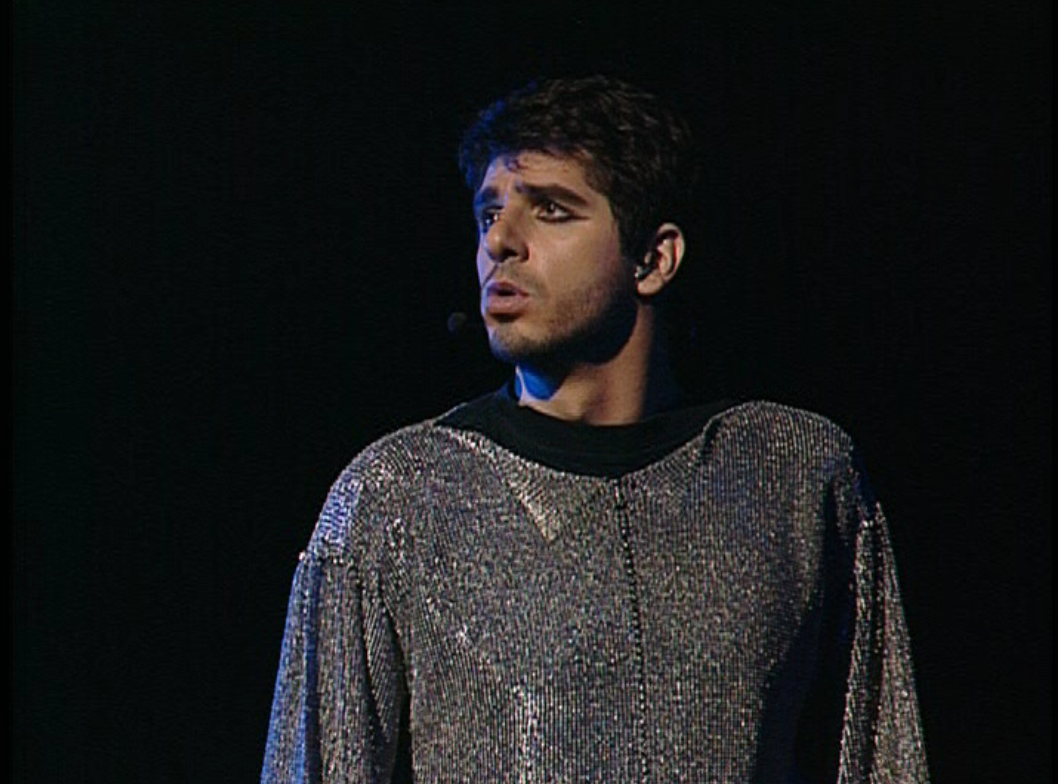
Ah Déchiré, Déchiré and I go way back to my first AMV, the character was pretty the embodiment of this song. And what is Déchiré all about? It’s about how Phoebus is super duper happy that two lovely ladies want him.

Unlike in the book, Phoebus here expresses a desire for having both women in his life instead of Esmeralda being a one night stand. Fleur-de-Lys would have been the wife and Esmeralda would have been the mistress. At some points in times, mistresses were totally ok, I’m not sure if that was the case for 1482 France but the point is two women want his love and he is normal for being happy about it.

I really enjoy this song. I would say this song is upbeat even though it’s a little disguised as being being moody and other versions don’t have the same level of dark wit. The song defiantly has great energy and is a testament to the stupid male ego.

Get the whole GLORIOUS ALBUM HERE
Le Portes de Paris (The Gates of Paris)

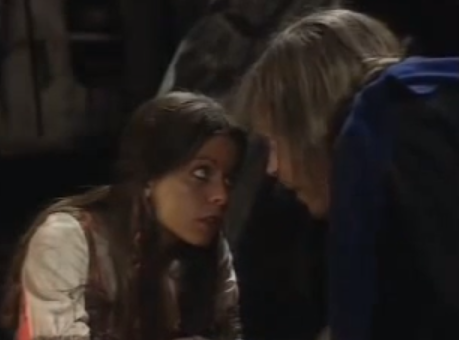
Gringoire singing Le Portes de Paris Bruno Pelletier Notre dame de paris picture image

Gringoire singing Le Portes de Paris

This song is kind of funny and I don’t mean like it’s hilarious, I mean this song set-ups a trend in Notre Dame de Paris that is very clear in all three of these songs. Where the plot and story are reduced to one or two lines of song over setting up mood or emotion. Typically this is fine but in this chunk of the overall story we kind of need story being told.

In Les Portes de Paris, Gringoire tells us he met a girl, followed her and lost her. That’s it. It’s like drive-by exposition. I mean if you don’t know he meant Esmeralda, would you REALLY know he meant her? The rest of the song tells us Paris is a dark and sexy place. It’s very moody and Gringoire is a delight in the song but alas isn’t a little more than forgettable.

Tentative d’enlèvement (Kidnap Attempt)

Phoebus and Esmeralda Tentative d'enlevement Helene Segara Patrick Fiori Notre Dame de Paris picture image

Phoebus and Esmeralda

Ah, yet another song to make that worst list, at number six. First off what the fuck? This song depicts the critical scene where Quasimodo tries and kidnap Esmeralda. This is also the scene in the book where Esmeralda and Phoebus meet for the first time. And it just all so sloppy in Notre Dame.

So when Quasimodo goes in for the kidnap, Esmeralda is in mid-run from some weird extra, so it just looks like she is running from the other guy and not even Quasimodo, so that ruins it.

However that not even the tip of the messed up-ness of Tentative d’enlèvement. When Phoebus saves Esmeralda he puts the moves on her and she rebuffs him, telling him he as gotten the wrong girl as Esmeralda isn’t a soldier-girl. So then what happens? He tells he he’ll meet her at a brothel the “Cabaret de Val d’amour.” And for whatever that line worked and she’s now like Phoebus, in fact later on she says her heart beats for him, but I’m getting ahead of myself. It’s just like what! In under two minutes the ruined a very pivotal scene.

The music for the song is okay, it has a nice mystery and dark tone but it’s not enough to save the song.

La Cour des Miracles (The Court of Miracles)

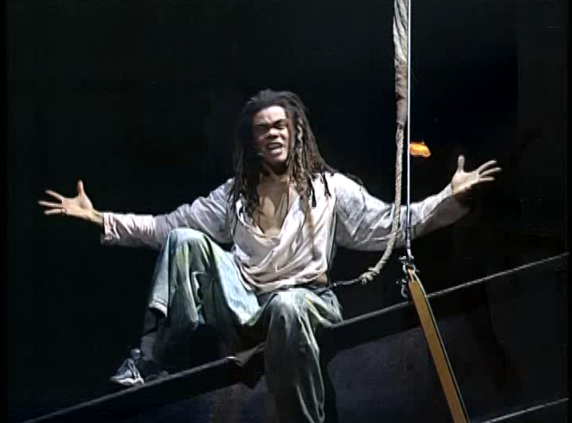
Luck Mervil as Clopin from Notre Dame de Paris picture image

Luck Mervil as Clopin from Notre Dame de Paris


At last another big number. La Cour des Miracles tells us about the Court of Miracles and Clopin’s outlook on the world as a world without much divide of status and religion. Then there is the drive-by exposition where Gringoire just literally pops in, is hanged in a bag, which looks like fun and married off. Any humor of the scene is gone.

As far of the song itself, it’s fun and has good enegry. I do like Clopin singing it off a gilder from the ceiling. Not a favorite song of mine but far from the worst. I kind of wish that the camera guy got more of Gringoire and Esmeralda dancing.

Speaking of Esmeralda and Gringoire, other version added lines for them, where Esmeralda tells him that she is not into him which the next song did anyway so it was a weird addition.

Get the whole GLORIOUS ALBUM HERE

Bohémienne

Esmeralda Helene Segara Bohemienne Notre Dame de Paris picture image

Esmeralda

Bohémienne is one of the few upbeat songs in Notre Dame de Paris. Pending on the cast you’re watching the number can be more upbeat, as most Esmeraldas do have dance choreography. The trouble with some Esmeraldas, is that even though they are dancing, the choreography can look REALLY mechanical. Some Esmeraldas can pull it all like Lola Ponce of the original Italian cast and Baba of the Korean version but most Esmeraldas it like arms up, run back. arms up again and now twirl. Helene Segara at least looks natural in her movements regardless whether not she is dancing, she isn’t but there are a few little steps in there.

Bohémienne tells us a little bit of Esmeralda’s origins and out look on life. She’s a wander and enjoys the unknown. She is also a dreamer and really dreams of going to Spain. Despite the upbeat nature of the number there is this hint of bittersweetness. The combination of tones gives this songs a nice complexity and interest.

It’s a really great introduction for Esmeralda and fun number.

Esmeralda Tu Sais, (Esmeralda, You Know,)

tu sais Esmeralda and Clopin Helene Segara Luc Mervil Notre Dame de Paris picture image

Esmeralda and Clopin

I once made a Top Ten Worst Songs of Notre Dame de Paris list and this song was there, at number three no less. This songs works to tells us more on Esmeralda’s backstory with regards to Clopin. Basically he raised her when she mother died. In the song he warns her about guys and his own rising interest in her.

Here the thing about Esmeralda tu sais and why it made my list, it’s REALLY boring. The melody, orchestration, tone are like valium. It doesn’t highlight the singer it anyway and makes Clopin sound like he is droning. In other cast versions, they tried to fix the song by making it a duet with Clopin and Esmeralda which is nice and Clopin gets more angry about the world but it didn’t really help anything, it’s still dull a rusty nail.

The ONLY thing I can give the song is showcasing Clopin’s gentler side but I mean they could have written a better melody, it’s just one of the weaker songs in the show.

Ces diamants-là (These Diamonds)

Julie Zenatti as Fleur-de-Lys with Patrick Fiori as Phoebus, Notre Dame de Paris picture image

Julie Zenatti as Fleur-de-Lys with Patrick Fiori as Phoebus, Notre Dame de Paris

Ces diamants-là is Fleur-de-Lys introduction song. Just so we’re all clear, Fleur-de-Lys is Phoebus’ Fiancee. Isn’t it great that Notre Dame de Paris introduces Fleur-de-Lys before Quasimodo? I think it is!

Ces diamants-là tells us about Fleur-de-Lys and Phoebus’ relationship. Fleur-de-Lys who is young in this version but is wise to Phoebus’ playboy ways in that she says even if his romantic lines are lies she doesn’t care. She is smitten with him and Phoebus whether or not is he is lying or sincere does seem to be interested in marring her.

The song is sweet but there is more at play. They way they circle around each other and pull way speaks to a power dynamic and really way they do it speaks to Fleur-de-Lys having more control than Phoebus. This could be because Phoebus is a slut who can’t help himself or that it’s Fleur-de-Lys who has the monetary upper-hand like she does in the book. The melody while it’s quite pretty seems a little off, like almost a little diabolical, like a little foreboding with those drums. In that sense it’s the perfect depiction of Phoebus and Fleur-de-Lys‘ characters in the musical.

Get the whole GLORIOUS ALBUM HERE

I might discuss aspects from other casts but I’m going to keep it to the original cast.

Le Temps des Cathédrals (The Age of Cathedral)


Bruno Pelletier as Gringoire singing Le Temps de Cathédrales Notre Dame de Paris  picture image

Bruno Pelletier as Gringoire singing Le Temps de Cathédrales

This is the first number of the show. It’s sung by Pierre Gringoire who acts mainly as a story teller. The song tells us about the changing times and how teh Cathedral once prominent and important to society is falling away and that population is changing too as people seek refuge in Paris.

The song itself is very mysterious with a touch of bittersweetness. The songs also have a great build and there is a nice reveals of the stage as the song builds. It starts with a bare stage and Gringoire but slowly layers of screens are pulled back to reveal the set pieces.

Le temps des cathédrales is also a great showcase for Gringoire’s voice. Bruno Pelleteir has such an expressive voice. Also with all the power and build up and the enegry Gringoire to into the song it transition to the nest song very nicely.

Les Sans Papiers (Those without Papers)


Luck Mervil as Clopin singing Le Sans Papiers, Notre Dame de Paris picture image

Luck Mervil as Clopin singing Le Sans Papiers

Just a little clarication papers meaning without passport, or without legal documentation which I don’t think they would have had in 1482, could be wrong but it a big deal these days and the Refugee were a big issue in France at the time this musical came out so it’s topical.

So what is interesting about Notre Dame de Paris is that even though they didn’t start it the same way as the book they do introduce the characters at roughly the same points. This songs in Clopin asking for refuge for his people. There is also the same tone of change.

There is a great power and darkness to Le Sans Papiers. It’s interesting that a song that is basically begging would have such a forceful tone to it. There is also a menace and urgency that makes this song exciting by the end.
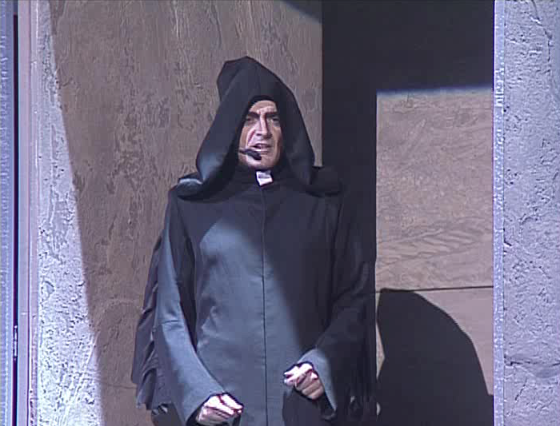
It also the first number with dancing. Notre Dame de Paris has a lot of dancing. For this particularly number the dancing is a little weird. I don’t know a ton or anything about dance, heck I was run out of tap dance class at the age of six, I’m the last person who should critic dance but while I think the dancing in this number is effective to the tone and mood of the song I don’t care for it. Some of it look like spazing out, which I excel out. I did like that walk out and throw down move.

Also during this song you can see Frollo looming in Notre Dame, as played by a rock climbing wall. And as indicated by the next song, this song did not melt Mr. Frollo’s icy heart.

Intervention de Frollo (Intervention of Frollo)

Daniel Lavoie as Frollo singing Invention de Frollo Notre Dame de Paris picture image

Daniel Lavoie as Frollo singing Invention de Frollo

This is the first song that is a little different between the cast version. Frollo commands Phoebus to arrest the people and he complies. In the original cast he tries to arrest Esmeralda and is taken with her. In other versions, after getting the order Phoebus finds Esmeralda dancing and is taken. It’s both a HUGE difference and not. With her dancing it clarifies Esmeralda as a dancer but the transition is not smooth. With the arrest we lose her a bit as dancer but it makes for a better transition. Though it’s a transition that exist within the song.

As bridge song, Intervention de Frollo is okay. It’s very staccato but gets the point across of Frollo authority and coldness and Phoebus‘ conformity and interest in pretty girls.
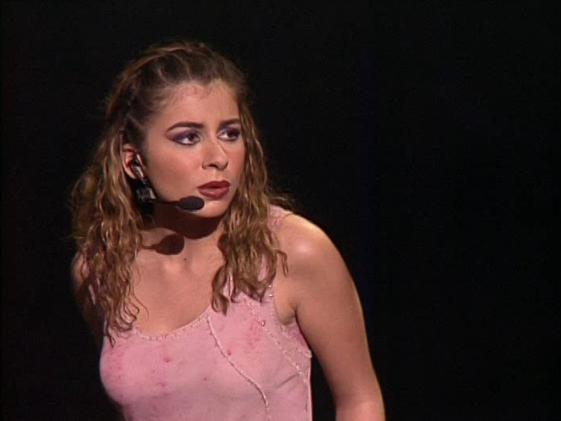
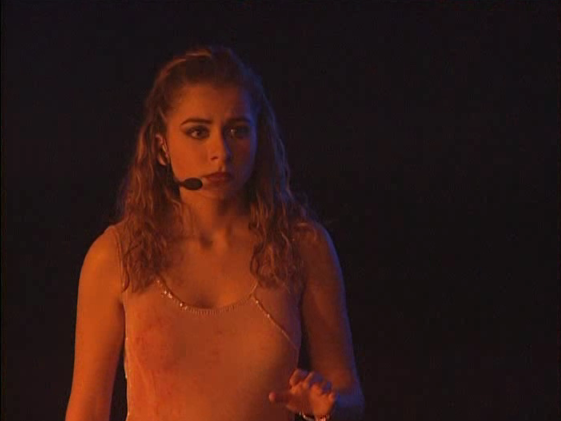
*I might translate these with crummy translations or go by the English titles. which can also be crummy.

GET THE WHOLE GLORIOUS ALBUM

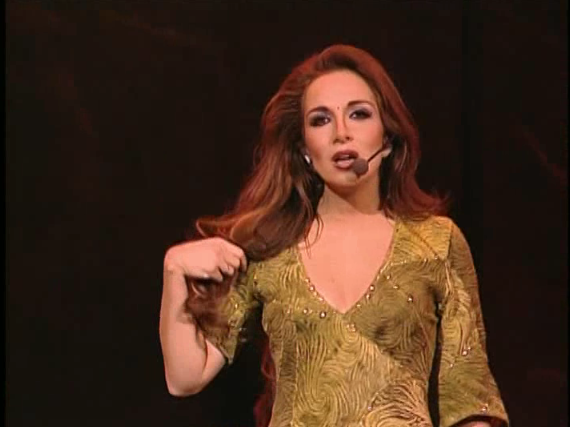
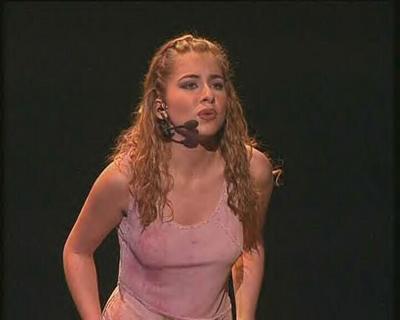
Julie Zenatti as Fleur de Lys Notre Dame de Paris picture image

Julie Zenatti as Fleur de Lys Notre Dame de Paris

So often in adaptations of The Hunchback Notre Dame, Fleur-de-Lys gets shafted. Either she is not there, an extra or just in a few scenes and with in those scenes she is pretty much a rich bitch. The 1956 version had her in one scene were she was soften a touch though still catty. Notre Dame de Paris however took a character that really isn’t a huge character in the book and fleshed her out and gave her some depth.

Julie Zenatti as Fleur de Lys Notre Dame de Paris

Julie Zenatti as Fleur-de-Lys Notre Dame de Paris

Fleur-de-Lys is the smallest role in the musical has she only has three songs, though she appears in more numbers. The minimal songs she get do reveal everything about her character and her arch.

Julie Zenatti as Fleur de Lys Notre Dame de Paris picture image

Julie Zenatti as Fleur-de-Lys Notre Dame de Paris

Unlike the book, Fleur-de-Lys is much younger. I believe in the book she was twenty-four whereas in Notre Dame de Paris she is fourteen. More than likely this change is based on Julie Zenatti’s age at the time she played the role, which was seventeen.

Julie Zenatti as Fleur-de-Lys with Patrick Fiori as Phoebus, Notre Dame de Paris picture image

Julie Zenatti as Fleur-de-Lys with Patrick Fiori as Phoebus, Notre Dame de Paris

Zenatti said in that Fleur-de-Lys loves Phoebus with a passion, which is true but her love for Phoebus is not as romanticized as Esmeralda. She knows that he is handsome and spouts out romantic lines but he is also a scoundrel and a soldier.

Fleur-de-Lys and Phoebus Julie Zenatti Patrick Fiori Notre Dame de Paris picture image

Fleur-de-Lys and Phoebus

In the Phoebus post, I mentioned that Phoebus was a double minion to both Frollo and Fleur-de-Lys and that is because at some point during the musical Fleur-de-Lys snaps and demands that Phoebus ensures Esmeralda’s death. The manner which she tells this to Phoebus is vastly different between the original version and all the subsequent versions.

Julie Zenatti as Fleur de Lys Notre Dame de Paris picture image

Julie Zenatti as Fleur-de-Lys Notre Dame de Paris

In the original version, Fleur-de-Lys snaps and sings her big number, La Monture, to herself and asks Phoebus to kill Esmeralda. He overhears this and with the next number tells her that he is returning to her and basically agreeing to her request. Very personally, I like the original version of La Monture, it has  a desperation and venom. It also means that Phoebus is taking some agency with the death of Esmeralda.


Julie Zenatti as Fleur de Lys with Patrick Fiori as Phoebus, Notre Dame de Paris picture image

Julie Zenatti as Fleur-de-Lys with Patrick Fiori as Phoebus, Notre Dame de Paris

In other versions, Phoebus asks Fleur-de-Lys to take him back as his unfaithful heart is all better. Fleur-de-Lys then very sexually asks him to kill Esmeralda. She honey-potted him. He can’t really refuse her after that. I get why they changed it, as it makes Fleur-de-Lys look more powerful and in- control and second it just make for a better on stage show number. However I do think that someone who desperate and at her wit’s end asking for someone death is more interesting than someone who is forcing someone and using sex to get what they want. Also I’m not sure why Fleur-de-Lys wants Esmeralda to die as much in other versions, it just seems like she testing Phoebus more that she is going out her mind with jealousy, but that is just me.


Julie Zenatti as Fleur-de-Lys with Helene Segara as Esmeralda Notre Dame de Paris picture image

Julie Zenatti as Fleur-de-Lys with Helene Segara as Esmeralda Notre Dame de Paris


Fleur-de-Lys is also Esmeralda’ s foil. Where Esmeralda is earthy, sensual, innocent and exotic, Fleur-de-Lys is colder, calculating, jaded, polished and has a fairer European beauty. This is in the book but is because Fleur-de-Lys is bigger in Notre Dame de Paris the difference between the two ladies is clearer.


Julie Zenatti as Fleur de Lys Notre Dame de Paris picture image

Julie Zenatti as Fleur-de-Lys Notre Dame de Paris

Despite having the smallest role in Notre Dame de Paris , Fleur-de-Lys is still quite well fleashed out and really compelling.

Next Time – Moving in to the songs

Original Cast Belle NOtre dame de Paris picture image

Original Cast Belle